
Words are powerful, especially those we speak to ourselves. And we carry them with us all day, whether we realize it or not. The things we say to ourselves shape how we move through stress, make decisions, and navigate all of the quiet moments in between. So, when life feels noisy or overwhelming, the right words can have a big impact, helping us come back to ourselves.
That’s where personal mantras come in. A personal mantra is so much more than a quote or something that sounds inspiring as an Instagram caption. It’s a focused, intentional tool that helps guide your inner world. It supports clarity, resilience, and a positive mindset (especially when things feel uncertain).
I like to think of mantras as anchors. They don’t stop waves, but they do keep you grounded as the water moves. I’ve found them to be so powerful in my daily life, which is why I wanted to share this post with you. We’ll dive into what a personal mantra really is, why it matters, and how to create one that supports you in your life.

What Is a Personal Mantra and How to Find Yours
A personal mantra is a short, meaningful phrase you come back to again and again… the kind that stays with you long after you’ve said it. The word mantra actually comes from ancient Sanskrit traditions! It was used to describe a sacred sound or phrase that steadies the mind. For a long time, these phrases were spoken in prayer or meditation, helping people return to focus, calm, and connection.
Today, people use mantras in a far more modern and accessible way. They help promote intention, emotional grounding, positive thinking, and mental clarity. And to be honest, you don’t need to be spiritual or follow a specific practice to use one. You just need words that feel true and supportive to YOU.
A personal mantra works best when it’s intentional, affirmational, and easy to repeat. It should also be easy to remember and comforting to say. Then, in times of stress, troubling decision-making, or self-doubt, your mantra becomes something stable that you can return to. It gently guides your thoughts back to where you want them to be.
This is something explored so beautifully on my podcast, The Cinnamon Effect. Especially in “Ep. 99 – Upgrade Your Emotional Well-Being: Empathy, Mantras, and the Power of Sensitivity with Karen Blaine.” The conversation we have highlights how intentional words can soften the nervous system and help us stay focused when emotions run high. Even now, I go back to this podcast often…
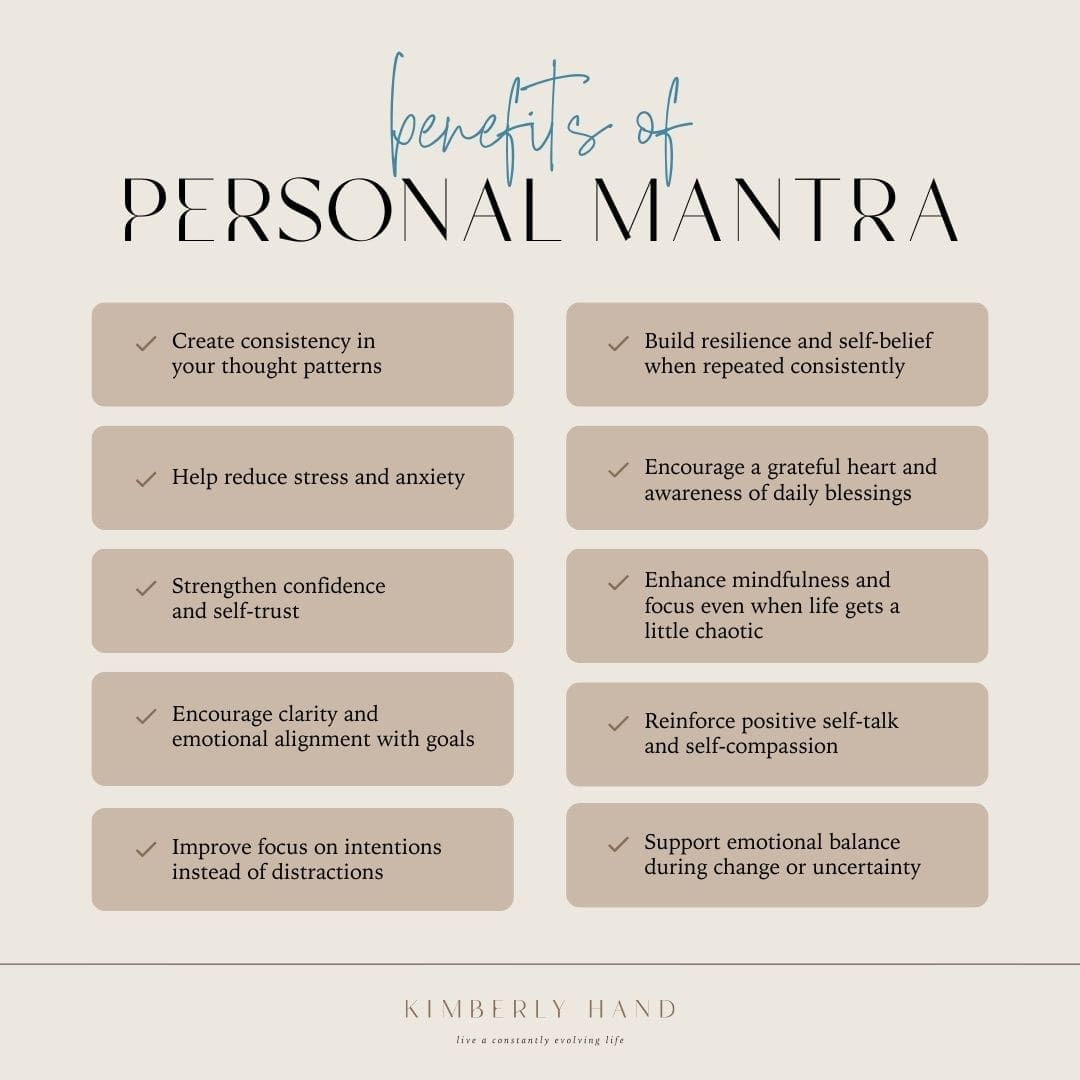
Benefits of a Personal Mantra
A personal mantra may seem simple, but its impact can be incredibly powerful. Mantras can:
- Create consistency in your thought patterns
- Help reduce stress and anxiety
- Strengthen confidence and self-trust
- Encourage clarity and emotional alignment with goals
- Improve focus on intentions instead of distractions
- Build resilience and self-belief when repeated consistently
- Encourage a grateful heart and awareness of daily blessings
- Enhance mindfulness and focus even when life gets a little chaotic
- Reinforce positive self-talk and self-compassion
- Support emotional balance during change or uncertainty
Over time, a mantra can entirely shift how you respond to challenges. Instead of spiraling, you have something steady to return to. That repetition helps reinforce a positive mindset and grateful heart, even on harder days.
Speaking of gratitude, this idea connects closely with Ep. 54 – The Power of Gratitude and Affirmations: Transforming Your Life with ‘I AM’. The life-changing episode explores how affirmational language shapes identity and self-trust over time. It also explores the truly powerful nature of gratitude in everyday life.
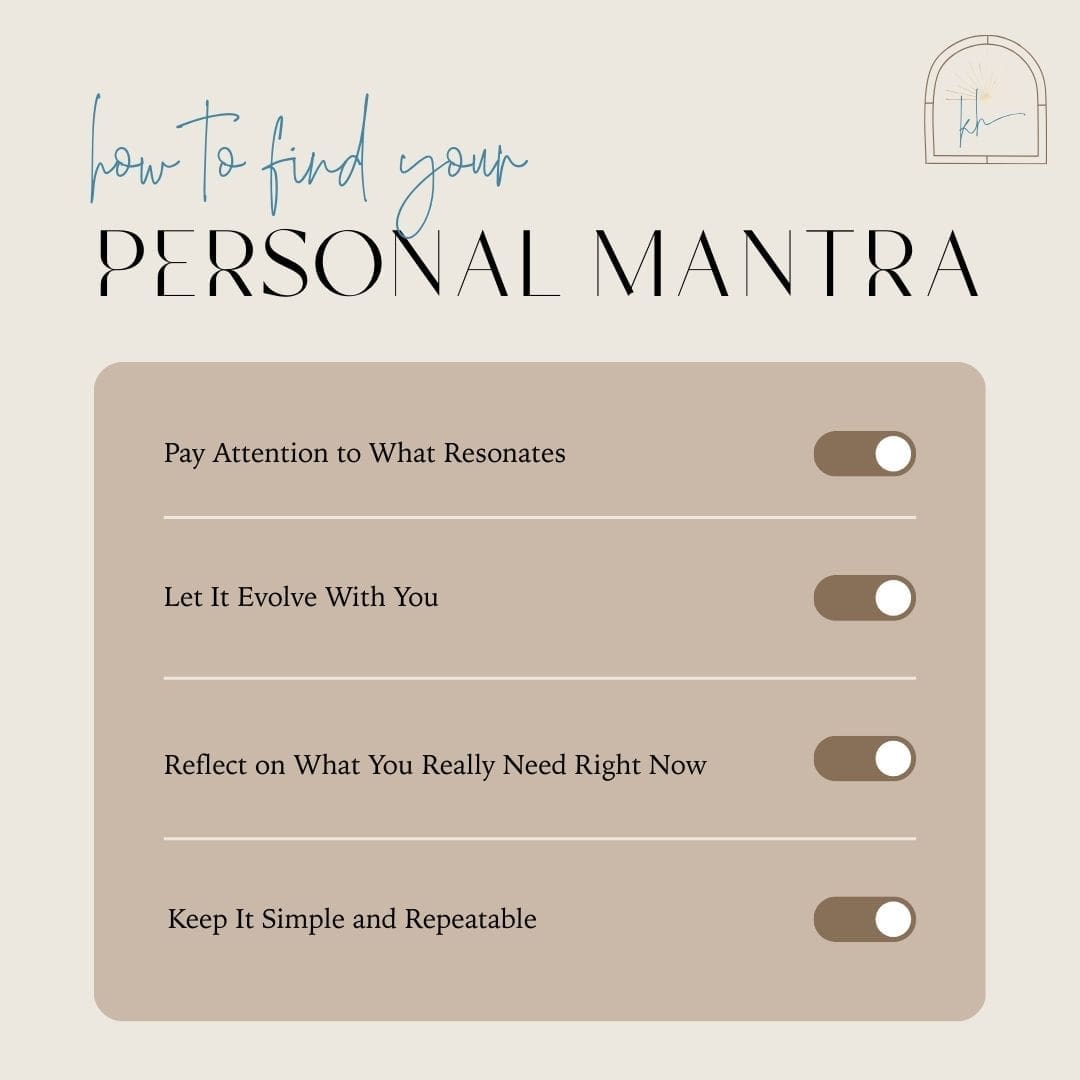
How to Find Your Personal Mantra
Pay Attention to What Resonates
Pay close attention to the phrases that naturally steady you. What words do you repeat to yourself in moments of stress? What thoughts ground you when you’re overwhelmed? More often than not, mantras aren’t something you come up with randomly—they’re something you uncover.
Maybe it’s the line you whisper before a big meeting, or a reminder you hold onto during moments of reflection. Treat those recurring phrases as signals.
Let It Evolve with You
When you find your mantra, it doesn’t have to stay with you forever. As you grow, your needs will naturally shift. The words that once gave you courage in one season may feel too small for the next. Your stressors will change. Your priorities will shift. And the version of you navigating today won’t be the same version navigating a year from now. But that’s the beauty of it all!
Allow your mantra to change alongside you. After all, this flexibility is part of honoring the process of life. Growth doesn’t require rigidity; it only requires awareness and compassion.
Reflect on What You Really Need Right Now
Start by asking yourself what you’re craving emotionally. Is it calm, confidence, patience, or trust? Your mantra should meet you where you are, not where you think it should be.
If life feels heavy, your mantra might focus on gentleness or support. If you feel scattered, it might help you stay focused. I promise you, there’s no perfect mantra, only one that feels right for this season of your life.
Keep It Simple and Repeatable
In moments of stress, your brain isn’t looking for something polished and perfect. It’s looking for something comforting and accessible. With this in mind, a personal mantra should feel easy to say, even when you’re overwhelmed.
Short phrases work best because they’re accessible in moments of stress. You want something you can repeat while driving, walking, cleaning, or just taking a breath. The simplicity of it helps the words land more deeply.
Personal Mantra Examples
If you’re not sure where to start, here are a few examples to spark inspiration:
- I return to peace when things start to feel heavy
- I’m surrounded by love and supported
- Every day I wake up and start my day with a grateful heart
- I choose to lead with love and light
- Calm and clarity are what I choose in this moment
- I’m grounded, steady, and open to whatever life brings
- I trust myself and the process of life
You might repeat your mantra during meditation, first thing in the morning, or softly to yourself as you move through the day. Little by little, the words start to land… and your nervous system begins to believe them.
When life feels noisy and overwhelming, mantras can help us take a step back and find ourselves again.
Your mantra tends to find you in its own time. It’s not a test, and there’s no gold star for picking the most impressive words or complicated phrases. You’re simply listening for the words that make something inside you soften… The ones that help you feel steady, clear, and a little more grounded than before.
When you return to the same words with pure intention, they begin to shape your inner world. And when your inner world feels steadier, everything else tends to follow.
If you’re looking to learn more, you’ll LOVE Ep. 112 – Re-Wire Your Brain and Create Your Own Unique Gratitude Practice. This episode dives deeper into how repetition and gratitude-based language reshape thought patterns. Alongside The Cinnamon Effect Journal, it’s a beautiful complement to this practice.


