
Motherhood is truly such a beautiful thing. It’s life-changing, sacred, eye-opening, and a unique experience in so many ways. It can also be, however, relentless.
Yes, of course, there are physical tasks like laundry, meals, driving, cleaning, and bedtime routines. Though what many women discover, often quietly and without language for it, is that the real weight isn’t always what you’re doing. It’s what you’re constantly thinking about.
You’re tracking appointments, remembering shoe sizes, anticipating toddler meltdowns, managing schedules, planning meals… Do I really need to go on? And you’re doing all of this while possibly working, partnering, caregiving, and attempting to be a human yourself.
No wonder so many mothers are feeling exhausted… Yet when someone asks what’s wrong, it can feel hard to explain. You might say, “Oh, I’m just busy,” or “I’m just tired,” but neither really captures the depth of what’s happening in your world.
So today, we’re getting real and talking about the mental load of motherhood: the invisible work that quietly shapes maternal wellness, relationships, and long-term family dynamics. Because once you can see it, you can take the steps to change it…
What Is the Mental Load Of Motherhood?
The mental load of motherhood is the ongoing cognitive labor of running a household. It basically involves anticipating any need, planning, organizing, remembering, and emotionally regulating for everyone in the room. It’s logistics, project management, and emotional labor wrapped into one role.
Because much of this work happens internally, it’s easy for others to underestimate how heavy it truly is to hold. In fact, many women carry this responsibility even in loving, supportive, dual-income homes. This isn’t at all because their partners don’t care, but because the management layer has silently defaulted to them (aka the default parent).
Over time, this imbalance can seriously fuel burnout, resentment, anxiety, and relationship strain. And when you constantly ignore your mental load, it’s like a domino effect. Maternal mental health suffers, partnership satisfaction becomes strained, and long-term family dynamics feel harder to change.
If this is starting to open your eyes, you might appreciate the conversation in Ep. 111 – How to Navigate the Invisible Load of Motherhood. In this episode of The Cinnamon Effect, I discuss how awareness is often the first doorway to change.
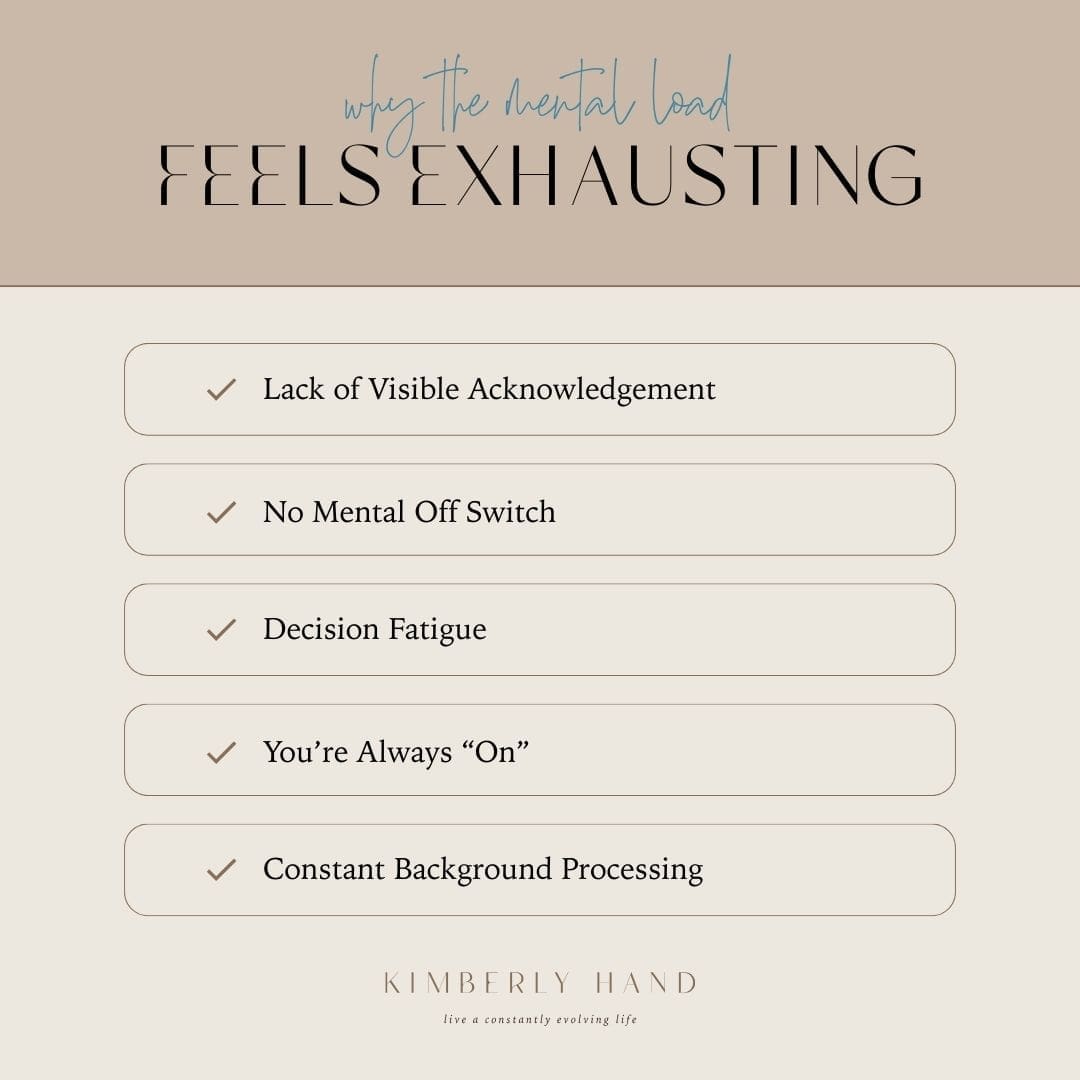
Why the Mental Load Feels Exhausting
Lack of Visible Acknowledgement
Invisible work very rarely receives recognition. If no one sees the planning, emotional buffering, and coordinating, it can sometimes feel like it doesn’t matter at all. But I promise you, it counts deeply. Humans need acknowledgement to sustain effort because it’s simple human nature. Without it, resentment grows quietly, and connection can begin to fray.
No Mental Off Switch
Even when you sit down, you’re STILL on call. You’re always the default emergency system, keeper of the details, and the one who knows how everything works. And, of course, these are all deeply honorable, beautiful responsibilities. However, that lack of psychological detachment is a huge contributor to feeling exhausted.
Decision Fatigue
Mothers can make an extraordinary number of micro-decisions every single day. What to cook, when to intervene, what to prioritize, and what can wait. Eventually, your brain hits capacity, and you might start to feel irritable, numb, or unable to choose even simple things for yourself.
That’s definitely not a personality flaw, it’s just neurological overload. There’s a super supportive conversation around this on Ep. 49 of The Cinnamon Effect. I sit and talk with Toni May about why depletion changes how we show up—and the importance of prioritizing your health as a mama.
You’re Always “On”
Many mothers become the emotional barometer of the home. It’s your job to notice shifts in mood, smooth conflicts, remember preferences, and absorb stress before it spills over. That level of awareness is a form of constant emotional labor that can get tiring pretty quickly.
Over time, being the steady center of your home for everyone else can leave very little room for your own processing. You may not even realize just how much you’re holding up until you hit a wall.
If you need a boost of encouragement, you may appreciate my episode, “Re-Wire Your Brain and Create Your Own Unique Gratitude Practice.” It’s proven to be extremely effective for me in moments where stress feels like it’s taking over.
Constant Background Processing
Your brain rarely stops scanning what needs attention next. What’s for dinner tomorrow? Oh, did I sign the permission slip? When is the dentist appointment? Why is the baby so quiet? Even during moments of “rest”, the mental tabs stay open.
This chronic cognitive vigilance keeps the nervous system not just activated, but going WILD! And that background processing remains on from the moment you open your eyes to the moment you fall asleep. (And even sometimes throughout the night!) This is why true restoration can feel super out of reach.
The Mental Load of Motherhood List
- Being the default parent
- Tracking school and activity schedules
- Holding space for everyone else’s stress
- Remembering medical appointments
- Continuing to run to-do lists in your head
- Planning groceries and meals
- Carrying responsibility for holidays and events
- Monitoring emotional changes
- Anticipating future needs
- Managing communication between family members
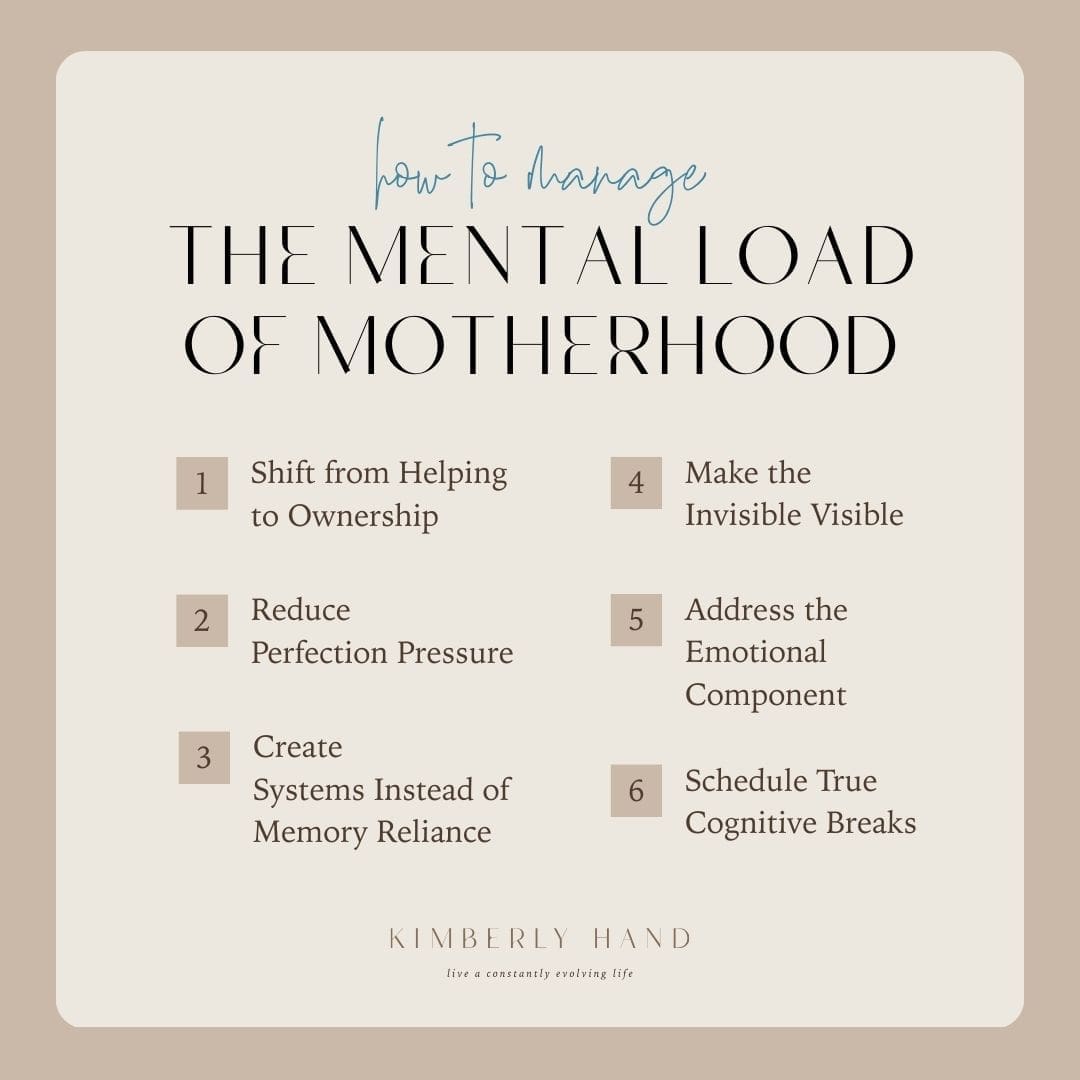
How to Manage the Mental Load of Motherhood
Shift from Helping to Ownership
A lot of us, when we mentally ask ourselves what we need, we silently reply with one little word: “help.” However, help still leaves you managing everything. Ownership, on the other hand, transfers the mental responsibility. When someone owns a task, they plan it, remember it, and execute it without supervision. This is where real relief begins.
Reduce Perfection Pressure
Sometimes the load expands because expectations are unrealistic. Work to identify what truly matters and release standards rooted in comparison or social media. Your home, your routines, and your feelings aren’t something to compare. Good enough is often more than enough, and you can do this!
Here’s an episode I think will help you out here: “Breaking Generation Trauma and Negative Thought Patterns to Cultivate More Meaningful Relationships.” It’s not easy, but it’s so worth it.
Create Systems Instead of Memory Reliance
Make use of shared digital calendars, automated bill payments, weekly planning meetings, and rotating responsibilities to reduce the strain on one person’s brain. Even if you are a pro at keeping up with things mentally, it can quickly become exhausting. Solid systems help to protect relationships from preventable tension and reduce emotional labor.
Make the Invisible Visible
Start by writing everything down that you need to get done, organize, or think about. This kind of household audit often surprises both partners, creating space for a healthy conversation about what each of you contribute. Remember: this isn’t a competition! It’s a tool for helping both parties feel supported and understood.
When invisible work becomes visible, it creates a foundation for fair, healthy, and equal understanding.
Address the Emotional Component
The mental load of motherhood isn’t just logistics. In fact, it tends to also carry emotional weight. Make sure to have structured conversations about what feels heavy and use specific language rather than blame. If communication stalls, outside support, such as therapy, can be transformative to your relationship and family dynamic.
Schedule True Cognitive Breaks
Most women take physical breaks but remain mentally responsible, while men usually have the chance to switch off completely. Try creating windows where someone else is the default decision maker. That means they answer questions, solve problems, and handle interruptions while you take some much-needed “me time”.
At first, this can feel kind of uncomfortable. However, practicing shared leadership inside the home retrains everyone’s nervous system, including yours. Relief becomes possible when your brain believes it is safe to stand down.
Motherhood isn’t just about what you’re doing… it’s about what you’re thinking, too.
Motherhood will always involve some form of responsibility, but carrying it alone and silently isn’t the requirement for being loved or capable. When we recognize and share the mental load, we make plenty of room for support, sustainable wellbeing, and partnership.
If you’re into deeper conversations like this, head on over to The Cinnamon Effect podcast, where we keep unpacking the realities that we deal with every day. And if you need a gentle daily anchor, the Gratitude Journal is a beautiful place to begin with meaningful change.
Remember: Even the smallest amounts of awareness can lead to honest conversations, and these honest conversations lead to shared responsibility.


