
Trying to be more socially confident is just one of those crucial things in life that (unfortunately) doesn’t happen overnight. While yes, you might feel more brave and confident when you’re at home alone, walking into a room full of people can completely shift everything. Your voice quietens, you begin to overthink, and you wonder how they’re viewing you as a person…
I know how common it is to feel confident alone and then uneasy at social events. This is especially true in situations with lots of energy and excitement! Social anxiety overwhelms you, making you question yourself in a split second. Luckily, the good news is that confidence isn’t a personality trait; it’s a skill! And thankfully, skills can be practiced and strengthened over time.
In Ep. 108 – Confidence is Currency: How to Pitch Yourself in Business, Careers, and Life with Molly Coller on The Cinnamon Effect, Molly reminds us that confidence is something you flex and build through action. Just like you build muscle through showing up at the gym consistently, you can grow your confidence the more you practice it.
So today, we’re going to chat about how you can be more socially confident in ways that feel comfortable and sustainable.
How to Be More Socially Confident Naturally
Social confidence plays a bigger role in your life than you think. It affects who you become friends with, how you show up at work, and whether you speak your mind. And sometimes, if we’re being honest, it just feels easier to avoid the whole thing. Don’t go. Don’t speak up. And don’t risk feeling awkward. I get that in the short term, that feels safer.
But after a while, that “safe” choice can start costing you. The rooms you skip are often the ones where something could have changed—a new connection, a new idea, a different version of you. And to be honest, growth rarely feels comfortable at the start. It usually feels a bit exposing or shaky, and that’s normal. First impressions happen fast, yes, but they’re shaped by simple things. How you stand, whether you make eye contact, how calm your energy feels, and how safe you make others feel. Don’t let that feel intimidating! It’s truly empowering.
Confidence isn’t about becoming louder or turning into someone you’re not. It’s not a personality type; it’s a skill. You build it by staying in the room a little longer than you want to. By holding eye contact, even if your stomach flips. By reminding yourself that being nervous doesn’t mean you’re incapable. You don’t need to be louder—just steadier.
What Is Social Confidence?
Social confidence is the ability to engage comfortably in conversation with security, intention, and purpose. It means you can go out and have a conversation without shutting down and drawing into yourself. Trust me, it doesn’t mean you don’t feel nervous; it just means you know how to deal with those nerves! The difference is knowing how to regulate yourself.
Many people make the mistake of confusing confidence with extroversion. They think that confident people love crowds and chaos, but that isn’t always true. You can prefer quiet spaces and your own company while still feeling confident in social situations.
In Ep. 48 – Evolving Authentically Through Life’s Ups and Downs, we talk about how authenticity develops—and how that same authenticity builds social confidence. When you stop performing and start aligning with who you are, connections feel firmer.
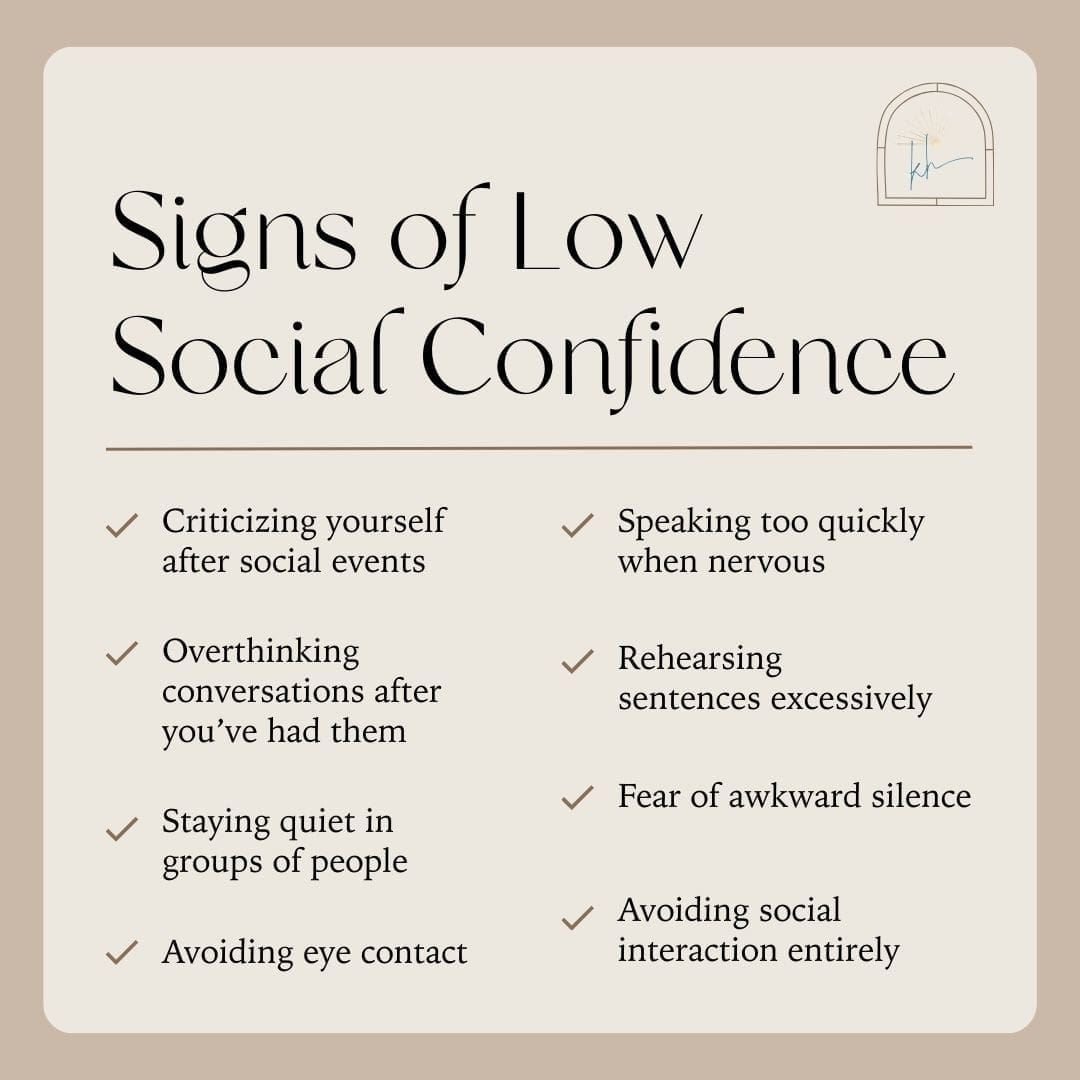
Signs of Low Social Confidence
Some signs of low social confidence include:
- Criticizing yourself after social events
- Overthinking conversations after you’ve had them
- Staying quiet in groups of people
- Avoiding eye contact
- Speaking too quickly when nervous
- Rehearsing sentences excessively
- Fear of awkward silence
- Avoiding social interaction entirely
- Fear of awkward silence.
Pay attention to these patterns without judgment. Awareness is what creates space for change.
Is Confidence a Social Skill?
Yes, confidence is a social skill! Some people will see it as something that comes naturally, but for most people, it’s definitely something that needs to be developed. You build it through repetition and exposure, not just waiting until you feel ready.
You grow confident by acting until your confidence arrives. (Fake it ‘til ya make it!) However, social confidence also depends on your individual communication skills and emotional regulation. If you can’t calm your body, your words will automatically reflect tension. If you never practice speaking, you won’t trust your voice.
In Ep. 56 – How to Overcome Challenges, Re-Build Your Life and Thrive, Debi Borger shares her sober journey. More specifically, she reflects on how she learned to navigate social settings without alcohol. Her inspiring story shows that confidence grows from structured support and consistent action, as long as you keep showing up—even imperfectly.
If this is something you’re currently managing, I have the perfect episode for you. Listen to Ep. 113 – Why My Life is Better Without Alcohol. In this solo episode, I explore every detail of how I re-evaluated the role drinking played in my life. Trust me, I’ve been there, and I would love to support you through your own journey through the process.
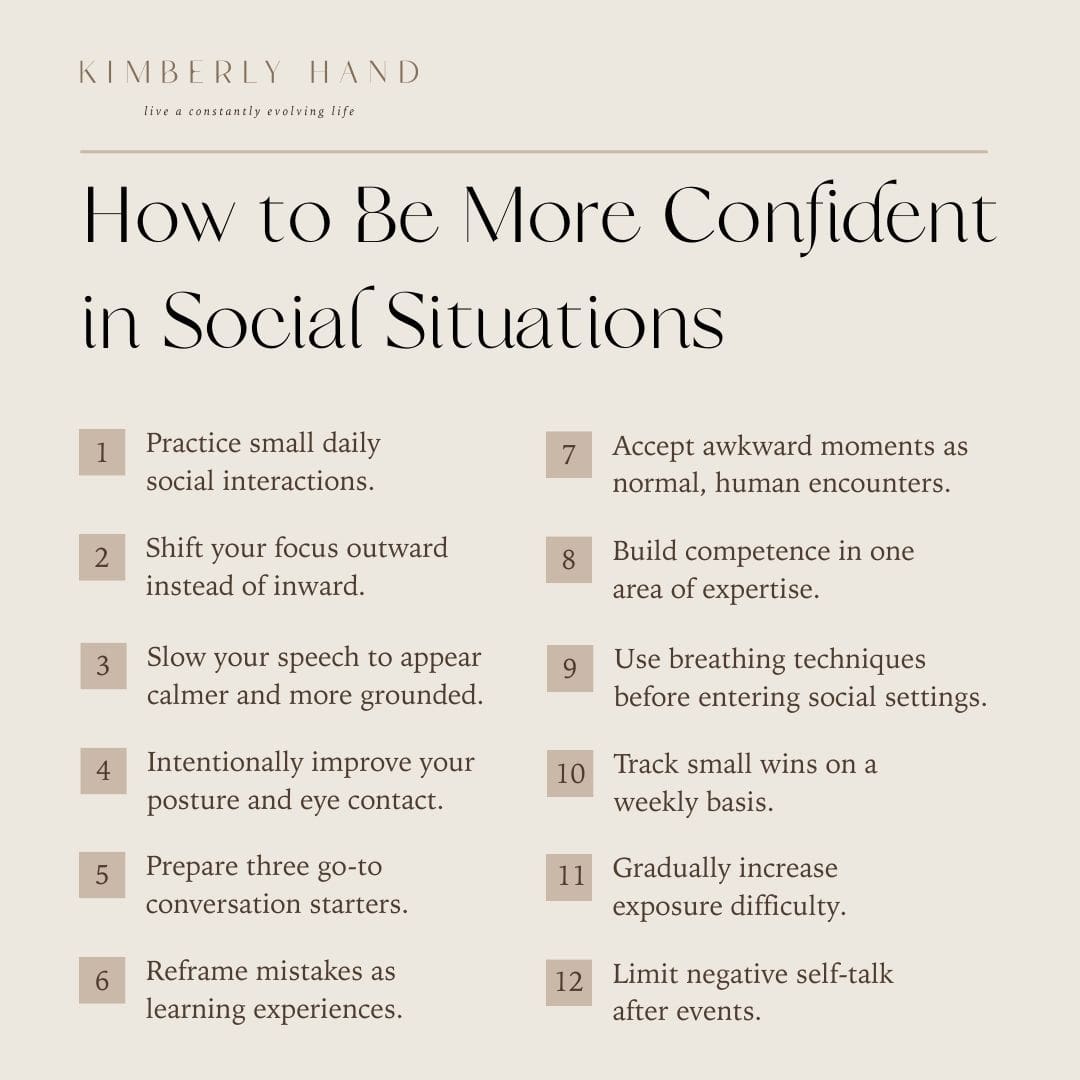
How to Be More Confident in Social Situations
Practice small daily social interactions.
Start small… Greet your barista, make conversation with a coworker, or smile at a neighbor. These moments help improve your social skills without too much overwhelm. Remember: small wins build momentum! It’s true that repetition lowers the emotional charge around interaction. The more you engage with people on a regular basis, the less threatening it feels.
Shift your focus outward instead of inward.
When anxiety rises, it’s only normal to want to turn inward. You start to monitor your tone, your body language, and your own physical or mental reactions. Ultimately, this is what fuels that pesky self-consciousness—and shifting your focus outward rather than inward can help tremendously.
Pay attention to the person you’re speaking to. Listen fully, ask thoughtful questions, and engage, because curiosity reduces pressure. When you focus on understanding rather than impressing or replying, conversations begin to feel lighter. People feel seen, and you feel less individually observed.
Slow your speech to appear calmer and more grounded.
Anxiety speeds up your words. So, make an effort to slow them down. Pause between sentences, breathe before responding, and take a moment to think about what you want to say. Calm, paced speaking makes you appear confident in social situations. When you slow down, others lean in. You signal steadiness, even if you feel nervous inside.
Intentionally improve your posture and eye contact.
When you’re in social situations, stand tall but relaxed, and keep your shoulders soft. Try to make natural eye contact while listening, because it tends to build trust quickly. Fun fact: it also signals to your brain that you’re safe!
Your body often leads your mind. So, when you have a strong posture, it can actually reduce social anxiety and help your body feel calm.
Prepare three go-to conversation starters.
Preparation in any situation reduces stress. Choose three simple openers from the list below and keep them flexible. This helps to remove fear of blank, awkward moments. Because when your brain has a starting point, it relaxes. Plus, this also allows you to remain present, respond naturally, and let the conversation flow rather than forcing it.
Reframe mistakes as learning experiences.
After social events, resist harsh self-talk and reflect instead. What worked well? What would you tweak next time? After all, protecting your mental health matters, and growth requires compassion. Each interaction teaches you something, so use it as data, not as evidence against yourself.
Accept awkward moments as normal, human encounters.
Everyone experiences awkward pauses, even if they’re experienced communicators. Confident people don’t avoid them; they just move through them. If something feels off or the conversation slows, just smile and continue. Awkward doesn’t equal failure, and social events are rarely flawless. People remember warmth far more than they remember perfection.
Build competence in one area of expertise.
Confidence grows when you feel competent. This is why you should work on developing one area of expertise at a time. Learn about fitness, business, parenting, or creativity so that when the conversation turns there, you can feel anchored. As the saying goes, mastery in one space builds courage in others.
Use breathing techniques before entering social settings.
Before you walk in, take a small moment to pause and breathe. Inhale slowly, and exhale longer than you inhale. This calms your nervous system automatically, and a regulated body supports steady conversation. Even a short thirty seconds of intentional breathing can lower tension and help steady your voice.
Track small wins on a weekly basis.
Make the time to sit down weekly and write down your progress. Did you hold eye contact longer? Speak up in a meeting? Stay at a gathering longer than fifteen minutes? Tracking your growth can greatly reinforce building your confidence. Progress feels far more real when you can see it.
Gradually increase exposure difficulty.
Once small interactions begin to feel easier, stretch slightly. You can attend a larger event, join a new group, or volunteer to share an idea publicly. Growth happens at the edge of discomfort. Just remember to push gently, not aggressively. Real confidence builds through steady expansion.
Limit negative self-talk after events.
Social anxiety can hugely distort your memory. Sometimes, you may replay one awkward moment far more than you focus on the ten good ones. Or, as we all do, you can begin to overcriticize yourself for moments that truly weren’t bad! Take the chance to challenge that narrative, replacing criticism with balanced reflection. Speak to yourself the way you’d encourage a friend.
Confident Conversation Starters for Any Situation
- So, how do you know the host?
- How’s your week been?
- What’s been keeping you busy lately?
- Have you read or watched anything interesting lately?
- What brought you to this event?
- Do you live in the area?
- Is this your first time here?
- How did you get into your field of work?
- Do you have any hobbies outside of work?
So many people feel confident privately but anxious in social settings… This isn’t a flaw; it’s an authentically human reaction.
Yes, building social confidence takes intention, but it also takes encouragement. You don’t have to figure it all out alone. For more ways to boost your confidence, read this post, “What Is a Personal Mantra and How to Find Yours,” and “How to Learn to Dance.” If this conversation resonated with you, I invite you to listen to The Cinnamon Effect, where we continue exploring confidence, growth, wellness, identity, and showing up fully in your life.
And if you’d like to create a simple daily practice to support your mental health while building your confidence, the Gratitude Journal is a powerful place to begin. Writing down small wins, reflections, and moments of courage helps retrain your mind to see progress instead of flaws.
Remember: confidence is something that grows through repetition, awareness, and action. Keep showing up. Keep practicing. You are so much more capable than you think. You’ve got this!


