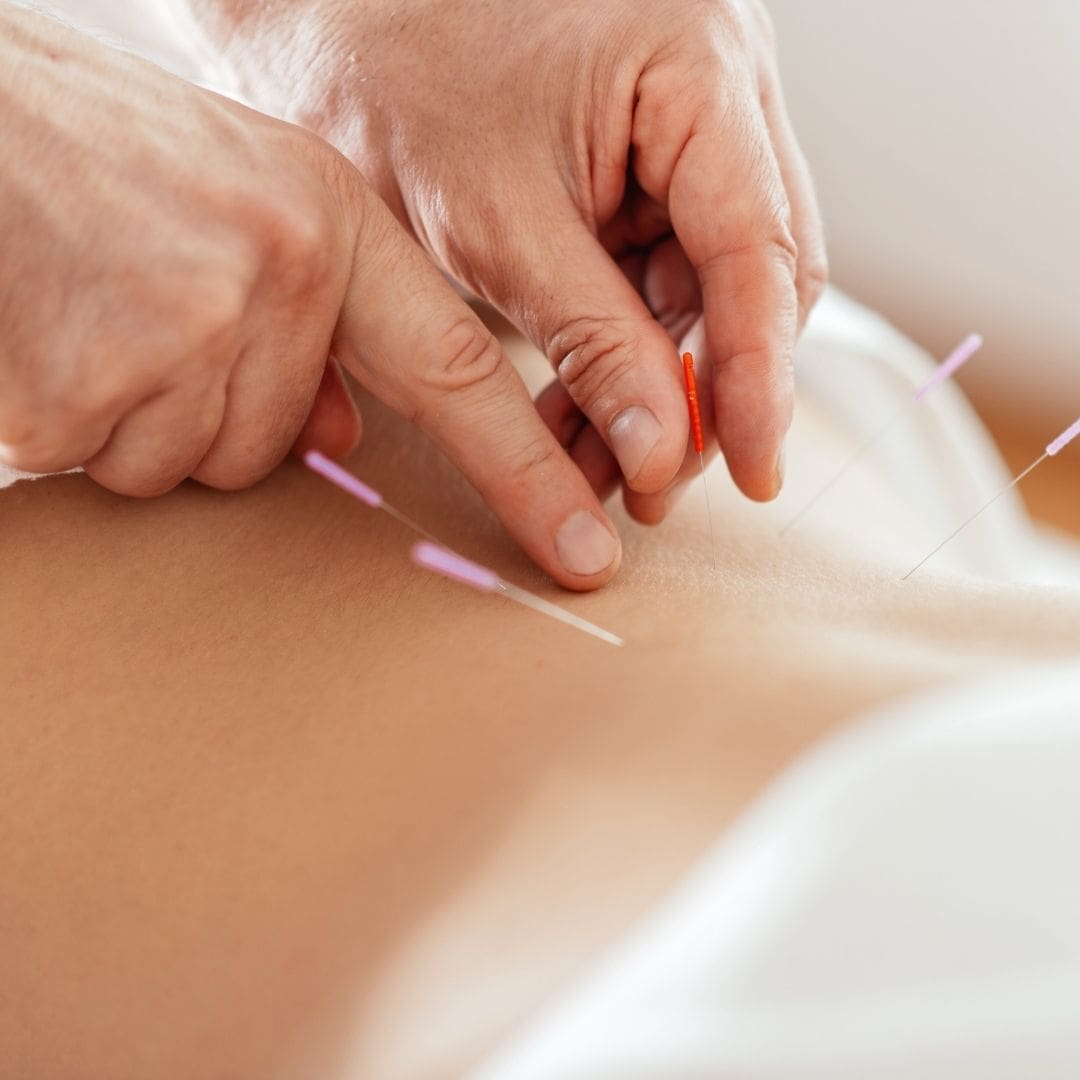
It’s easy to get confused between dry needling and acupuncture. And if you’ve ever confused the two, assuming they were the same thing, you’re not alone! While both treatments do involve needles, they serve totally different purposes, target different systems, and follow different philosophies.
That means they aren’t interchangeable, even though people sometimes talk about them as if they are. Understanding the benefits, safety, differences, and what to expect makes it much easier to decide which one might better suit your needs.
In this post, we’re going to chat about the differences between dry needling and acupuncture. This way, you can feel informed and confident about your options!
What Is the Difference Between Dry Needling and Acupuncture?
Essentially, the key differences between dry needling and acupuncture come down to their purpose and philosophy. On one hand, dry needling targets trigger points in muscles to reduce pain and improve mobility. On the other hand, acupuncture is based on traditional Chinese medicine and focuses on balancing the flow of energy throughout the body.
Both treatments use safe, sterile needles, but they approach healing in entirely different ways. Dry needling is typically used for musculoskeletal issues and sports injury rehabilitation. In contrast, acupuncture can support broader wellness goals alongside pain relief.
The effectiveness of each treatment ultimately depends on the practitioner’s skill, the patient’s condition, and the consistency of treatment. That means results can vary, which is completely normal in any therapeutic setting. Considering personal goals and treatment preferences is crucial before starting either method to make sure it’s actually suitable.
If you’re recovering from a sports injury or dealing with tight trigger points, dry needling treatments might feel like the right option. But if you’re seeking holistic care that supports overall well-being, acupuncture could be worth exploring! I actually discussed acupuncture in my episode, “Facial Acupuncture, Buccal Massage and More: Holistic Tips for Natural Beauty with Kimberly Hand.”
If you’re interested in holistic growth, personal transformation, and healing, my podcast, The Cinnamon Effect, is exactly where you need to be!
Is There a Difference Between Acupuncture and Dry Needling?
Of course! There’s absolutely a difference between acupuncture and dry needling.
At first glance, they look almost identical… tiny needles, strategic placement, and a practitioner who knows exactly what to do. But once you look a little closer, the philosophy behind each one looks pretty different. One comes from thousands of years of traditional medicine, while the other developed much more recently with modern physical therapy.
Both can be incredibly beneficial depending on what your mind, body, and soul need. The key is understanding the purpose of each practice and how it may support you overall.
Let’s walk through it together:
What Is Acupuncture? The Ins and Outs
Acupuncture is a Traditional Chinese Medicine (TCM) healing practice that involves inserting thin, sterile needles to balance energy flow. It’s one of the oldest healing practices in the world, dating back 3,000–5,000 years! Practitioners originally believed that the body has an energy system—often called Qi (pronounced chee)—that flows through pathways known as meridians. And that still holds true today.
When that energy flow becomes blocked or imbalanced, it can show up in many different ways… pain, fatigue, digestive issues, stress, or just simply feeling “off.” Placing thin needles into specific points on the body helps restore balance and stimulate the nervous system.
While that explanation may sound a little magical at first, many people experience a profound sense of calm afterwards. There’s a reason it’s remained such an essential staple in holistic care for all these years!
It’s less about fixing something and more about resetting. It encourages the body to slow down and regulate itself again.
Hear me and my beautiful guest, Asha Walker, discuss Chinese Medicine in my episode, “Creating a Travel-Proof Routine.”
How Does Acupuncture Work?
From a traditional perspective, acupuncture stimulates the body’s natural energy pathways to restore balance and a sense of alignment. From a modern scientific perspective, on the other hand, researchers believe acupuncture may stimulate nerves, muscles, and connective tissues.
That stimulation then increases circulation, triggering the body’s natural pain-relieving chemicals. In many ways, both the ancient and modern explanations meet in the middle. The body receives a signal… and the mind responds.
I know what you may be thinking… any treatment involving needles must hurt. However, many find that once the practitioner inserts the needle, they feel minor tingling or numbness. Rather than a signal that something is wrong, it’s a simple way to know the treatment is working.
What Can Acupuncture Do?
One of the reasons acupuncture has remained so popular over the thousands of years it’s been around is its incredible versatility. People often seek acupuncture for:
- Chronic pain
- Stress and anxiety
- Headaches or migraines
- Hormonal balance
- Digestive concerns
- Sleep challenges
- Overall wellness support
In holistic health, acupuncture is often seen as a way to help the body return to equilibrium. It’s not a dramatic overnight transformation, but a steady, supportive tool that encourages regulation. Because sometimes, the biggest change people notice isn’t simple physical relief. It’s the subtle feeling that their body is finally beginning to work with them again.
If you’re interested in learning more about combining holistic care with modern medicine, I have just the episode. Listen to “Blending Eastern and Western Wellness with Harmony Brown: Acupuncture, Functional Medicine, and Activating Joy in Your Life.”
How Long Does Acupuncture Take?
Acupuncture sessions generally last anywhere from 30 to 60 minutes. The practitioner will first discuss your health history, symptoms, and overall wellness goals. This part feels more like a calm, thoughtful conversation rather than a traditional medical consultation.
Once the needles are in place, many people rest quietly and calmly for about 20–30 minutes. This is when the treatment begins to take effect! And that quiet moment of relaxation may be one of the most underrated benefits.
In a world that rarely allows us to pause… acupuncture creates space for the nervous system to relax and reset.
Is Acupuncture Safe?
When performed by a licensed, trained practitioner, acupuncture is considered very safe and effective. The needles are extremely thin, much thinner than those used in traditional injections, and they’re sterile and single-use.
Aside from minor tingling or pressure, most people even report feeling little to no discomfort during treatment. If you receive this treatment yourself, you may be surprised by just how subtle the sensation is!
Of course, it’s essential to work with a practitioner who follows proper training and protocols. In experienced hands, acupuncture has a long track record of being safe, effective, and suitable for holistic health.
What Is Dry Needling? The Ins and Outs
Dry needling is a minimally invasive, evidence-based technique that targets muscle trigger points to relieve pain and improve mobility. While it may look similar, it’s actually much different from acupuncture!
Dry needle treatments were actually developed in the 1940s within modern Western Medicine, primarily used by physical therapists. Rather than focusing on energy pathways, it targets all of those tight, knotted areas that can cause pain over time. So if you’ve had a stubborn muscle knot that just wouldn’t release… that’s exactly the kind of spot dry needling can address.
The goal truly is simple: dry needling releases muscle tension, reducing pain and helping restore normal movement.
While acupuncture takes a whole-body approach, dry needling focuses on musculoskeletal pain and injury recovery.
How Does Dry Needling Work?
Dry needling works by inserting thin needles directly into trigger points within the muscle. In medical terms, a practitioner will insert that needle into the myofascial trigger point, which is that stressed, painful band of muscle.
When they do this, it prompts the muscle to twitch or contract briefly. The response helps release tension in muscle fibers, encourages blood flow, and stimulates the body’s natural healing response.
In simpler terms… it works with your body, helping the muscles to finally relax. Once that tension is released, people report being able to walk, stretch, and move better. It’s a holistic approach to feel like yourself again.
What Does Dry Needling Do?
Physical therapists often recommend dry needling because of how seamless the process is. In addition, it’s an effective, quick way to reduce muscle tension and improve range of motion.
Some of the conditions practitioners may address include:
- Muscle knots
- Sports injuries
- Neck and back pain
- Shoulder tension
- Limited range of motion
- Chronic muscle tightness
Athletes and those recovering from injuries often find dry needling to be extremely helpful as part of a broader plan and approach. Rather than focusing on whole-body balance like acupuncture, the emphasis lies in relieving localized muscle dysfunction.
How Long Does Dry Needling Take?
Dry needling sessions generally only take 10–60 minutes. So much quicker than traditional acupuncture sessions! However, it depends on the muscles being treated and each person’s unique circumstances.
Because the technique is a bit more targeted, practitioners will often combine dry needling with other holistic practices. This may include stretching, mobility exercises, or additional gentle physical therapy treatments.
Is Dry Needling Safe?
When you receive dry needling from a trained, licensed professional, the treatment is considered safe and effective. Like acupuncture, the needles practitioners use are extremely thin and sterile. You may feel mild soreness or slight bruising, but that sensation is similar to a deep-tissue massage or a workout.
And those side effects, for the most part, don’t last very long! Most people find they gently reside within 24–48 hours, especially when you accompany healing with heating pads or warm baths.
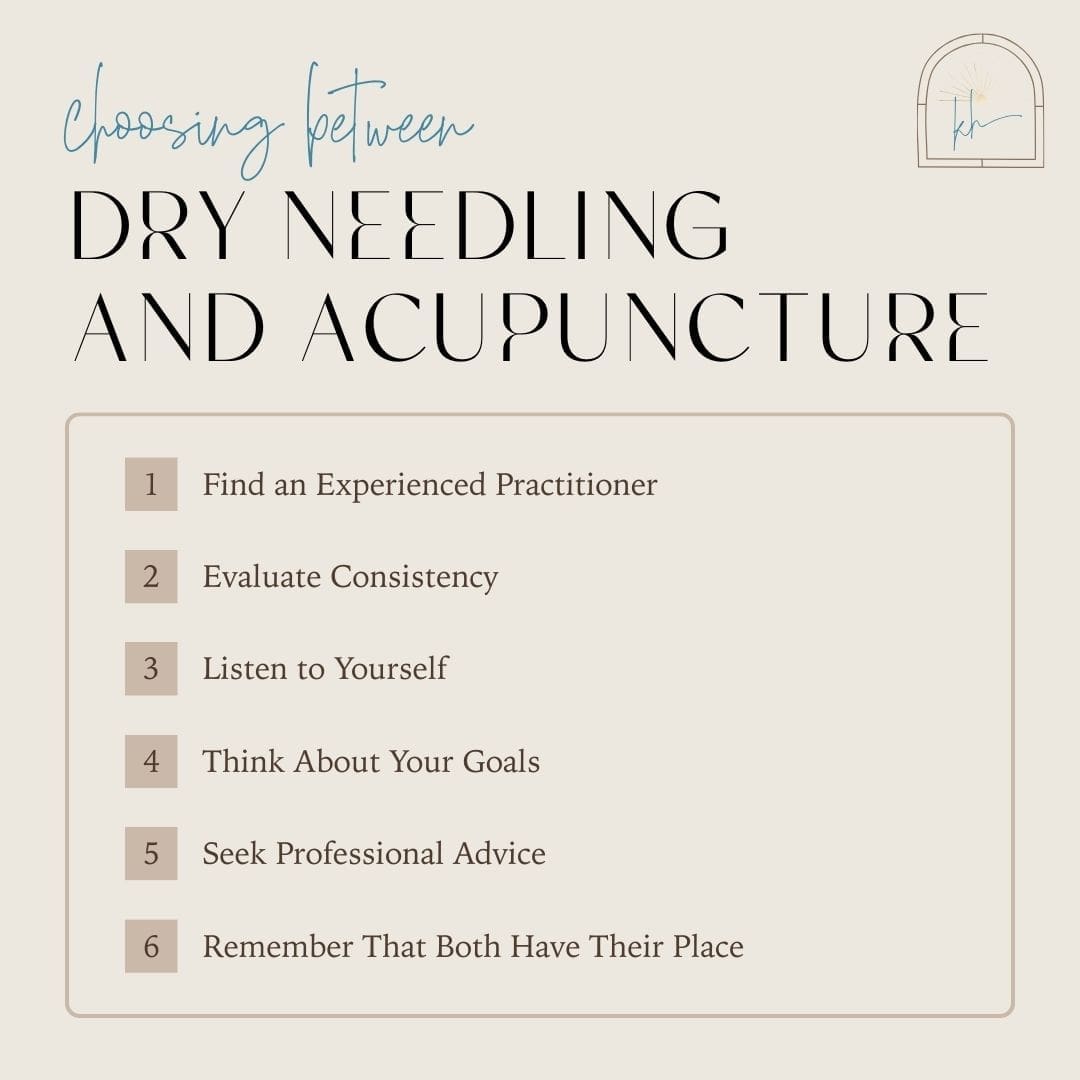
Choosing Between Dry Needling and Acupuncture
Find an Experienced Practitioner
The results you get will always depend on your practitioner’s skill and experience. Physical therapists and clinicians trained in dry needling specialize in musculoskeletal issues, while practitioners of acupuncture work within the principles of traditional Chinese medicine and energy-based care.
No matter whether you take the route of dry needling or acupuncture, finding a qualified, experienced practitioner is the first step to a beautifully rejuvenating experience.
Evaluate Consistency
Both therapies are cumulative, meaning they work best with multiple sessions. As you build on top of the previous benefits, each treatment encourages a physiological change that continuously strengthens the body.
Dry needling is commonly seen as part of physical therapy programs, while acupuncture is used regularly for pain management and overall wellness. Consistency will help greatly to maximize the benefits.
Listen to Yourself
Don’t forget that your comfort matters… Some people will prefer one approach over the other based on how they respond to treatment. Honestly, there’s no wrong choice; it’s about what feels right and supports your goals.
Think About Your Goals
If you’re dealing with muscle tension or recovering from a sports injury, dry needling may be a good fit. This approach is all about reducing pain and improving mobility. However, if you’re looking for a more holistic approach that supports overall wellness and energy balance, acupuncture might align better with your needs. Don’t be afraid to do your own research!
Seek Professional Advice
A consultation with a physical therapist, licensed acupuncturist, or healthcare professional can clarify which treatment best suits your individual needs. They can assess your symptoms and recommend an appropriate plan, so you know which is best.
Remember That Both Have Their Place
Dry needling and acupuncture don’t exist in isolation. They can work alongside physical therapy, exercise, and other treatments to support recovery and overall health. Reducing pain and improving function long-term often involves a combination of strategies.
Dry needling and acupuncture can support recovery, pain relief, and overall well-being in complementary ways.
Ultimately, the choice between dry needling and acupuncture depends on your individual needs. If you are dealing with muscular tension/pain or a sports injury, dry needling might be the best method. However, if you’re seeking broader wellness and energy-based care, acupuncture could be worth exploring. Both approaches offer potential benefits when performed by qualified professionals.
Understanding the differences between the two therapies empowers you to make informed decisions. Whether you choose one or both, the goal is the same: supporting your health and well-being in a way that feels right for you. I know that wellness is a journey, and every single step, no matter how small, makes a difference. Paired with The Cinnamon Effect Journal and The Cinnamon Effect Podcast, you have everything you need to start your journey today!
Visit the blog for more posts like:


