Life can feel busy, repetitive, and super overwhelming sometimes. Days blur together, routines feel automatic, and joy starts feeling distant. A lot of people assume joy will arrive after the next milestone or major life change. But more often, it slips quietly through the cracks of everyday life. And that’s totally normal!
Lately, I’ve realized that finding joy in life is usually less about changing everything. It’s more about how you experience your daily moments. A peaceful morning, meaningful conversation, or a small moment of gratitude can completely shift your perspective. When you start paying attention, joy in your life begins to feel much more accessible.
That idea came through beautifully in “Ep. 124 – Dance As A Wellness Hack And Parenting Kids By Showing Up For Yourself with Peter Robbins.” What started as a conversation about ballroom dancing became a deeper reflection on movement, growth, and rediscovering joy through the process itself.
In honor of that, in this post, I’m sharing a practical and sustainable guide to help you find joy on a daily basis again. Let’s “grow” on this journey together!
Finding Joy in Life Through Simple Habits
Finding joy in life isn’t just a feel-good idea. It directly impacts mental health, relationships, and overall quality of life. Even positive circumstances can feel flat when joy is missing. Yes, you can still have success and stability while experiencing emotional disconnection.
Joy also changes how you experience everyday life. It affects your energy, mindset, emotional resilience, and how you take in the world. Small moments begin to feel more meaningful when you slow down enough to notice them. That creates more positive emotions naturally throughout the day.
In “Ep. 104 – Celebrating 2 Years of The Cinnamon Effect,” I reflected on entering my “yes” era. I realized joy often grows through small choices, not dramatic reinventions. Saying yes to experiences, creativity, and connection seriously changed my daily life more than I expected. Those shifts created more alignment and fulfillment over time.
And the beautiful thing about joy is that it grows naturally when your actions reflect your values. You don’t have to chase it constantly. Simple, small, consistent shifts create lasting emotional change. Over time, joy becomes part of your everyday life instead of something distant.
What Is Finding Joy About?
Finding joy isn’t actually about being happy all the time. Life doesn’t work like that. Think of it this way: happiness usually comes and goes depending on what’s happening around you. Joy, on the other hand, feels… different. It can still exist in hard seasons, which is what makes it feel more meaningful. And most of the time, joy is actually pretty quiet.
Joy is the calm feeling after a long day. A conversation that makes you feel understood. Sitting outside for five minutes and realizing your nervous system has finally relaxed a little. Sure, they’re all small things, but they stay with you.
This topic came up in “Ep. 99 – Upgrade Your Emotional Well-Being with Karen Blaine.” We spoke about mindfulness, emotional resilience, and how emotional awareness changes the way you experience life. When you stop disconnecting from yourself all the time, joy becomes easier to notice.
And I think that’s the part people miss. We get so focused on being productive, getting through the week, and ticking things off. It’s then that we stop paying attention to what actually makes us feel good. A lot of the time, joy comes back when you reconnect with the simple things that make you feel like yourself again.
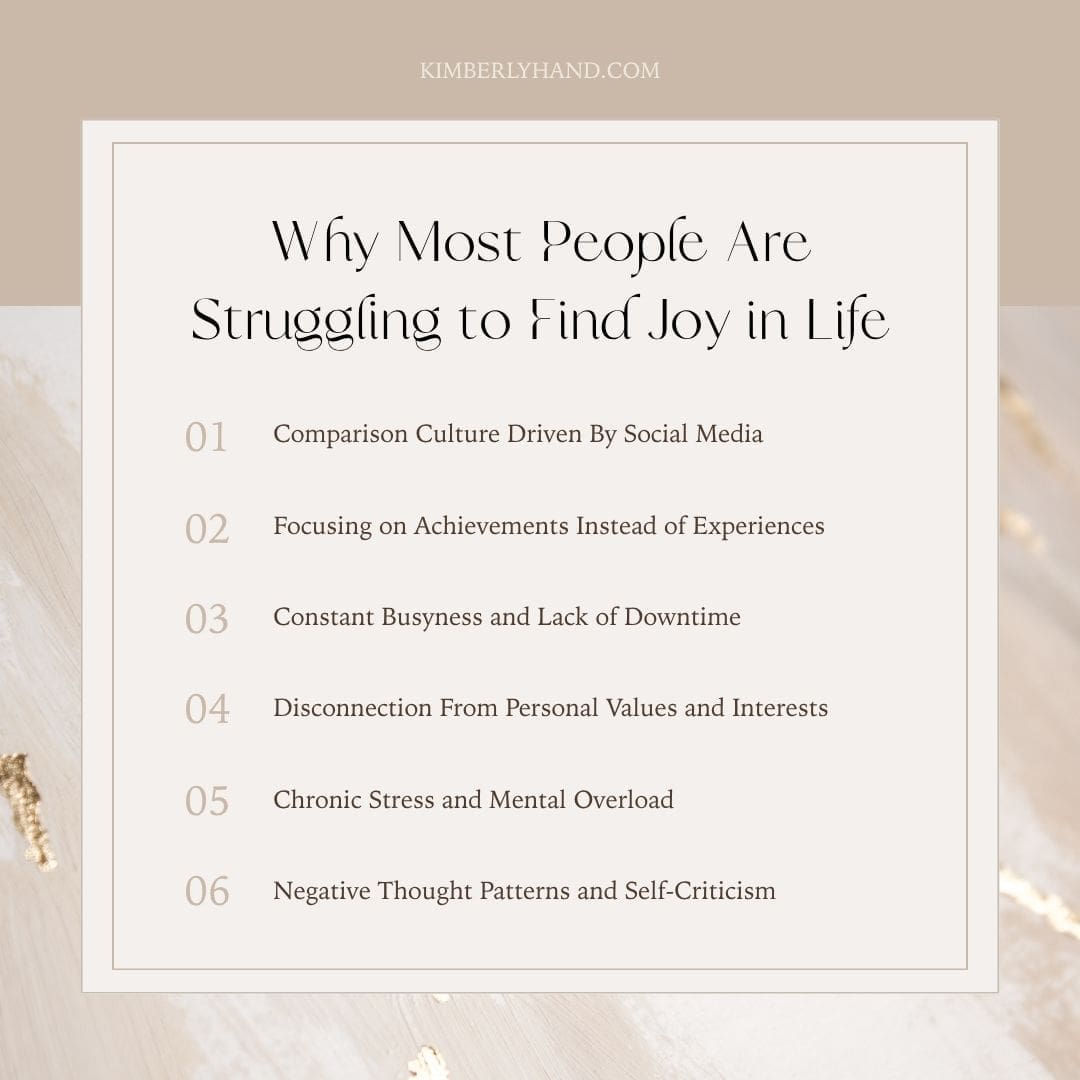
Why Most People Are Struggling to Find Joy in Life
Comparison Culture Driven by Social Media
Social media definitely changes how people experience their own lives. You start comparing your reality to carefully curated moments online. Over time, that comparison creates dissatisfaction and emotional pressure. It becomes harder to appreciate your own experiences fully because of what you see online.
In “Ep. 94 – Breaking Generational Trauma and Negative Thought Patterns,” we discussed how outside influences shape self-worth and emotional patterns. Social media often fuels unrealistic expectations and instant gratification. That cycle slowly disconnects people from true joy.
The more time you spend focusing outward, the harder it becomes to hear yourself clearly. Joy grows through self-awareness, not comparison. Paying attention to your own values changes everything.
Focusing on Achievements Instead of Experiences
A lot of people believe joy will come after the next achievement. They think happiness exists somewhere in the future version of life, after a certain event, goal, or festive period. But constantly chasing milestones often just leaves you exhausted. And when you’re living like this, you never fully arrive in the present moment.
I’ve experienced this personally during different seasons of growth. It’s easy to become so focused on goals that you forget to enjoy your actual life. Sometimes the most meaningful experiences happen during ordinary moments. And ultimately, those moments deserve your full attention too.
In “Ep. 52 – How To Create Main Character Energy,” I talked about the importance of embracing life more fully instead of waiting for permission. Joy usually appears when you stop postponing your own happiness and, instead, make it a priority.
Constant Busyness and Lack of Downtime
Many people move through the day without slowing down mentally. There’s always another task, message, responsibility, or distraction competing for attention. Even downtime often involves multitasking or scrolling (yes, I’m talking about your nightly TikTok doomscroll!). That constant stimulation makes it difficult to feel grounded and emotionally present.
Joy needs presence to grow. When your mind constantly races ahead, small moments become easy to miss. A peaceful walk, meaningful conversation, or a quiet morning starts to feel insignificant. Slowing down creates more space for feeling joyful naturally.
I notice this in my own daily routine as well. On days when I prioritize movement, sunlight, and quiet moments, I feel completely different. My nervous system relaxes, and life feels more purposeful again. Those small habits support joy more than people realize.
Disconnection From Personal Values and Interests
Sometimes people slowly disconnect from the things that once made them feel alive. Responsibilities replace creativity, curiosity, movement, and play. Over time, life starts feeling emotionally repetitive. That disconnect creates emptiness, even during “successful” moments.
This is why revisiting old interests can feel surprisingly healing. It reconnects you with the intentional parts of yourself again. This is something we explored in “Ep. 116 – Cultivating Creativity with Choreographer Maria Konrad.” We talked about how creativity supports personal growth and emotional well-being. After all, creative expression helps people feel more connected and alive.
Joy often begins to return through the things that naturally energize you. That could be movement, music, creativity, writing, or time outdoors. The important thing is recognizing what genuinely supports you emotionally.
Chronic Stress and Mental Overload
Many women are carrying a constant mental and emotional overload. They’re managing work, schedules, relationships, the mental load of motherhood, and responsibilities every single day. And chronic stress keeps the nervous system in survival mode.
This is why rest matters so much. Slowing down is not laziness or weakness. Your body needs moments of calm to experience positive emotions fully. Without that balance, life can start feeling emotionally flat.
In “Ep. 110 – Navigating Wellness: Insights from the Eudemonia Summit,” I talk about how wellness isn’t just about physical health. Emotional well-being and nervous system regulation matter deeply, too. Joy becomes much harder to access when your body constantly feels stressed and tired.
Negative Thought Patterns and Self-Criticism
Negative self-talk quietly drains joy from everyday life. Many people are far harder on themselves than they realize. They minimize achievements, focus on flaws, and constantly criticize themselves internally. As time goes by, that mindset becomes emotionally exhausting.
Self-criticism also makes it difficult to fully enjoy positive experiences. Even good moments become filtered through pressure and perfectionism. Learning to speak to yourself more compassionately changes your emotional experience significantly. It creates more space for peace and joy.
That’s why practices like mindfulness, affirmations, and emotional awareness matter. They interrupt negative thought patterns over time. With this, emotional well-being grows through consistency and self-awareness.
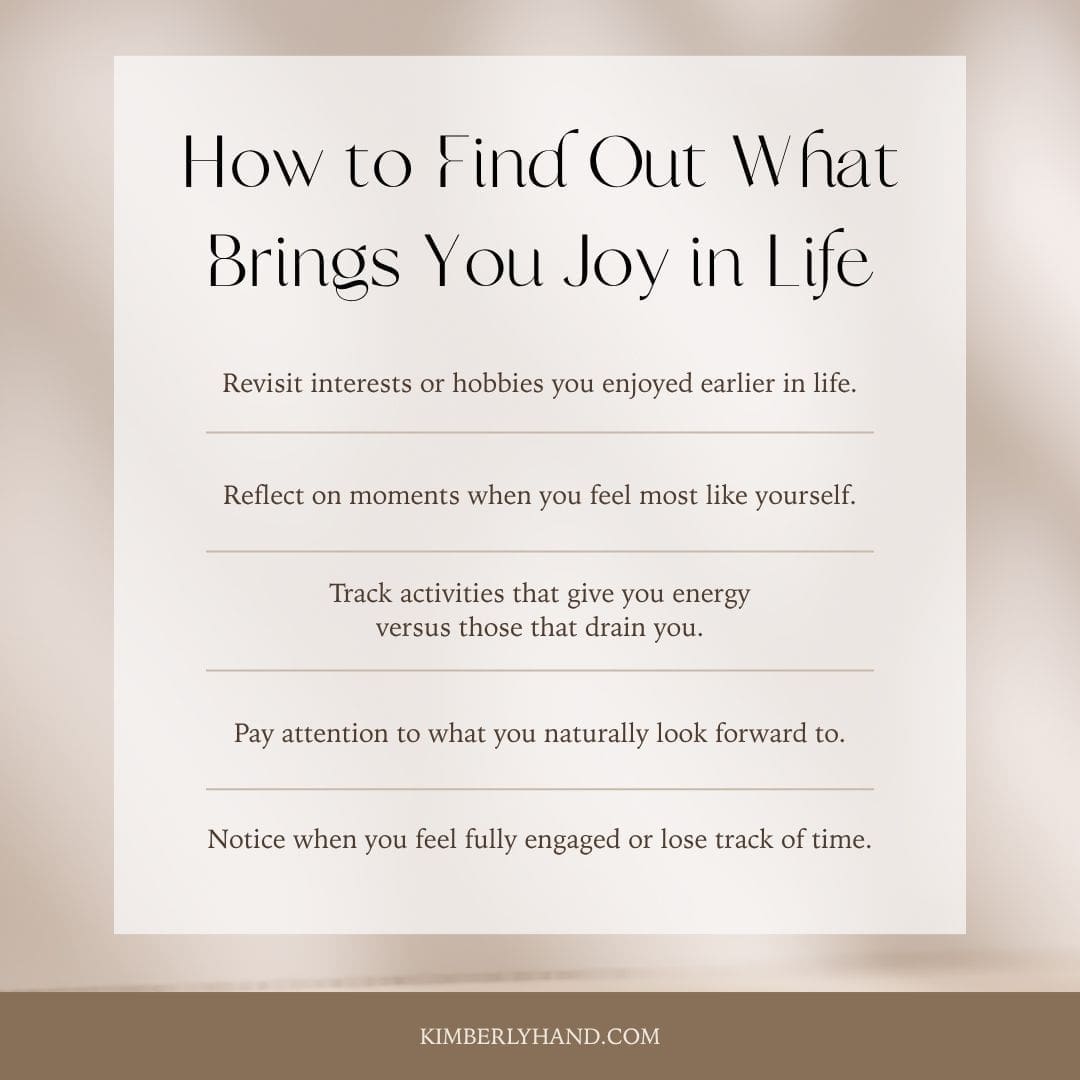
How to Find Out What Brings You Joy in Life
Revisit interests or hobbies you enjoyed earlier in life.
Many people abandon hobbies as life becomes busier and more demanding. Over time, responsibilities slowly replace creativity and fun. To combat this, revisiting old interests can reconnect you with yourself again. It reminds you who you were before life became so heavy.
I spoke about this in “Ep. 106 – I’m a Cheerleader Again?! Life Update.” For me, returning to dance brought back my confidence, excitement, and nostalgia. It reminded me that joy still belongs in adulthood, too. But sometimes, we simply stop making space for it.
You don’t ever need to justify the things that make you feel alive. Joy itself is reason enough. Allowing yourself to reconnect with old passions can feel incredibly healing to your current self and your inner child.
Reflect on moments when you feel most like yourself.
Think about moments where you feel calm, authentic, and emotionally connected. Those experiences often reveal your core values and needs. Joy grows when your life reflects those things consistently, as alignment creates emotional fulfillment over time.
This also connects beautifully with how to show up for yourself. Self-awareness helps you build routines that genuinely support your wellbeing. It becomes easier to protect your energy and priorities, ultimately creating more space for joy in your life. Because, if nobody’s told you yet: you deserve a life that feels aligned emotionally, not just productive externally.
Track activities that give you energy versus those that drain you.
One of the easiest ways to find joy is through observation. Start noticing how activities make you feel afterward. Some experiences leave you feeling energized and inspired. Others leave you emotionally drained or disconnected.
Paying attention to those patterns gives you valuable information. It helps you understand what naturally supports your wellbeing. Joy often leaves clues throughout your day already—you simply need to notice them more intentionally.
Pay attention to what you naturally look forward to.
Joy often appears through anticipation before the experience itself. Notice what you naturally feel excited about during the week. Maybe it’s your morning coffee, an evening walk, or dinner with friends. Those moments matter more than you think.
Small moments create joy on a daily basis. And here’s the best part: they don’t need to be extravagant to feel meaningful! Paying attention helps those experiences feel richer emotionally. Presence strengthens positive emotions naturally.
Notice when you feel fully engaged or lose track of time.
Moments of deep engagement usually point toward meaningful experiences. You stop checking the clock and become fully present. As a result, it often reveals what genuinely fulfills you emotionally.
For some people, this happens during movement or creativity. Others experience it while cooking, gardening, or spending time with loved ones. These moments create connection, presence, and emotional fulfillment.
How to Find Joy in Life
Create small moments to look forward to.
Not every good moment has to be life-changing. Sometimes it’s just your coffee in the morning before the house gets noisy, or finally getting a second to sit down with your The Cinnamon Effect Journal at the end of the day. Little routines like that give your day some shape and something to look forward to. And honestly, those tiny moments do more for your mood than some of the larger ones.
Reduce distractions and constant multitasking.
Too much noise can make you feel disconnected without even noticing. Think: constant notifications, multitasking, always listening to something. Your brain never really gets a break. And after a while, everything starts to feel mentally cluttered. Creating a bit of quiet helps more than people expect. Even a few minutes without input can reset your mood and your mental space.
Spend more time in calming environments.
Your surroundings really do affect your mood. Fresh air, sunlight, nature, quiet spaces—all of it helps your nervous system settle a little. And it doesn’t have to be anything dramatic either. Open a window. Sit outside for ten minutes. Light a candle at night. Small environmental shifts can change the feeling of a whole day.
Let go of perfectionism.
Perfectionism has a way of draining the enjoyment out of everything. Nothing feels finished because there’s always something that could be better. It’s exhausting after a while. But when you stop expecting yourself to do everything perfectly, life feels lighter. And there’s a lot more room for joy in that space.
Be more present during everyday moments.
A lot of the time, we move through the day without really being in it. Your body is doing one thing while your brain is already thinking about five others. However, slowing down a little changes the feeling of ordinary moments. Even standing outside for a minute or eating without your phone nearby can make you feel more grounded. Life feels better when you’re actually present for it.
Practice specific gratitude instead of general appreciation.
Generic gratitude can start feeling a bit automatic after a while. But when you stop and notice one specific moment, it lands differently. Maybe someone sent you a text right when you needed it, or you had a conversation that made you feel understood. Those little moments stay with you. And the more you notice them, the more naturally joy starts showing up in your day.
Focus on what feels meaningful.
A meaningful life usually looks quieter than people expect. It’s not always the impressive things that make you feel fulfilled. Most of the time, it’s connection, honesty, creativity, feeling calm, or having time for what matters to you. A lot of people spend years chasing things that look successful but don’t actually feel good internally. Joy tends to come back when your life feels more like your own.
Spend time with people who energize you.
The people around you affect your energy more than you think. Some people leave you feeling drained, while others make you feel calmer and more like yourself. Those relationships matter. Being around people you feel safe with changes the way life feels day to day.
Build routines that support the life you want.
Your routine truly does shape your emotional well-being. The little things you repeat every day slowly become the feeling of your life. That could be journaling, moving your body, slowing down in the mornings, or making time for creativity again. It doesn’t need to be perfect or aesthetic. It just needs to support the kind of life you actually want to feel. For inspiration, see our post, “Daily Wellness Routine Ideas.”
Finding joy in life is less about changing everything. It’s more about how you experience your daily moments…
Finding joy in life rarely comes from changing everything overnight. More often, it comes from paying attention differently. It’s about noticing what supports your well-being and making more space for it consistently. Small moments create a meaningful life.
Joy is not something reserved for perfect circumstances or future milestones. It exists within ordinary moments already happening around you right now. A deep breath, a valuable conversation, a morning routine, or a quiet walk create real moments of joy. You simply need to slow down enough to notice it.
Sometimes the real win is simply showing up, trying something new, and allowing yourself to enjoy the journey. If you’re looking for new ways to show up for yourself, tune into The Cinnamon Effect podcast or head to the website.


