
Have you ever sat down to do something simple—reply to a message, finish a task, respond to an email—and just… forget why you’re there? It’s called brain fog, and it’s incredibly frustrating. It’s not even that you can’t think; it just feels harder than it should. Like your brain’s a bit slow to catch up, or things aren’t clicking properly. You reread the same thing three times, lose your train of thought, or sit staring at your phone thinking, “What was I doing again?”
And it kind of creeps into everything. Not in a dramatic way… just enough to be annoying. You feel a bit off, a bit behind, maybe a bit scattered. And after a while, it can get in your head, too, because you know this isn’t normally how you are. So if that’s been you lately… yeah, you’re not the only one.
In this guide, I’m going to go through some simple ways to deal with brain fog. Nothing overwhelming, just practical things you can actually do, so you can start to feel a bit clearer and more like yourself again.

How to Deal With Brain Fog and Feel Like You Again
Brain fog is honestly way more common than people think… it just doesn’t always get called out for what it is.
It’s not just being tired or having a bit of an off day. Instead, it feels harder to… connect the dots. You tend to feel dazed, exhausted, or even a bit confused. And when that’s happening, everything else feels harder too. But here’s the good news: if you’re dealing with brain fog, it’s usually a result of something simple. You need to just start noticing what might be contributing to or causing it.
Maybe it’s due to poor sleep or a lack of attention to your health. Or maybe it’s unaddressed stress, unhealthy food choices, or a lack of self-care. Sometimes, it’s a mix of multiple factors—which is why it can feel slightly confusing. While there’s no immediate fix, there are ways to improve brain fog and feel better again. When you start fixing the basics—even if it’s only a little bit—you do start to notice a difference. It’s not instant, but it shifts.
If you’d like to know more about optimizing your health and addressing brain fog, check out “Ep. 24 – Optimize Your Health For A More Vibrant Life with Elizabeth Tringali – Part 2.” Elizabeth dives into gut health, functional medicine strategies, and biohacking rituals that can support mental clarity, especially for lingering issues like long COVID brain fog. You can also find Part 1 here.
What Is Brain Fog?
Brain fog is a term for a group of symptoms that impacts your thinking, memory, or concentration. You forget things, lose your train of thought halfway through something, can’t focus properly… or you just feel a bit off and can’t really explain it. And most of the time, there is something behind it. You just don’t always notice it straight away.
Sleep is often a direct cause. Stress, too! Especially the kind you ignore and just keep trying to push through. Food, water, routine… all the boring basics that are easy to let slip a bit. It doesn’t take much before things feel off, and your brain’s usually the first thing to show it.
Sure, there’s no magic fix, but there are changes you can make over time. And the exciting part? Once you start noticing what might be contributing, you have something to work with. You don’t have to fix everything at once. Even small changes can start to make a difference.
For even more advice, listen to my episode on simple non-toxic swaps that improve your environment and reduce toxic load. You’d be surprised at how much this can change how you feel!

What Causes Brain Fog?
There are quite a few reasons that you might experience brain fog. Most of the time, it’s not just one thing; it’s a combination of:
- Nutrient deficiencies
- Lack of sleep
- Chronic health conditions
- Poor diet
- Burnout
- Hormonal changes
- Anxiety
- Stress
- Dehydration
You might read through that list and think, “Okay… I’ve been experiencing a few of those things.” And that’s completely normal. The important thing is to gently start noticing patterns in your own routine and how your body responds.
For guidance on hormonal balance and supporting your circadian rhythm, listen to “Ep. 100 – Harnessing the Power of the Sun for Better Health with Jen Van Horn.” This episode offers actionable tips for stabilizing hormones, improving sleep, and optimizing energy levels.
What Does Brain Fog Feel Like?
Brain fog can feel slightly different for everyone, but there are some more common experiences that tend to show up. These can include:
- Mental fatigue
- Difficulty concentrating
- Slow thinking
- Forgetfulness
- Confusion
- Trouble finding the right words
- Disassociation
- General fatigue
- Drowsiness
- Lack of wellbeing
It’s kind of like that feeling where your brain just isn’t firing the way it usually does. You might forget simple tasks, reread the same sentence three times, or struggle to stay focused. And while it can be frustrating, recognizing these brain fog symptoms is the first step towards improving them!
Interestingly, infrared therapy and red light have been shown to support those experiencing these symptoms. For more on this, check out “Ep. 83 – How to Use an Infrared Sauna to Fight Depression, Support Women’s Health, and Achieve Radiant Skin.”
How Long Does Brain Fog Last?
This is one of the most common questions, and the answer really depends on what’s causing it. Sure, short-term brain fog—like after a poor night’s sleep or a stressful week—can clear up within a few days once you rest and reset your routine. On the other hand, if brain fog is linked to ongoing stress, burnout, or underlying health conditions, it can last longer.
That’s why consistency matters. When you start making small lifestyle changes, like improving sleep, nutrition, and stress management, you’ll usually notice gradual improvements over time. It’s not instant, but it is absolutely possible to feel clear again.
If you’re struggling with brain fog, I encourage you to listen to “Ep. 95 – Keeping Your Health and Fitness Philosophy Simple and Effective with Sarah Fisher.” Sarah and I discuss actionable ideas and exercise routines that support mental clarity and energy.
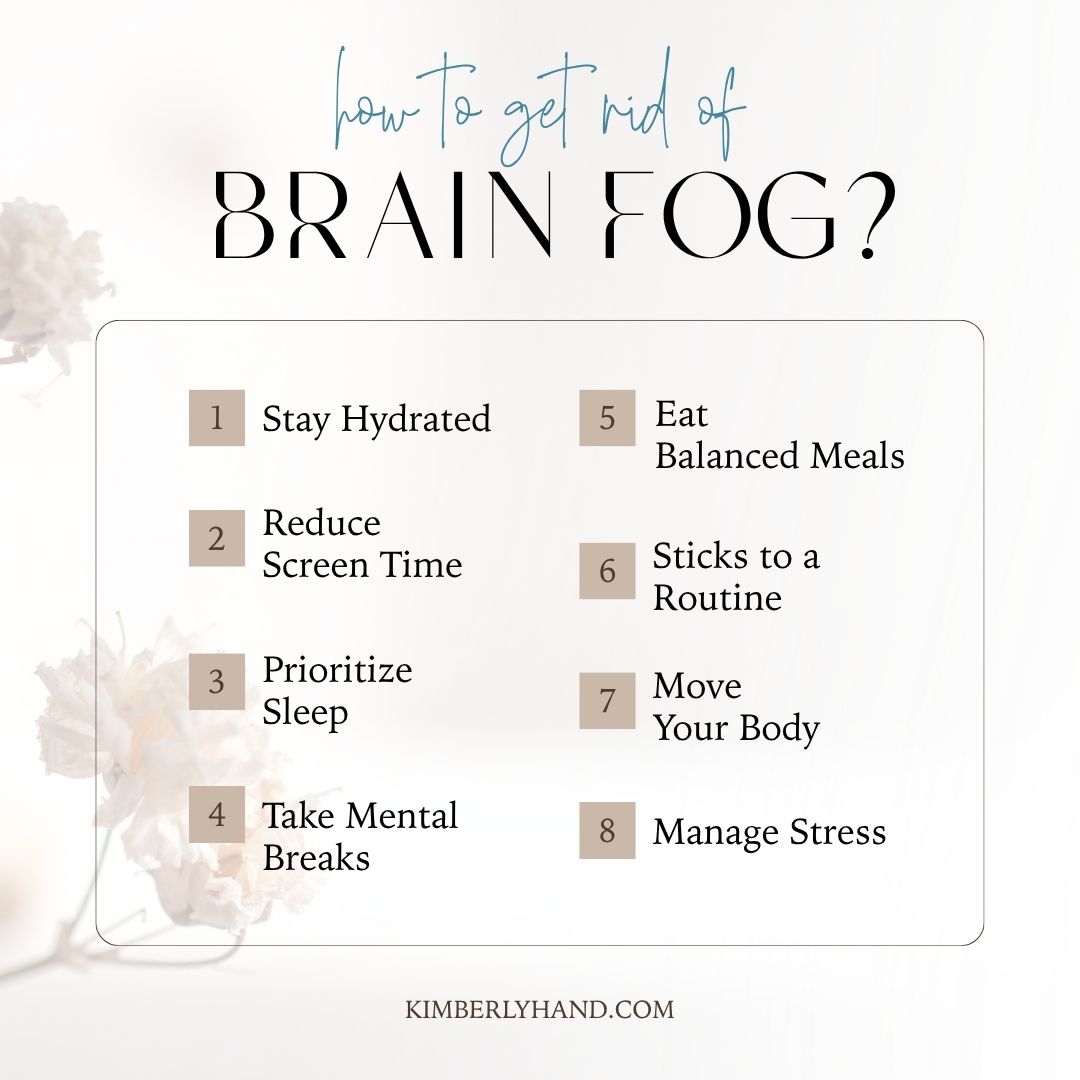
How to Get Rid of Brain Fog
Stay Hydrated
Even just mild dehydration can affect your cognition. And don’t worry, you don’t have to chug a few bottles of water all at once to fix this! You can combat dehydration by keeping water nearby all day and sipping regularly. However… don’t forget things like magnesium, electrolytes, and potassium. I actually talk all about this in my episode, “Harnessing the Power of the Sun for Better Health with Jen Van Horn.”
When you follow these tips, it won’t take long before you notice that your focus improves and your brain fog dissipates!
Reduce Screen Time
If you’ve been feeling mentally foggy, your screen habits might be playing a bigger role than you think. Constant exposure to screens, especially if you’re scrolling, multitasking, and jumping between pages, can overload your brain. It’s called cognitive overload!
The goal isn’t to cut screens out completely. Instead, it’s about being more intentional about how and when you use them. Take short breaks throughout the day, step outside for natural light, and even set small boundaries, like limiting screen time before bed. This is one of those changes you will truly notice the benefits of.
Prioritize Sleep
Did you know that sleep, or lack thereof, is one of the BIGGEST factors affecting your cognitive function? Yes, it’s absolutely true. In fact, consistent rest helps your brain reset and process information more efficiently, reducing brain fog symptoms. Just like you need rest, your brain does, too. This is its opportunity to detox, transfer short-term memories into long-term storage, and lower cortisol levels.
Take Mental Breaks
Short breaks help you physically, but they also allow your brain to rest. Step outside, close your eyes, and listen to the life around you. Focus on the birds, the wind through the trees, and any other sounds you can hear. Breathe deeply and return to your day with more clarity.
Eat Balanced Meals
Protein, healthy fats, greens, and whole carbs are a great way to provide your brain with consistent, steady fuel. Skipping meals or relying on processed foods can be a huge contributor towards brain fog. Especially because processed food and poor nutrition can contribute to chronic inflammation, blood sugar instability, and, of course, dehydration. To fuel your mind, you have to fuel your body.
I have a whole episode about this, titled “Food as Fuel: Food Combining, Why Chewing Is Important, and Finding Joy in the Kitchen with Katie Hardie.” Definitely check it out!
Move Your Body
Even some light exercise can help to improve blood flow and oxygen to the brain. And that boost of blood flow and oxygen results in enhanced alertness, focus, and lower cortisol levels. This is extremely important for improving mood, reducing anxiety, and even strengthening existing neurons! (Yes, the benefits truly are that amazing.)
Rebounding, which is a mini-trampoline exercise, is particularly effective. You can learn more in “Ep. 21 – Holistic Healing: Exploring Intuitive Nutrition, Gut Health, and Self-Love with Jen Van Horn.”
Manage Stress
There’s no denying that stress clouds thinking. Journaling with The Cinnamon Effect Journal, breathing exercises, or slowing down can really help. Managing your stress is one of the best ways to reclaim your health. Find out more about advanced functional medicine strategies in Ep. 16 (Part 2) – Reclaim Your Health with Dr. Kunal Gandhi.
Brain fog can disrupt your routines, affect your mood, and slowly chip away at your confidence and productivity.
Brain fog can be really frustrating, but I promise you that your brain isn’t working against you… It’s just asking for a little help. Small changes in sleep, hydration, food, movement, or your environment can make a difference over time. Start with one or two things, like getting more sleep or swapping something at home for a non-toxic option, and slowly you’ll start to feel clearer, more focused, and actually present.
For encouragement on personal growth through life’s challenges, Ep. 48 – Evolving Authentically Through Life’s Ups and Downs with Alyson Seligman is deeply motivating. You can also find more inspiration on The Cinnamon Effect podcast.
If you’re curious about other ways to support your mental clarity, I encourage you to read my post, “Does Frequency Healing Work?” There’s some super interesting insight into how sound, solfeggio frequencies, and energy-based practices can actually help your focus and overall wellbeing. It’s definitely worth checking out if you like exploring gentle, holistic approaches!
Thank you all for being here—I can’t wait to chat again in my next post—and podcast episode! See you there.


