
Creating a daily routine can feel like a lot. Especially when your days already feel busy, a bit unpredictable, and honestly, a little all over the place. You might be wondering… “Do I really need one more thing to ‘get right’?” However, when there’s no structure at all, it’s so easy to drift into habits that leave you feeling scattered, distracted, or completely drained by the end of the day.
That’s really where a routine can change everything. Not in a rigid, every-minute-is-planned kind of way… but as a simple framework you can lean on. Something that brings a bit more calm, direction, and helps show up in the moments you need it most.
If you need a gentle reminder of why this is so important, listen to the Anastasia Ganias episode of The Cinnamon Effect. Anastasia talks all about how she weaves small wellness rituals into her daily routine—and how much of an impact they’ve made.
And that’s the exact energy we’re going for here. So in this guide, we’re going to walk through how to create a daily routine that actually fits your life… not one that looks good on paper but falls apart in just a few days.

How to Create a Daily Routine That Actually Sticks
A well-designed routine is one of the simplest ways to improve productivity and reduce that constant mental chatter. It also takes some of the pressure off decision-making, which, over time, can really support your mental health and overall balance.
That said, it’s not about filling every single spare minute of your day. You don’t need a color-coded schedule or ten new habits overnight. Creating a daily routine is more about gently prioritizing what matters to you and building small, repeatable actions into your day-to-day life that actually last.
When you learn how to create a daily routine that actually works for you, you start to feel a bit more grounded. A bit more in control of your time. And weirdly, a lot more relaxed, even when life is still busy.
What Is a Daily Routine?
A daily routine is a structured sequence of habits and activities that you intentionally, consistently follow each day. Think: how your mornings start, how you break up your work, or even how often you have a glass of water and step outside for a bit.
Your routine doesn’t need to be strict or perfectly planned. And it’s definitely not something you’ve “failed” at if the day doesn’t go to plan. It’s more like a loose rhythm… something that helps your day feel a bit more steady and a bit easier to move through, based on what your life actually looks like right now.
What Are the Benefits of Having a Daily Routine?
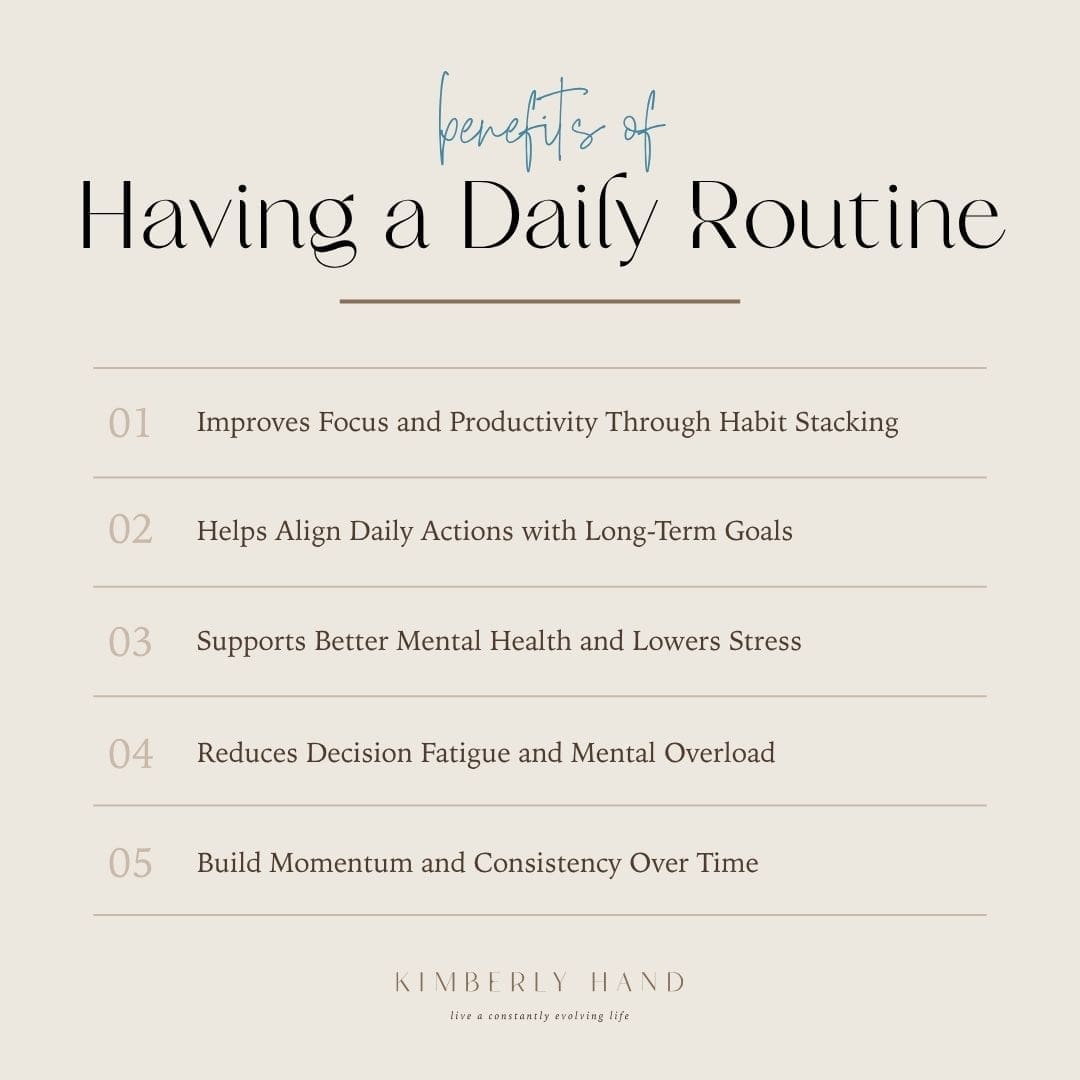
Improves Focus and Productivity Through Habit Stacking
When you repeat the same habits at similar times each day, your brain starts to recognize patterns. It becomes easier to focus, easier to start, and easier to stay consistent. This is where habit stacking comes in, pairing one habit with another so it flows naturally, rather than feeling forced.
Helps Align Daily Actions with Long-Term Goals
Now this is a big one! A routine helps you actually live in alignment with what you say you want. Not just think about it or just plan it, but gently move toward it every single day. When your day has structure, even small actions start to add up. Because the reality is, long-term goals aren’t reached in one big moment. You build them through small, repeatable habits that fit into your everyday life.
Supports Better Mental Health and Lowers Stress
There’s something really calming about knowing what your day roughly looks like. It reduces the underlying stress of uncertainty. In “Ep. 112 – Re-Wire Your Brain and Create Your Own Unique Gratitude Practice,” we talk about how simple daily practices can literally reshape your mindset over time… and daily routines play a big part in that.
Reduces Decision Fatigue and Mental Overload
You know that feeling when you’ve barely started your day, and you already feel mentally tired? That’s often decision fatigue. A routine removes a lot of those small, constant decisions. You’re not figuring everything out on the fly with a routine, because you already have a loose plan. And that’s important, because it frees up your brain for things that actually matter.
Build Momentum and Consistency Over Time
Small actions, repeated daily, add up. It might not feel like much at first, but over a few weeks, you’ll notice things start to shift. You feel more on top of things, less reactive, and more intentional in how you move throughout your day. And that’s the power of momentum. When you have a routine in place, you’re not constantly starting from scratch. Instead, you’re building on what you did the day before. Which, over time, creates a sense of stability—even in unpredictability.
How to Make a Daily Routine for Yourself
Start Small
This is where most people go wrong. They try to change everything at once out of desperation. Instead, begin with just 2–3 habits. That might be a simple morning routine, a walk, or drinking more water. Keep it realistic so you actually stick with it as time goes by.
Anchor Habits Together
This one’s pretty clever. Try to pair a new habit with something you already do. For example, stretch while your coffee brews… or step outside after lunch. It makes the habit feel automatic instead of something you put a lot of effort into. And while this seems small, it’s actually incredibly important. You’re much more likely to stick to routines when they feel manageable.
Identify Priorities
Start by getting really clear on what matters most right now. Not everything… just 3-5 key areas. Maybe it’s your health, your work, your family, or personal growth. When you focus here first, your routine feels purposeful instead of random and unorganized.
Build Around Energy Levels
Pay attention to when you feel most focused during the day. That’s when you want to do your deeper work. In “Ep. 100 – Harnessing the Power of the Sun for Better Health with Jen Van Horn,” there’s a great reminder of how factors like sunlight and circadian rhythm influence energy levels. More importantly, it’s a deeper look into why timing truly matters more than we think.
Time Block Your Day
Rather than scheduling every minute, try assigning general blocks of time. For example, a work block in the morning, a reset in the afternoon, and wind-down time in the evening. It gives you structure without feeling restrictive or tied down. And, just as I mentioned earlier, this balanced structure helps a routine feel far more sustainable and intentional.
Test and Adjust
Your routine isn’t fixed. It’s something you refine. Try it for a week, then tweak what’s not working. In “Ep. 120 – Wellness on the Road: Creating a Travel Proof Routine with Asha Walker,” this idea comes up a lot. It’s all about building routines that adapt with your life, not break when things change.
How to Avoid Autopilot in Daily Routine
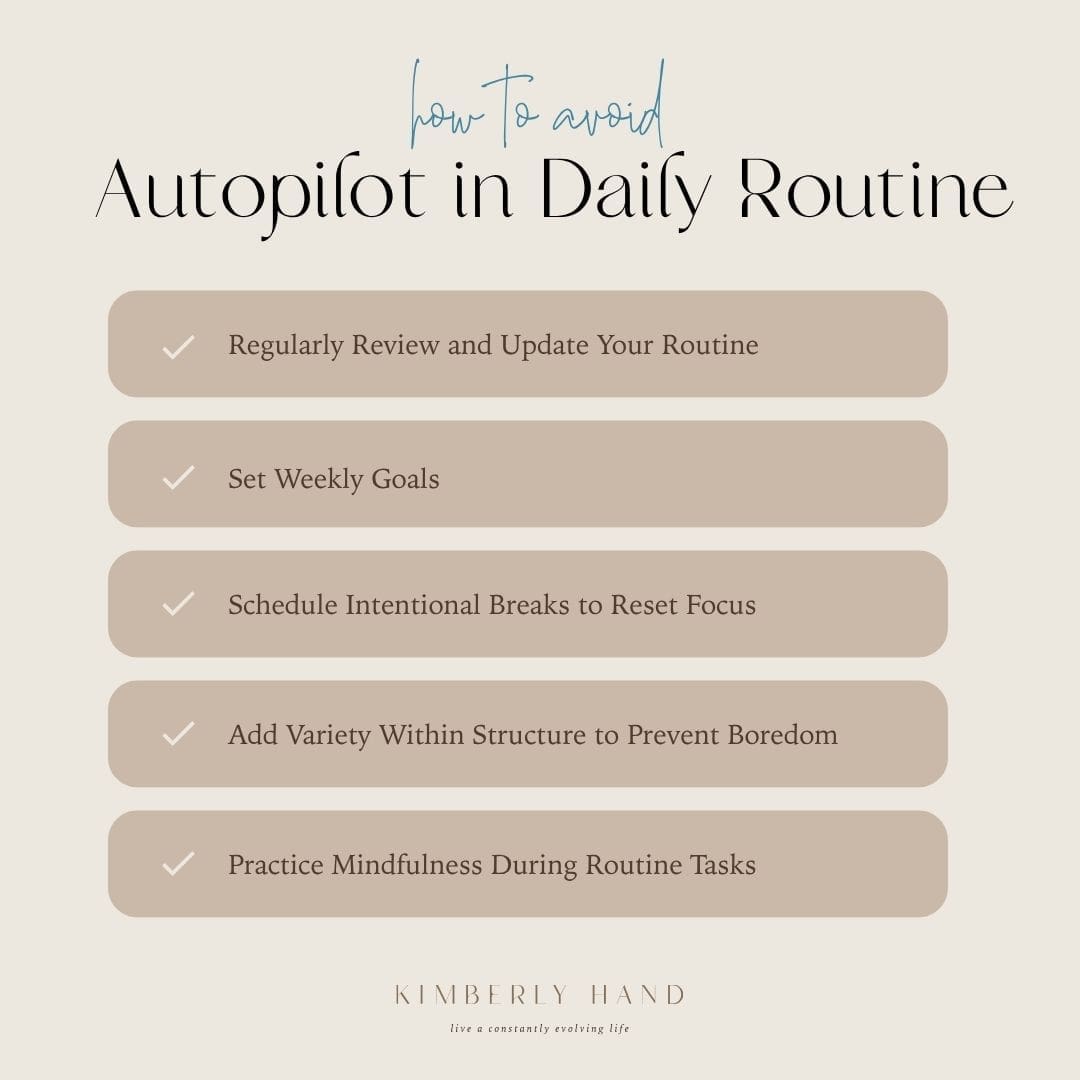
Regularly Review and Update Your Routine
Life changes… and your routine usually needs to shift with it. What worked a few weeks ago might not feel right anymore, and that’s okay. A quick check-in now and then helps you adjust without overthinking it.
Set Weekly Goals
It can help to have a rough idea of what you want out of the week. Nothing too intense, just something to guide you so your days don’t feel like you’re on autopilot the whole time. The goals can be as big as stepping up in your career or as small as drinking your daily water requirement.
Schedule Intentional Breaks to Reset Focus
It sounds a bit backward, but stepping away actually helps you focus better. Research proves this! Taking small, intentional breaks helps you prevent burnout and improve your performance. This doesn’t have to be a time-consuming task, either. Even a short break to move your body, or taking a moment to pause, can make a real difference when you resume your day.
Add Variety Within Structure to Prevent Boredom
Having a routine helps, but doing the exact same thing every day can get a bit stale. Keeping the structure and changing the small things (workouts, meals, how you unwind) keeps it feeling fresh without making you feel like you’re starting from scratch. It’s new enough to feel fun, but comfortable enough to feel safe.
Practice Mindfulness During Routine Tasks
Even the small things can feel different when you slow down a bit. Having your morning coffee, going for a walk, or even just taking a breath between tasks… it all adds up. I touched on this in “Ep. 49 – Balancing Career, Motherhood and Putting Your Health First.” All those small, intentional moments matter more than we realize, especially when life feels busy.
What Does a Healthy Daily Routine Look Like?
Here’s a simple example you can adapt:
- Wake up and drink a glass of water
- Gentle movement or stretching (10-20 minutes)
- Morning routine (skincare, breakfast, planning)
- Focused work block
- Break + movement
- Second work block
- Lunch + reset
- Light activity or walk
- Evening wind-down
- Consistent sleep time
And if your life feels full, especially if you’re balancing work, family, and everything in between, you might really resonate with this blog post: The Mental Load of Motherhood. It’s a good reminder that routines should support you in all seasons of life, not overwhelm you.
Here’s one more resource for you: “Keeping Your Health and Fitness Philosophy Simple and Effective with Sarah Fisher.” This episode really reinforces the idea that simple, consistent habits are what actually stick.
Creating a daily routine can feel simple… but it can genuinely change how your days feel.
At the end of the day, creating a daily routine isn’t about doing more. It’s about doing what matters, just a little more consistently. Some days will feel easy, others won’t. And that’s totally normal.
Over time, those small habits start to shape how you feel and how your days flow. If you want more on wellness, holistic health, and finding your purpose, The Cinnamon Effect podcast is the perfect place to continue. You may even want to track your routines in The Cinnamon Effect Journal to see what’s actually working, without overthinking it. You’ve got this!


