
For years, I believed my brain was just… me. The habits I repeated, the thoughts I had, and the emotions I felt all felt fixed. But then I learned something that truly altered the way I thought about life: the brain is constantly changing.
This is known as neuroplasticity—the brain’s incredible ability to form new neural connections and reorganize existing ones throughout life. It’s the reason you can break a habit, shift anxious thoughts, improve focus, or develop a new skill—even as an adult. And here’s the thing: neuroplasticity doesn’t just happen in extreme cases, like recovering from a major injury or a stroke. It happens in everyday life.
I’ve talked about this in-depth before on The Cinnamon Effect in Ep. 112 – Rewire Your Brain and Create Your Own Unique Gratitude Practice. This episode explores how intentional gratitude and mindful reflection contribute to the neural shaping of resilience, joy, and perspective. The exciting part? It doesn’t take any magic tricks or secret skills—anyone can do it with just a little bit of effort.
In this blog post, I’m going to share a practical guide of ways that you can rewire your brain in ways that feel intentional and empowering. These are strategies you can start today for lifelong development. Shall we get started?

How to Rewire Your Brain for Lasting Change
A lot of people hear the phrase “rewire your brain” and wonder what it really means. There’s kind of a sense of mystery around it, or maybe even skepticism. But when you understand the science, it becomes less intimidating and far more helpful.
Neuroplasticity has been studied for decades. In fact, research shows that the brain is not a fixed organ; it’s adaptable and responsive. This means that every time you repeat a behavior or learn something new, your brain is actively making steps to rewire itself. Every moment slowly becomes an opportunity to create new neural pathways, no matter the circumstance.
Understanding how to rewire your brain can create impactful change and help you lead a grateful life. It reminds us that change is not only possible, but natural! And when we approach it gently, rewiring our brains can feel like a breath of fresh air.
What Does It Mean to Rewire Your Brain?
Rewiring the brain is the process of forming new neural connections and reorganizing old ones. Doing so helps you shift your habits, behavior, thoughts, and skills over time to better align with your desired outcome. At the heart of it, rewiring requires that you consciously engage in practices that strengthen helpful pathways while weakening unhelpful ones.
Each time you repeat a thought or action, you’re silently strengthening the neural pathway associated with those choices. Over time, this pattern becomes instinctive. It truly is fascinating! However, this is why intention matters. You can strengthen both positive and negative pathways.
Positive rewiring includes everyday examples such as:
- Scrolling on your phone less and choosing mindfulness practices
- Swapping out a stress response for intentional reactions
- Learning a new skill or language
- Adjusting immediate emotional responses to challenges
The beauty of this process lies in its continuity. Even when it feels subtle. Even when it feels like nothing’s happening at all. You’re always shaping your brain—the power lies in doing it intentionally.

Can You Rewire Your Brain?
You can absolutely rewire your brain—in every way, shape, and form. The brain is constantly changing throughout life, which is what it’s designed to do. And this isn’t just a simple theory! Decades of research show that adults can form new neural pathways and recognize networks through learning, experience, and repetition.
Here are a few main reasons why we use neuroplasticity:
Emotional regulation: Reducing stress, anxiety, or reactive patterns
- Skill acquisition: Picking up a new language, instrument, or hobby
- Recovery: From injury, illness, or even mental health challenges
- Habit change: Replacing old patterns with healthier ones
Even small daily practices shape your brain. With the right amount of intention, patience, and effort, you can achieve meaningful change at any stage of your life. I promise, it’s never too early or too late to want a life better aligned with your current desires.
How Long Does It Take to Rewire Your Brain?
There’s no one-size-fits-all timeline when it comes to rewiring your brain. The speed of change depends on:
- How deeply ingrained the old patterns are
- How consistently you practice
- The complexity of the new habit or behaviour
Research suggests small shifts can start showing up in just a few weeks. More profound rewiring can often take two to three months or more of consistent practice. However, the most important factor isn’t speed—it’s consistency. Daily attention, gentle repetition, and patience are what create lasting transformation. Over time, the new pathways strengthen, old patterns weaken, and your brain becomes more aligned with the life you want to live.
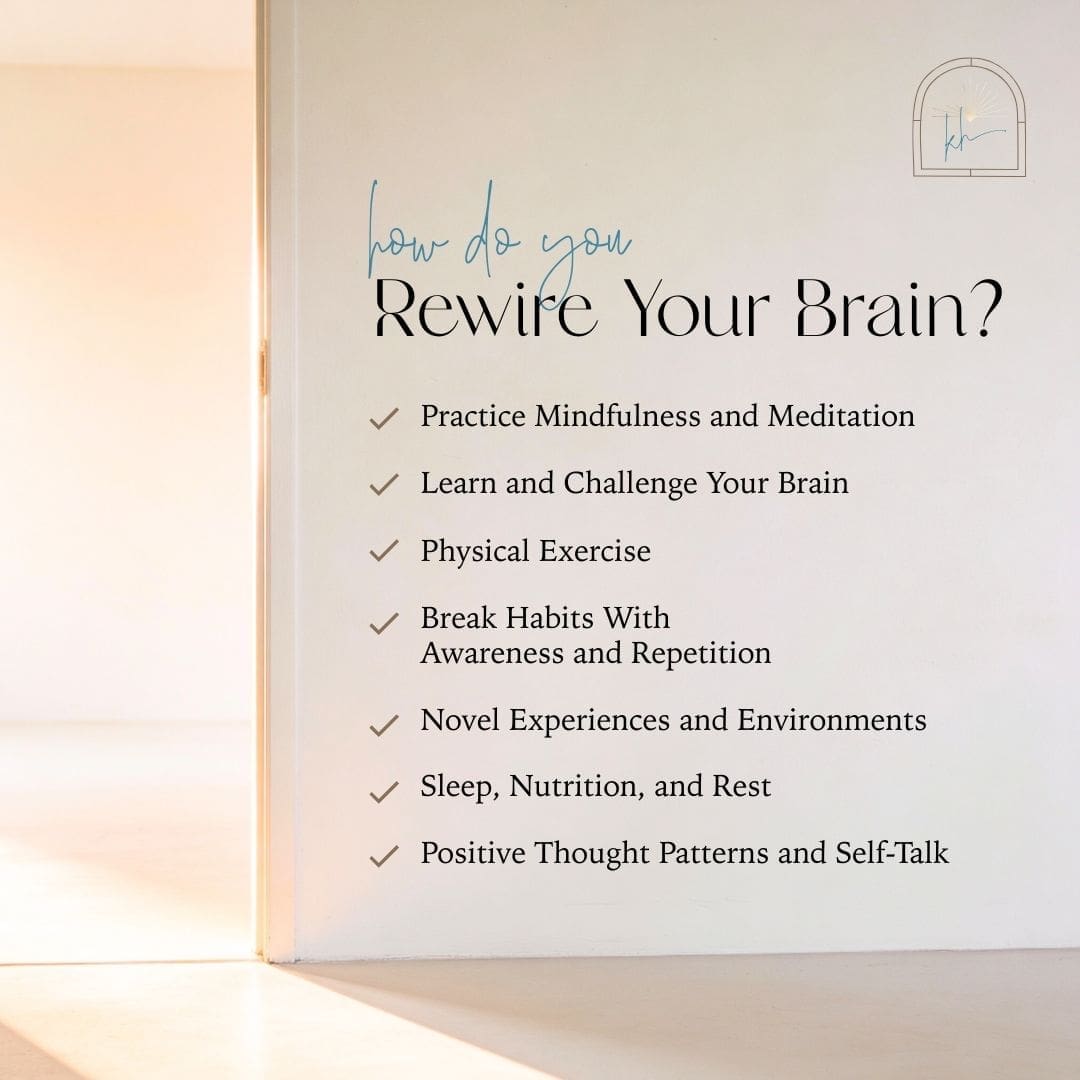
How Do You Rewire Your Brain?
Here are practical, research-backed ways to intentionally shape your neural pathways, presented in gentle, achievable steps:
Practice Mindfulness and Meditation
Mindfulness and meditation strengthen attention, emotional regulation, and cortical areas linked to self-control. Studies show that consistent practice increases gray matter in regions of the brain associated with learning, memory, and emotional balance.
Even just five minutes a day helps you notice habitual thought patterns, giving you space to choose new responses instead of reacting automatically. Over time, your brain begins to favor calm, focused pathways over stress-driven ones.
Learn and Challenge Your Brain
Whether it’s a new language, instrument, creative skill, or technical ability, learning something unfamiliar stimulates neuroplasticity. It forces your brain to form new connections and reorganize existing ones. The key is curiosity. Approach learning with openness, without judgment, and allow yourself to enjoy the process.
Physical Exercise
Regular movement is more than just good for your body—it’s essential for your brain. Physical activity increases brain-derived neurotrophic factor (BDNF), supporting neuronal growth and strengthening connections in areas like the hippocampus.
Even a daily walk, gentle yoga, or stretching routine can boost cognitive flexibility, mood, and emotional resilience. Movement becomes a tangible way to support your brain’s rewiring. If movement is your jam, I have a great post about The Benefits of Rebounding!
Break Habits With Awareness and Repetition
Start by identifying triggers and outcomes of unwanted habits. Then intentionally replace them with healthier behaviors. Repetition gradually strengthens the new neural pathways and weakens the old ones.
This is exactly how small daily choices (like pausing before reacting, drinking water instead of soda, or journaling instead of scrolling) create lasting change.
Novel Experiences and Environments
Exposing yourself to new sights, sounds, and challenges encourages your brain to form connections beyond familiar patterns. Traveling a new route, trying new foods, or exploring creative projects stimulates growth in unexpected ways.
Novelty invites the brain to stay adaptable, engaged, and resilient.
Sleep, Nutrition, and Rest
Your brain consolidates learning and repairs itself when you fuel it. Good nutrition and rest provide the building blocks for new neural pathways. Adults who prioritize sleep and a nourishing diet support optimal neuroplasticity and emotional balance.
Just as with every other intentional step in this process, consistency here lies the foundation for all other brain-rewiring practices.
Positive Thought Patterns and Self-Talk
Thoughts are powerful. Repeated positive self-talk and gratitude practices can reinforce mental pathways that promote resilience, optimism, and focus. Over time, these patterns feel more automatic, shifting your inner narrative in profound ways.
Even small phrases such as “I can learn this” and “I’m capable of change” can help the brain favor positivity instead of self-doubt.
Rewiring your brain is all about realising how capable your brain is of change…
Neuroplasticity reminds us that growth is never about perfection. It’s about gentle, intentional practices. Every mindful choice, new habit, or movement towards curiosity or gratitude strengthens the brain in subtle but meaningful ways. The Cinnamon Effect Journal is so helpful here; it makes you more aware of the subtle shifts you make day to day to improve your life.
And never forget, you have the power to shape your neural pathways, guide your mind, and transform your patterns. This journey is gradual, patient, and deeply personal. It will unravel at your individual pace.
Speaking of gratitude, I’m so grateful to have you all on this journey with me, and I wouldn’t be here if it wasn’t for you guys! See you all next week!


