Eating healthy sounds simple… until you’re actually standing in the grocery store trying to figure out what to buy. Because in theory, you understand the importance of choosing healthier, more mindful meals and snacks. But in real life, there are labels everywhere, so many options, and half the time you’re second-guessing what’s actually “good” anyway. It gets confusing quickly. And if you walk in without a plan, it’s even harder.
That’s where having a healthy food grocery list really helps. It doesn’t have to be complicated; it’s just a way to go in with structure, helping you choose foods that actually support you and your overall health. When you know what you’re there for, everything just feels easier. Less pressure, less overthinking.
As I discussed in “Ep. 121 – Fresh Philosophy: Inside Plum Market with Co-Founder Marc Jonna,” grocery shopping isn’t just about picking up food. It’s about building habits that actually support how you want to feel day to day. And that’s exactly what I’m here to help you with today! Let’s break down how to create a healthy grocery list in a simple, realistic way, so you can walk into the store feeling a bit calmer, clearer, and actually confident in what you’re buying.
Healthy Food Grocery List: Clean Eating Made Simple
Having a healthy food grocery list just makes things easier when you’re trying to eat better. Not 100% perfect, just better in a way that actually fits into your life. Because without one, it’s really easy to wander around, second-guess everything, or just grab whatever feels easy at the moment. And then you get home and think… Why did I even buy half of this?
But when you’ve got a list, even a really simple one, it’s different. Now, you already know what you’re there for, and you don’t have to make decisions on the spot. Because, let’s be honest, that’s what usually leads to unsustainable shopping choices and food waste!
If you want to learn a little more about this, listen to “Ep. 78 – How To Be The CEO Of Your Health with Dr. Avianne Hospedales (Part 1).” In it, Dr. Avianne and I discuss the role ownership plays in your daily habits—grocery shopping included! It’s one of the small decisions that quietly shape so many other facets of your life.
Ultimately, a list helps you save time, cut back on random extras, and keeps you focused on foods that actually fuel you rather than stuff that ends up in your cart because you were overwhelmed. Before I help you create a list of your own, I’ll discuss what “healthy foods” are and why they come with so many benefits.
What Are Healthy Foods?
Healthy foods are nutrient-dense whole foods that supply minerals, fiber, and essential vitamins. They usually give you a good mix of protein, carbs, and healthy fats, plus all the vitamins and minerals your body actually needs to feel good and function properly.
Think of it this way: if you don’t need to read a long, confusing label to understand it, you’re probably on the right track! Fresh produce, whole grains, lean proteins, nuts, seeds… All of that fits in this category.
I talked about this in “Ep. 82 – Transform Your Relationship with Food, Lower Inflammation and Avoid Food Trends with Shelley Loving.” The whole philosophy is based on the fact that healthy eating doesn’t need to be extreme or complicated. It’s more about coming back to simple, nourishing foods and giving your body what it actually recognizes.
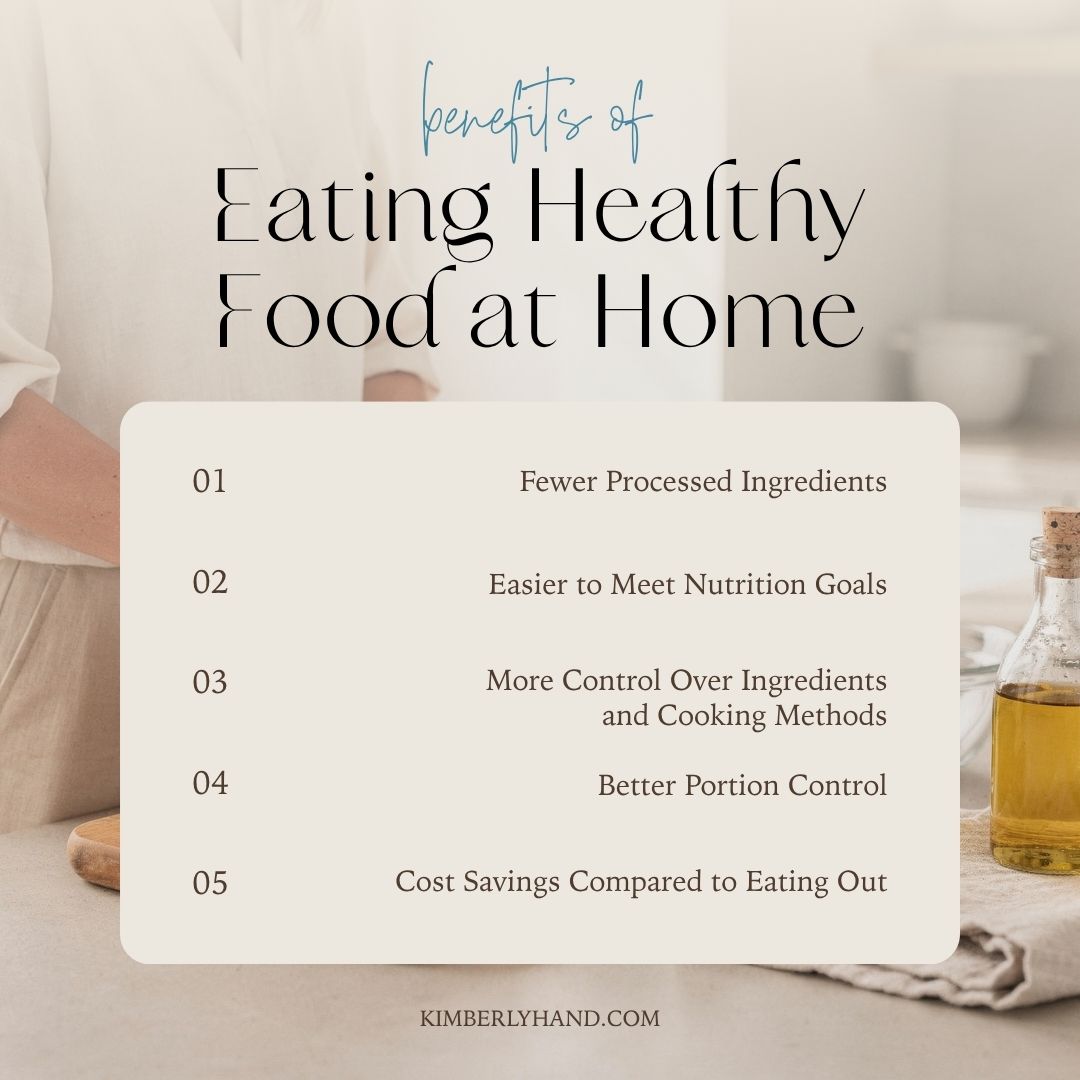
What Are the Benefits of Eating Healthy Food at Home?
Fewer Processed Ingredients
Unfortunately, a lot of what’s on the shelves is full of processed ingredients, preservatives, and chemicals. While it may taste good… it’s not great for our bodies. When you cook at home, you’re better able to avoid additives without even really trying.
You get to choose what goes into your meals, controlling what you consume—and what you don’t. It’s a much simpler, more holistic approach to nourishing your routine.
Easier to Meet Nutrition Goals
When you’ve got a bit of a plan, it’s easier to stay on track without overthinking it. You’re not trying to figure it out on the spot anymore, because you’ve already got meals that include protein, fiber, and healthy fats.
I discuss this more in depth in “Ep. 107 – Food as Fuel: Food Combining, Why Chewing Is Important, and Finding Joy in the Kitchen with Katie Hardie.” Katie and I have a vulnerable, purposeful conversation about building meals that actually support your energy… not just fill you up. That starts with what you’re choosing at the grocery store.
More Control Over Ingredients and Cooking Methods
Eating shouldn’t feel restrictive or like a chore. And while cooking at home may take a bit of extra effort, it’s a meaningful way to reconnect with your routine. More importantly, it’s an easy approach to supporting your well-being more intentionally.
You gain greater control over how your food is prepared… not just what goes into it. From cooking techniques to ingredient combinations, you can adjust each meal to better fit your needs and preferences. And over time, that level of control creates a more consistent, balanced approach to eating.
Better Portion Control
When you cook at home more, you naturally start to get a feel for portions. Not in a strict way that becomes obsessive, but you gain just a little more awareness. Without oversized meals or pre-set servings, it becomes a bit easier to notice what actually feels enough for you.
And don’t forget, what is enough for YOU might not be the same for someone else. This journey isn’t about comparison; it’s about listening to your own body.
Cost Savings Compared to Eating Out
This is one of the best—and most overlooked—parts of healthy food grocery lists: cutting expenses. Eating out time and time again, even though the costs may be smaller initially, adds up over time. When you’re using simple staples like fruits and vegetables, rice, and proteins, you can stretch meals further than you’d think—and you save money doing so. And across a week, it adds up pretty quickly. Say goodbye to blowing your grocery budget and hello to a cheaper bill that’s full of things that actually make your body feel good!
In “Ep. 49 – Balancing Career, Motherhood and Putting Your Health First,” there’s a really honest conversation about how easy it is to let health slip when life gets busy. Having a simple grocery structure is one of those things that keeps you grounded when everything else feels a little crazy.
What Are Healthy Foods to Buy at the Grocery Store?
Whole Grains
Whole grains are an excellent, wholesome source of fiber, vitamins, minerals, and antioxidants. Compared to regular grains, they help improve digestion, boost heart health, and stabilize blood sugar. No more day-disrupting quick spikes and crashes! When looking for whole grains, consider items like brown rice, oats, quinoa, and whole-grain. They’re easy to work with, pair well with almost everything, and make meals much simpler to put together.
Protein Sources
Protein is what keeps you going through the day without constantly thinking about what your snack or meal will be. More specifically, protein helps build and repair tissues, boost immune function, and support muscle mass, bone health, and metabolism. Chicken, fish, eggs, beans, lentils, tofu… whatever you prefer, it all works. Greek yogurt is another easy one. You can throw it into breakfast, have it as a snack, or use it when you don’t feel like making a full meal.
Pantry Staples
Having a few basics in your pantry makes everything easier during the week. Canned beans, spices, and olive oil are all simple things you can build meals around. It means you’re not starting from scratch every time, and you’re less likely to rely on convenience foods when you’re tired or short on time.
Fresh Produce
Fresh produce is kind of the base of everything. Grab some leafy greens, apples, citrus, berries, broccoli, and frozen foods/frozen fruits for smoothies or quick snacks. It doesn’t need to be as complicated as it looks online sometimes.
These foods are full of fiber and antioxidants. But more than that, they make you feel better. Reduced inflammation. Improved gut health. Stabilizes blood sugar. Higher energy levels and better moods… adding a bit of color to your routine truly makes a difference.
Healthy Fats
Healthy fats are easy to overlook, but they make a difference. And don’t let the word “fats” scare you away. Avocado, olive oil, nuts and seeds, and nut butter all support things like hormones, brain function, and even your skin. Beyond that, healthy fats are essential for heart health, blood sugar regulation, and cholesterol levels. They help meals feel more filling, which you’ll definitely notice.
Dairy or Alternatives
Dairy or non-dairy preferences vary from person to person. Some love whole milk and can tolerate it well, while others don’t prefer it or have to avoid it due to certain sensitivities. Ultimately, it comes down to what works for you and your health. Regular dairy or plant-based choices like almond milk, oat milk, or soy will work. And if you can, go for unsweetened options. It just cuts out some of the extra sugar you don’t really need.
And honestly, this is where things can start to feel a bit more meaningful, too. In “Ep. 93 – Healing Through Food: The Story of Gratitude Garden Farm,” there’s such a powerful reminder of how food can genuinely support healing and well-being. We talk about growing and choosing food with intention, and you can really see how something as simple as adding more fresh, whole produce into your week can shift how you feel over time.
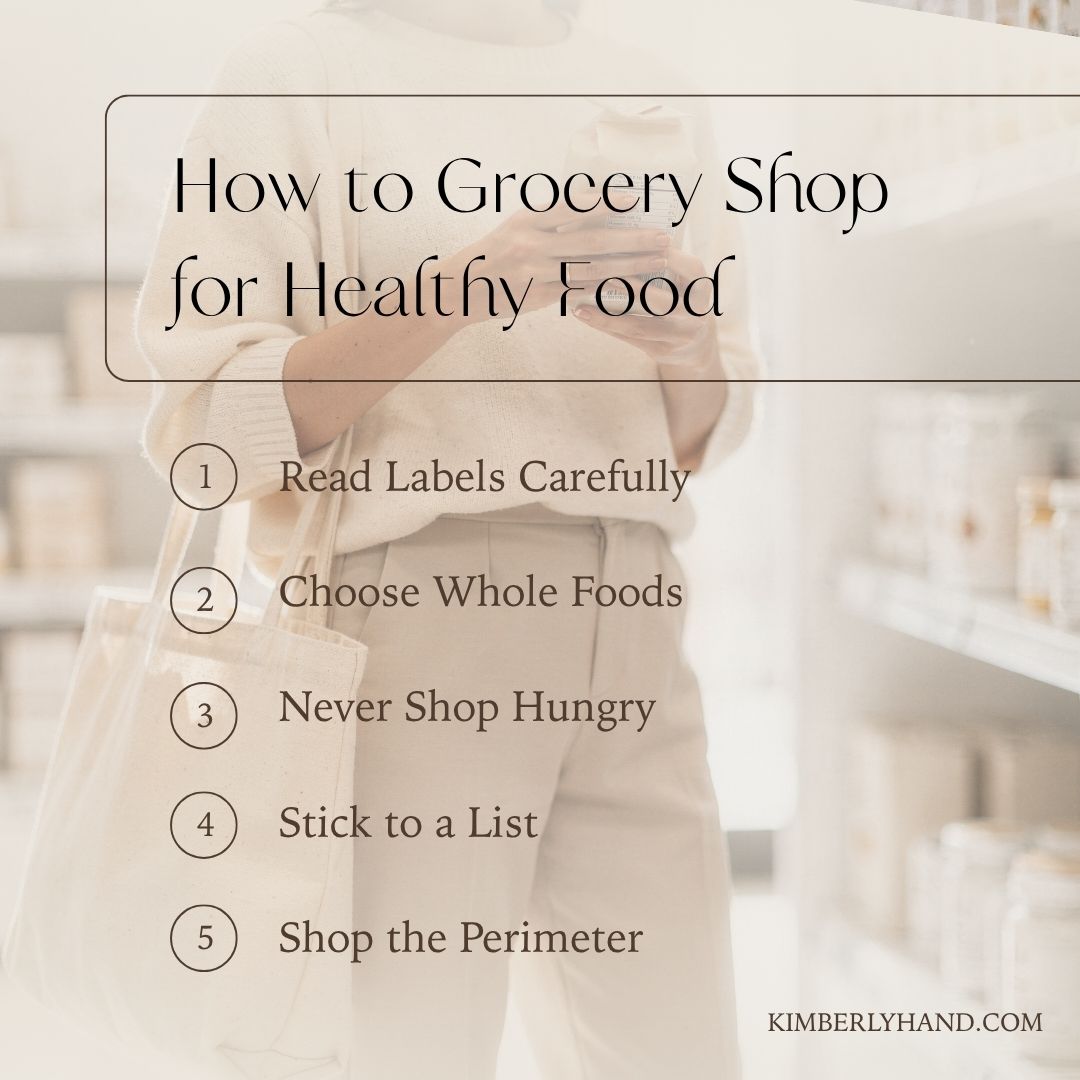
How to Grocery Shop for Healthy Food
Read Labels Carefully
You don’t need to stand there analyzing everything, but it’s worth having a quick look at labels. If the ingredient lists are super long or full of things you don’t recognize, it’s a sign that it’s full of processed additives and artificial alternatives. After a while, you’ll start to notice the patterns.
Choose Whole Foods
Whole foods can serve as the foundation for every meal and snack. They’re not overly processed or full of unhealthy artificial ingredients. The simpler they are, the easier they are for your body to use. And over time, that becomes the basis of how you eat.
Never Shop Hungry
Never, and I mean NEVER, go grocery shopping when you’re hungry… It rarely ends well. Everything looks good, even the things you wouldn’t normally buy. Having something small to eat beforehand makes it easier to stay focused and not just grab whatever.
Stick to a List
Having a list makes a big difference. You’re not walking around trying to remember what you need or making every decision on the spot. It keeps things simple and less overwhelming, and, fortunately, you’ll end up with more items you truly need—not items that sound good at the moment.
Shop the Perimeter
Most grocery stores are set up the same way. Fresh produce, like meats, dairy, and fruits and veggies, sits around the edges. If you begin there, you’re less likely to fill your cart up with the things you don’t need. And, ultimately, your grocery haul starts to look more intentional—without you even having to think much about it. Then you can go into the middle aisles for anything else you need.
Grocery shopping becomes so much easier when you plan meals!
At the end of the day, grocery shopping for healthy food doesn’t have to be perfect from the start. Instead, it’s more about making things feel a little easier for yourself as you go.
When you’ve got a simple list, a bit of label awareness, and some idea of what actually supports your body, it all feels less stressful. You’re not overthinking every choice. You start to trust yourself a bit more with it.
And if you want to go a bit deeper into your relationship with food, I’ve shared more here: How to Have a Healthy Relationship with Food. Also, here’s my guide to living a non-toxic lifestyle. As always, I’ll see you in the next episode of The Cinnamon Effect—thank you all for joining me on this beautiful healing journey.


