If you really stop and think about it… most everyday routines include more chemicals than we realize. From the cleaning products under your sink and the personal care products you use every morning to the processed foods you grab when you’re busy and the environmental toxins you encounter daily—it all adds up.
And the thing is, it’s rarely one big, obvious exposure. It’s the small, repeated ones that really add up over time. The air fresheners plugged into the wall. The “clean-looking” beauty products that still contain harmful ingredients. Even the indoor air you breathe every single day. Over time, these low-level exposures can quietly contribute to health issues, fatigue, hormone imbalances, and that general feeling of being a bit… off.
That’s where choosing a non-toxic lifestyle becomes so powerful. It’s not about fear or perfection; it’s about becoming intentional. It’s about gently questioning what you’re allowing into your environment and your body, and making choices that support how you actually want to feel.
So in this post, I’m sharing a practical, realistic guide to living a non-toxic lifestyle… one that feels doable, supportive, and actually sustainable in real life.
Guide to Living a Non-Toxic Lifestyle One Step at a Time
If you’ve ever gone down the rabbit hole of “toxic vs. toxin-free,” you know how quickly it can feel overwhelming. One article says something is safe, another says it’s not… and suddenly you’re questioning everything from your deodorant to your cookware. The truth is, living a non-toxic lifestyle isn’t about getting everything perfect right away.
Instead, it’s about making thoughtful choices and gradual changes that reduce your overall exposure to harmful chemicals. Those small shifts? They compound over time in the BEST way. Building awareness is the first step. Then it becomes about choosing what aligns with your lifestyle in a way that feels sustainable and realistic—not restrictive. Because when it feels good and manageable, you’re far more likely to stick with it.
If you want a really practical starting point, “Ep. 97 – Simple Non-Toxic Swaps For Your Home and Lifestyle” breaks this down beautifully. It’s one of those episodes you can listen to and immediately start applying… without overthinking everything.
You might also love “Ep. 98 – Tackling Technology and Fast Fashion For A Non-Toxic Lifestyle.” This episode expands the conversation beyond your home and into the everyday choices we often overlook—like clothing and tech use.
What Does a Non-Toxic Lifestyle Mean?
A non-toxic lifestyle doesn’t mean eliminating every single chemical from your life (because that’s not realistic—and honestly, not necessary). What it does mean is reducing exposure to harmful or unnecessary chemicals in your everyday environment.
It’s about choosing safer, lower-risk alternatives where you can. Think of it like this… It’s not about making drastic changes overnight; it’s about reducing your cumulative exposure. So instead of stressing about one “toxic product,” you start looking at the bigger picture:
- What are you using daily?
- Which chemicals are you breathing in without realizing?
- What are you putting on your skin?
That’s where the biggest impact is.
In “Ep. 16 (Part 1) – Reclaim Your Health with Dr. Kunal Gandhi”, there’s a powerful conversation around environmental exposures, detox pathways, and how toxic living can influence long-term health. It really reframes this whole conversation in a doable, more empowering way.
Where to Start With a Non-Toxic Lifestyle
The best place to start? With the things you use every single day! Your personal care products, cleaning products, cookware, and food. These are your highest exposure points—and they’re where switching to non-toxic makes the biggest difference.
Instead of trying to overhaul your entire life overnight (which rarely sticks), start by asking: “What do I use daily that might contain harmful chemicals?” Then begin there.
For example, begin by:
- Swapping toxic deodorant
- Upgrading your water filter
- Replacing harsh cleaning products
- Reducing processed foods
- Paying more attention to reading labels
In “Ep. 105 – Underwear Matters: The Non-Toxic Wellness Revolution”, there’s a conversation about how what you wear daily can impact your health in ways most people never consider. And if you want to zoom out and look at your home as a whole, listen to “Ep. 51 – Transform Your Home Into a Wellness Sanctuary!” It completely shifts your perspective on creating a supportive environment.
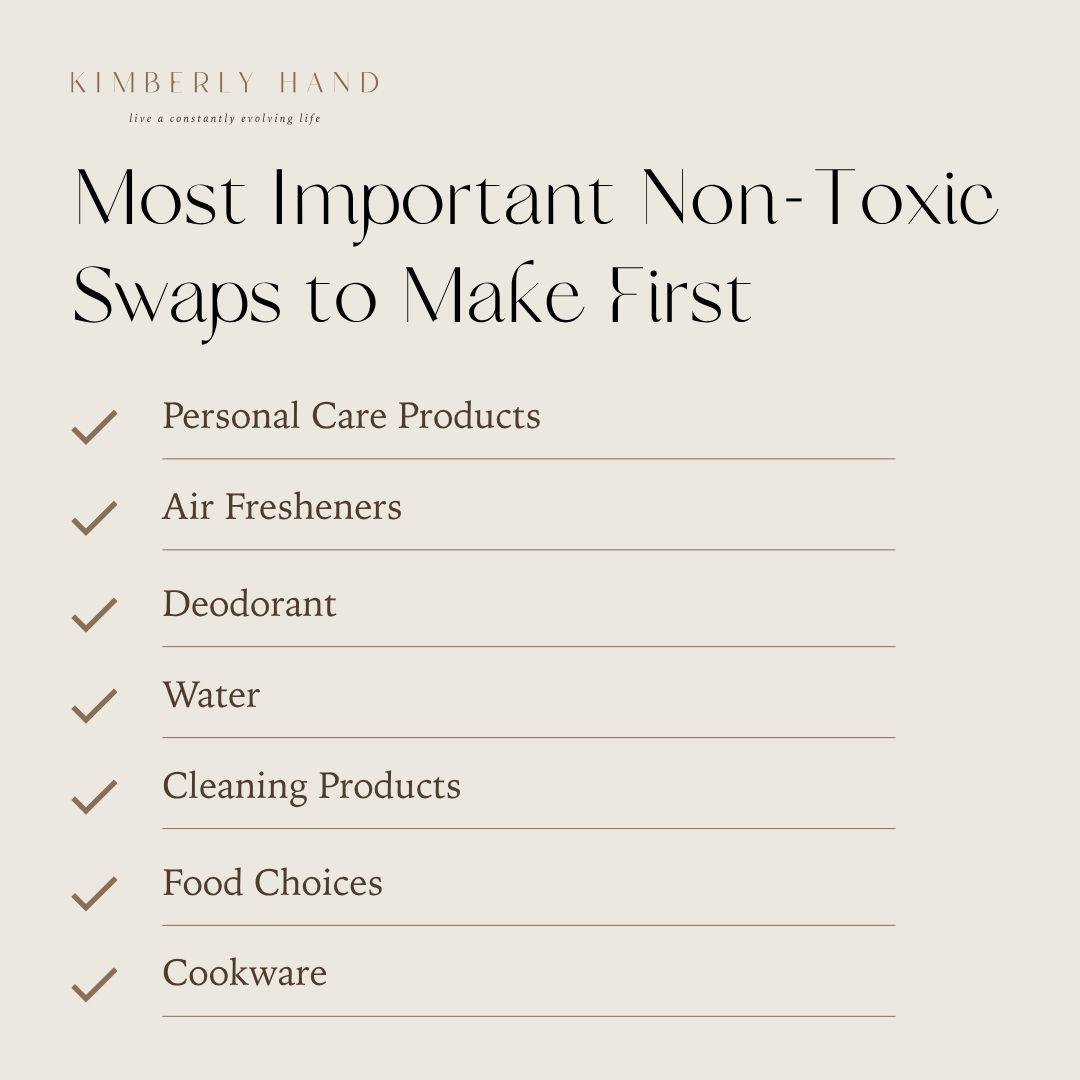
Most Important Non-Toxic Swaps to Make First
Personal Care Products
Your skin is your largest organ, so what you put on it matters. Daily products such as body wash, moisturizer, and perfume can pass chemicals into your body over time. Don’t toss everything out just yet. Instead, start small by reading labels, researching, and figuring out what each ingredient means… for you and your health.
Also, don’t feel like you have to take time and analyze every product on your shelves. Just begin with the products you use most. Over time, you might even notice that your body starts to feel different. For more on clean makeup/beauty, check out “Ep. 123 – The Truth About Clean Beauty”.
Air Fresheners
Air fresheners seem harmless, but many contain chemicals that can pollute your air. Instead of masking odors, they can increase your chemical load. For example, many popular brands contain chemicals like benzene, toluene, and formaldehyde. And though you may not realize it, that may be the cause of your headaches or endocrine disruption.
Natural options like essential oils, non-toxic candles, open windows, or tackling odor sources tend to work better. Even small changes make your home feel cleaner and calmer.
Deodorant
Deodorant is easy to overlook, but because we use it daily, it adds up. Many brands contain aluminum and other chemicals that may affect your body’s processes. For example, have you ever applied a deodorant that makes your armpits red and itchy? For most of us, we assume that’s just a minor allergy to a common ingredient. However, it may also be a reaction to the chemicals!
Look for deodorants that prioritize simple ingredient lists, organic certifications, and aluminum-free or paraben-free labels. Switching may take some trial and error, but once you find a good one, it’s a simple, long-term swap.
Water
Water quality matters. After all, you drink it every day! Some tap water can have trace contaminants depending on where you live. Even bottled water isn’t necessarily a safe bet. In fact, research shows that at least 45% of U.S. tap water has one (or more) types of PFAs (forever chemicals).
Forever chemicals are groups of human-made compounds that don’t break down. And it’s not surprising to learn that many of these are linked to a range of health issues. To help combat this, a simple filter is easy to install and reduces exposure. It’s a small change that supports your health on a daily basis.
Cleaning Products
Most people don’t realize how much cleaning products affect indoor air. Those “fresh” smells often come from synthetic fragrances, many of which contain endocrine-disrupting chemicals that can interfere with your hormones. Breathing them daily can also cause headaches or fatigue.
Remember, you don’t need a cupboard full of sprays. Simple low-tox options—or even homemade mixes—can cut exposure a lot. The goal is a cleaner, calmer space, not more chemicals.
Food Choices
Small changes in food can make a big difference. Processed foods often contain additives or hidden ingredients that may cause inflammation. Beyond that, many processed foods are made to be hyper-palatable, meaning they’re actually addictive. And when you consider how few nutrients they offer compared to how much unhealthy fat, sodium, and added sugar they contain? It makes you rethink everything you eat!
Once again, you don’t need perfection. You don’t even need to limit yourself from enjoying a little takeout every now and again! However, it is important that you focus on whole foods when you can. It’s all about finding a solid foundation for your diet that feels doable.
Cookware
Cookware matters because you use it every single day. Non-stick pans, especially scratched or overheated, can release hidden chemicals into food. Switching to stainless steel or safer materials is easy and effective. Plus, you’ll feel better knowing your food is safer for you to enjoy.
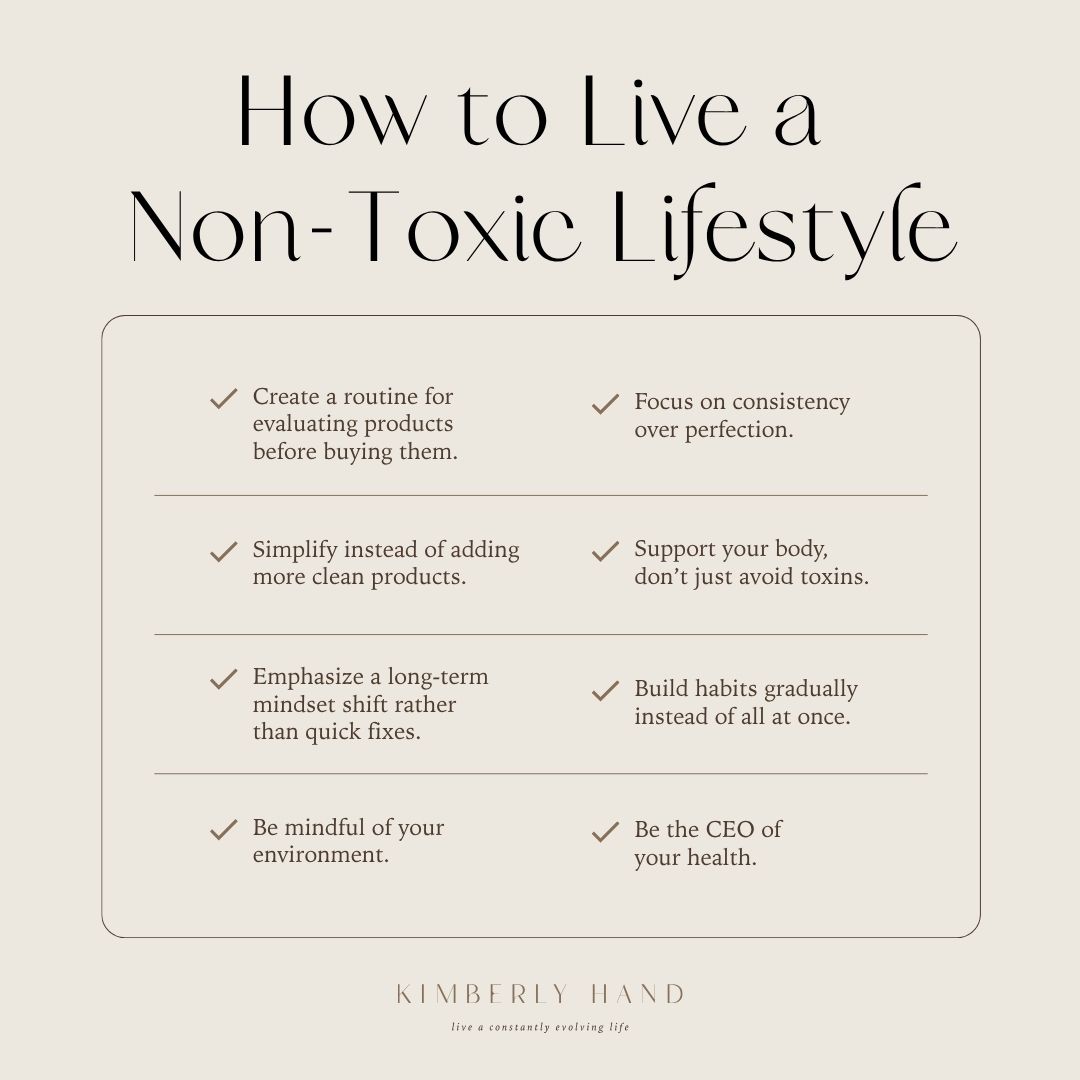
How to Live a Non-Toxic Lifestyle
Create a routine for evaluating products before buying them.
Start getting comfortable with reading labels and recognizing common harmful ingredients. You don’t need to memorize everything, but awareness helps you make more intentional choices. Over time, this becomes second nature… and you’ll find yourself naturally avoiding toxic products without even thinking about it.
Simplify instead of adding more clean products.
A non-toxic lifestyle isn’t about replacing everything with a “clean” version. In many cases, it’s about using less overall. Simplifying your routine reduces your exposure, saves money, and makes your lifestyle feel lighter, not more complicated.
And if you do feel the need to replace, don’t feel guilty about that. I see you! Instead, try to save money (and your sanity) where you can by making clean alternatives at home. Most DIY recipes call for natural ingredients, such as white vinegar, baking soda, and lemon. You don’t have to splurge, and you can feel good about how you clean your safe space.
Emphasize a long-term mindset shift rather than quick fixes.
This isn’t a quick reset; it’s a long-term shift in how you approach your health and environment. If you’re working on that deeper mindset change, this post on how to rewire your brain fits in perfectly. Because so much of this journey comes down to awareness, habits, and the way you think about your choices.
When you shift how you perceive things, change feels intentional and wholesome. And, naturally, this encourages you to stick to this new routine and make a true difference in your daily habits.
Be mindful of your environment.
Your environment plays a huge role in how you feel day to day. Decluttering, improving indoor air quality, and being intentional about what you bring into your space can have a powerful effect. “Ep. 6 – Feng Shui Your Life!” and “Ep. 115 – Refresh Your Home, Refresh Your Energy” both share simple ways to improve your space without making the process feel overwhelming. Remember: small changes add up—and you should be proud of yourself for every step you take.
Focus on consistency over perfection.
You don’t need to be completely toxin-free to experience the benefits of a non-toxic lifestyle. What matters most is consistency: choose better options more often than not. Let go of the pressure to get everything “right,” and instead focus on building habits that support your health over time.
Support your body, don’t just avoid toxins.
Living non-toxic isn’t just about removing harmful chemicals; it’s also about supporting your body. Things like movement, sunlight, hydration, and stress management all play a role in how your body processes and responds to exposure. In “Ep. 100 – Harnessing the Power of the Sun”, there’s a great breakdown of how simple habits like sunlight exposure support hormone balance and overall well-being.
And for a simple, sustainable approach to movement, “Ep. 95 – Keeping Your Health and Fitness Philosophy Simple and Effective” is incredibly refreshing.
Build habits gradually instead of all at once.
Trying to change everything overnight is one of the fastest ways to feel overwhelmed and give up. Instead, focus on small, manageable shifts that fit into your current routine. That might look like replacing one product at a time or slowly upgrading your kitchen and home environment. When you take this approach, the changes feel easier to maintain, and they actually stick long term.
Be the CEO of your health.
At the end of the day, no one knows your body better than you. In “Ep. 78 – How To Be The CEO Of Your Health”, there’s a strong emphasis on taking ownership, asking questions, staying informed, and building a lifestyle that truly supports you. Why? Because this isn’t about trends… It’s about creating something that works for your life.
Over time, toxins can quietly contribute to health issues, fatigue, hormone imbalances, and that general feeling of being a bit… off.
If you’ve made it this far, you’ve probably realized that this whole idea of living a non-toxic lifestyle isn’t about flipping your entire life overnight. It’s about becoming more aware, a little more intentional, and making choices that support how you want to feel. And that includes day-to-day and long-term.
And if you’re wanting to keep learning, exploring, and refining your approach, The Cinnamon Effect podcast is such a beautiful place to go deeper. You might even find yourself listening as you slowly make those holistic, intentional changes. Think: switching out your cleaning products, rethinking your personal care products, or finally upgrading that water filter… it all starts to click in a different way.
If you’re someone who loves to reflect, track habits, and stay intentional, grab The Cinnamon Effect Journal. It truly pairs so well with this journey. It gives you space to check in with yourself, notice what’s working, and stay aligned with the lifestyle you’re creating. No pressure or perfection necessary!


