I’ll be honest, dancing can feel super intimidating in the beginning. If you’ve ever stood near a dance floor and hesitated, I get it. Maybe you’ve told yourself you have no rhythm or no experience. Or maybe it’s just something that feels unnatural to you! Those thoughts alone can stop you before you even begin.
But here’s what I’ve learned over time… dancing isn’t just reserved for certain people. It’s not about talent or being naturally good. It’s something you can learn, slowly and in your own way. And more importantly, it’s something you can actually enjoy.
On The Cinnamon Effect podcast, I actually brought on Peter Robbins to discuss dancing as a wellness hack. Through this, we shared what it looked like to step outside of comfort zones through ballroom dancing. What surprised me most wasn’t the performance itself. It was how powerful the process became. Showing up suddenly mattered more than getting it right.
So, this post is here to guide you there gently. We’ll walk through how to learn to dance without pressure and why it matters for your well-being. I’ll also share simple steps to help you start learning with confidence. Are you ready? Let’s have some fun!
How to Learn to Dance (Even If You Feel Awkward At First)
Learning to dance isn’t at all about natural talent, even if it feels that way at first. It’s about building rhythm, coordination, and confidence over time. These things develop through repetition and patience. They don’t appear overnight, and they don’t need to.
Many beginners tend to struggle because they expect quick results. They often jump into full routines and end up doing too much, too early. Without structure, it starts to feel frustrating and confusing, which is about when people decide it’s not for them.
That idea of patience and growth comes up often in my conversations on The Cinnamon Effect. In “Ep. 96 – Become Unstoppable: Rewiring Your Subconscious Mind,” Christina L. Woods and I discussed how quickly we (all!) fall into self-doubt. Dancing brings those thoughts to the surface while also giving you a chance to move through them.
When you slow things down, something shifts. Your body begins to recognize patterns and timing, and you stop overthinking every step. In turn, you start trusting yourself. And that’s when progress becomes noticeable.
Above all, consistency matters more than most people realize. Short, regular practice builds more than occasional long sessions. Over time, your skill level improves without force and, instead, starts to feel natural rather than effortful.
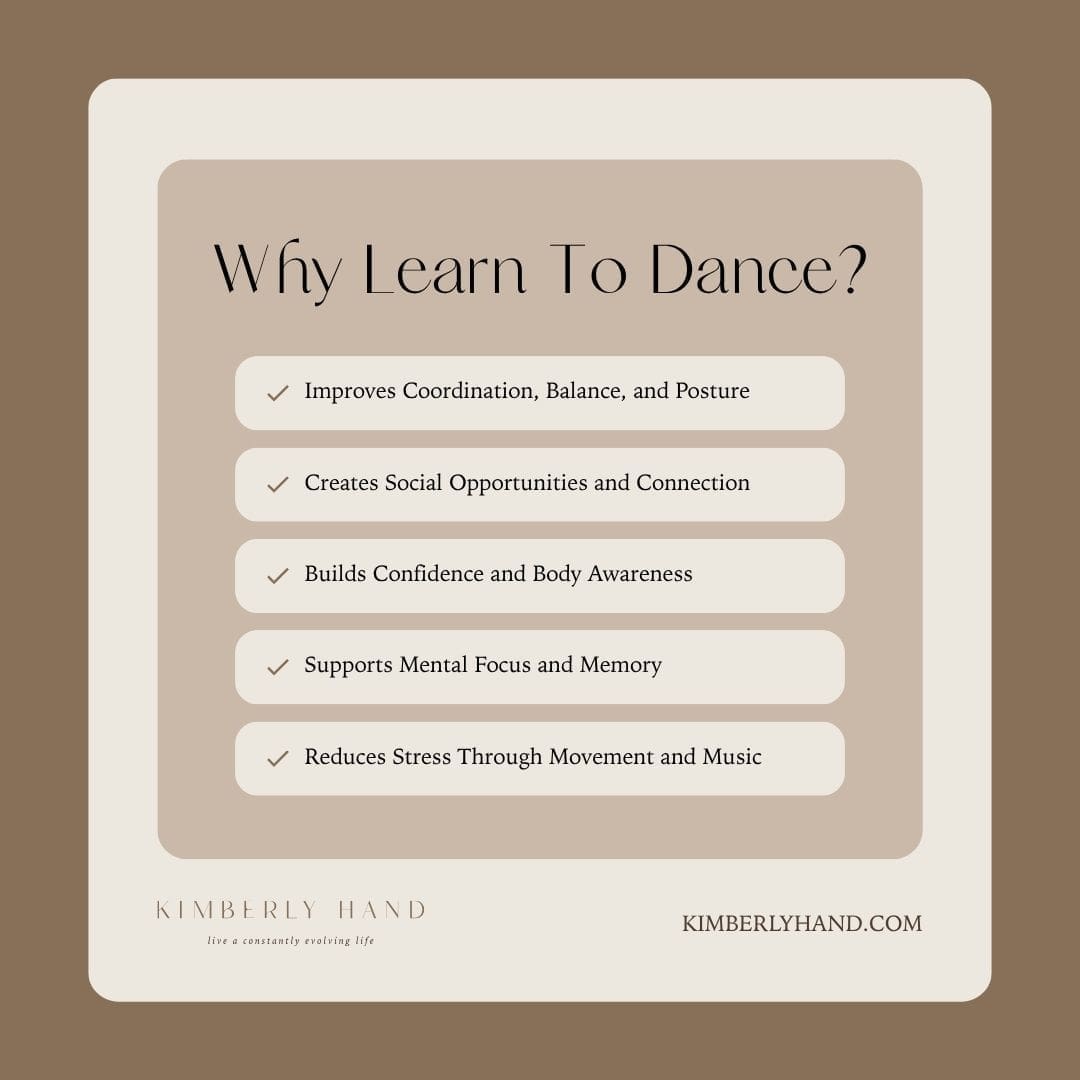
Why Learn to Dance?
Improves Coordination, Balance, and Posture
As your dance journey continues, your coordination improves naturally over time. Your balance gets better, and your posture begins to lift without needing constant correction. But these changes don’t just impact how you dance—they often show up in your everyday movement.
This idea of movement supporting your overall health connects back to “Ep. 76 – Food, Movement, Longevity and Being Your Own Cure.” Movement doesn’t need to feel rigid or intense. It can feel supportive and sustainable, and dancing fits into that beautifully. Different dance styles support your body in different ways.
Ballroom dancing encourages structure and alignment. Hip hop builds rhythm and relaxed control. A Latin dance style often improves fluidity and connection. Find what you feel comfortable with and let it move you—physically and emotionally!
Creates Social Opportunities and Connection
Dance classes offer a fun, natural way to meet new people. You’re learning together, which makes it feel less intimidating and creates a mutual bond. There’s often laughter and shared progress along the way that keeps the connection authentic. That connection tends to build quickly and naturally.
If you’ve been craving connection, this is a gentle way in. Dancing creates space to interact without pressure or expectation, supporting your growth and social confidence. You’re practicing connection in a relaxed environment where you truly enjoy being—and that changes everything.
If you’re looking for other ways to open yourself up, check out my post: “How to Be More Socially Confident!” It’s full of practical, actionable advice that you can effortlessly apply to your daily life.
Builds Confidence and Body Awareness
Dancing helps you reconnect with your body in a gentle, purposeful way. You begin to notice how you move and carry yourself, even outside of dancing. That awareness builds confidence from the inside out, helping you feel grounded and more steady over time.
Confidence doesn’t usually arrive before you start, so don’t worry. In fact, it actually builds because you start. Each small attempt adds to that sense of self-trust. And that shift carries into other areas of your life.
Supports Mental Focus and Memory
Learning steps in dance routines challenges your brain in a really healthy way. You begin to remember patterns and sequences over time. This gradually improves focus and strengthens your memory, keeping your mind active without feeling overwhelmed.
“Ep. 110 – Navigating Wellness: Insights from the Eudemonia Summit” sums this up well. I talk about how wellness isn’t just physical—it includes mental stimulation and presence. Dancing brings both together in a simple way.
Reduces Stress Through Movement and Music
Did you know that researchers have found that regular movement supports mental health? It helps substantially to release tension you didn’t even realize you were holding. When you dance to music, you step out of your thoughts and into the present moment. Remember, it’s not about doing it perfectly. It’s about giving yourself space to move and feel.
Can Anyone Learn to Dance Well?
Yes! Of course. Anyone can learn to dance well with some practice and patience. Though it might not feel like you’re dancing well in the beginning, that’s totally normal. Rhythm is something that can be developed over time, even if it feels unfamiliar at first. It’s just important to remember that coordination develops through repetition and consistency.
Most progress comes from simply showing up regularly. You don’t need to push yourself hard or rush the process. All you need to do is focus on the basics and keep at it! This is where all real improvement happens.
In “Ep. 104 – Celebrating 2 Years of The Cinnamon Effect: Cutting the Noise and Saying Yes to Life,” I talked about saying yes to life in small ways. To me, learning to dance can be one of those quiet “yes” moments.
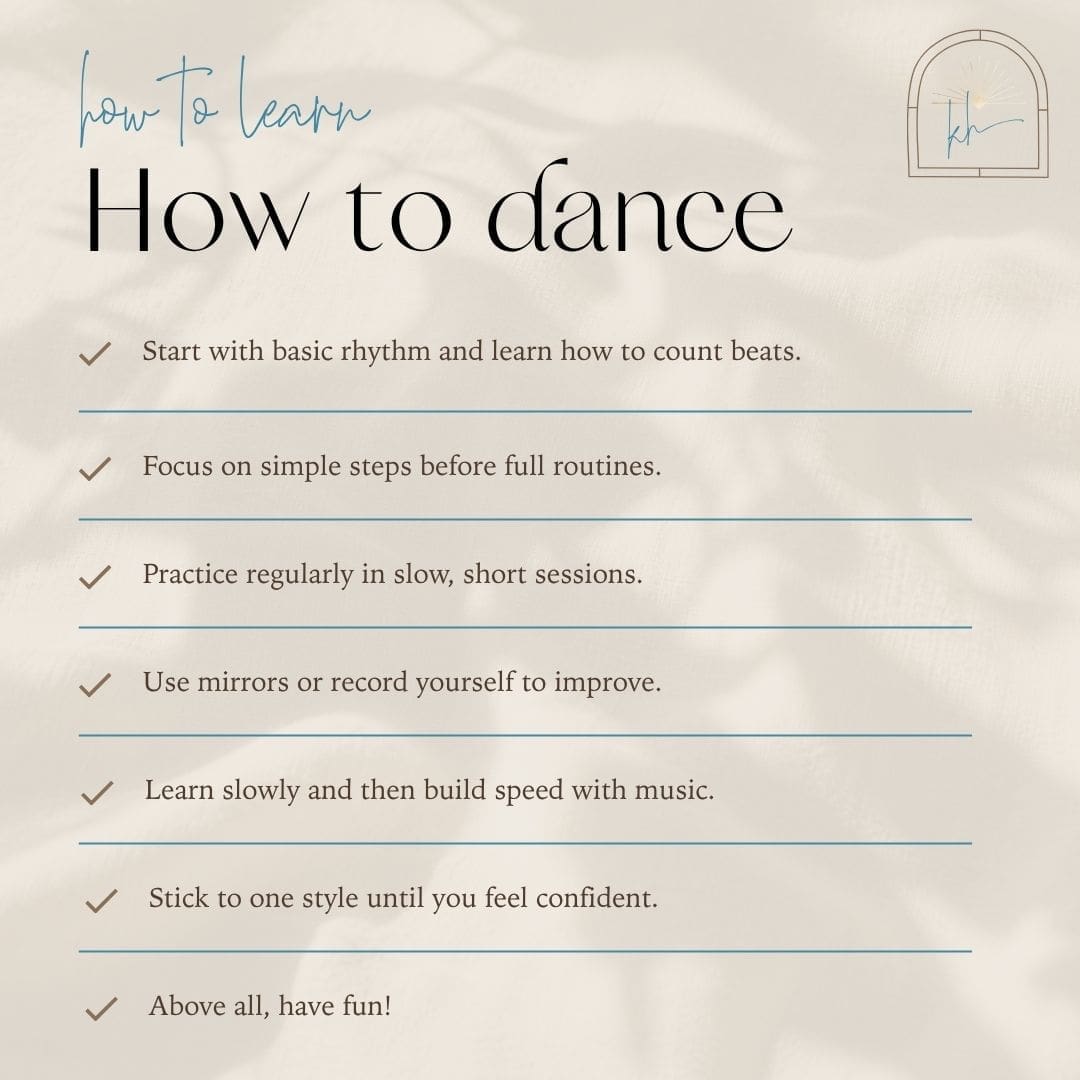
How to Learn How to Dance
Start with basic rhythm and learn how to count beats.
Everything begins with understanding the rhythm of music. Learning to hear the beat helps you feel more grounded. And you don’t just have to jump right into it! You can start by clapping or even just stepping side to side. This builds a simple but super important foundation.
Over time, your body starts to match the music naturally. And the best part? Just keeping it simple helps you stay relaxed and consistent. That’s what makes it easier to keep going.
Focus on simple steps before full routines.
It’s tempting to jump straight into full routines early on, I get it. But simple steps create a much stronger foundation long-term. When the basics feel natural, everything else flows more easily. This approach reduces frustration and builds your confidence.
This idea of building from the basics mirrors creative work, too. In “Ep. 116 – Cultivating Creativity with Choreographer Maria Konrad,” we talked about developing skill over time. We go over how growth comes from layering, not rushing. Dancing works the same way.
Practice regularly in slow, short sessions.
You don’t need long sessions to make progress. Short, consistent practice works so much better over time. Even ten to fifteen minutes a day can help, but just make sure you don’t do too much. This allows your body to retain what it’s learning.
It also keeps the experience feeling manageable and enjoyable. Over time, those small sessions create real progress. That’s what keeps your dance journey moving forward.
Use mirrors or record yourself to improve.
I know this feels a little awkward, but it truly works! Whenever you practice, either do so in front of a mirror or a camera. It gives you valuable feedback on your movement. You can notice posture, timing, and small adjustments, all of which help you improve more quickly.
Recording yourself also shows your progress over time. You begin to see changes you might not feel yet, which can be incredibly motivating. This reminds you that your effort is working, and you’re doing great.
Learn slowly and then build speed with music.
Starting slowly helps your body understand each movement clearly. Rushing often creates confusion and unnecessary frustration. Plus, going fast only increases your risk of accidental injuries! When you slow down, you build accuracy and confidence. That makes everything feel more natural later.
Once you feel comfortable, you can gradually increase speed while adding music to bring everything together in a different way. It starts to feel more fluid, enjoyable, and high-energy, which is when dancing really begins to click.
Stick to one style until you feel confident.
There are so many dance styles for beginners to explore. Swing, hip-hop, Latin, ballroom, jazz, contemporary—these are all great options for those getting started. Choosing one style helps you build confidence faster. It also gives your learning structure and direction.
Jumping between styles too early can feel overwhelming. On the other hand, staying focused allows your skills to develop more deeply. You’ll begin to feel more comfortable on the dance floor, and that confidence will carry into other styles later.
Above all, have fun!
This might sound obvious, but it’s often the first thing people forget. When you focus too much on getting it right, you lose the joy that’s meant to come with it. Dancing is meant to feel good, not perfect or rigid. Letting yourself enjoy the process changes everything.
Give yourself permission to be a beginner and even laugh at the awkward moments. Those moments are part of the experience, not something to avoid. The more relaxed you feel, the more natural your movement becomes.
What Is the Easiest Dance Style to Learn?
Many people look for the easiest dance styles when they begin. Usually, these are styles with simple and repetitive patterns. Beginner hip-hop, swing dancing, and some Latin dance styles are definitely easy to learn.
Ballroom dancing can also be beginner-friendly with the right support. Ultimately, structured dance classes and experienced dance studios make a big difference. So if you’re feeling a little lost, private lessons can help you progress at your own pace. They offer guidance that builds confidence quickly.
But the truth is, the easiest dance style is the one you enjoy, no matter how you look while learning!
Dancing isn’t reserved for certain people. It’s something you can learn slowly and in your own way!
Remember, enjoyment keeps you consistent, and consistency builds progress. Without that, it’s easy to stop too soon. So, choose something that feels fun, fuels you, and encourages you to grow—this is where dancing becomes fun!
If trying new things is on your schedule at the moment, check out The Cinnamon Effect podcast. Every week, I talk about wellness, holistic health, and purpose, with a delightful blend of inspiration, practical advice, and thought-provoking discussions.
I’d love to hear from you here, too! What dance style are you curious about right now? Have you tried a dance class before? Share your experience and help someone else start their dance journey today!


