
Wellness can look different for everyone, but I think the most important thing is consistency. A daily wellness routine is really a structured set of habits that support physical health, mental clarity, emotional balance, and long-term energy throughout the day. And the best part? It truly doesn’t have to feel restrictive or overwhelming to make a difference.
A lot of people associate wellness with occasional self-care practices or “reset” moments. But really, the strongest routines are usually built around small daily actions that work together over time to improve overall well-being naturally. This is the exact concept I discussed in “Making Olive Oil Sexy with Fancy Peasant Founder Anastasia Ganias” on The Cinnamon Effect. The routines that last are normally the ones that fit into real life.
That said, starting is often the hardest part. That’s why below, I’m sharing a daily wellness routine that can actually fit into your already-existing habits. I’ll also discuss why wellness is important and tips for making it feel sustainable and enjoyable. Because ultimately, this should support your life—not become another stress task to manage.
Daily Wellness Routine Ideas for a More Balanced Life
A daily wellness routine creates structure and stability in how a person cares for their physical health, mental state, and emotional well-being. It’s not a one-time effort or short challenge. Instead, it becomes a long-term system of habits that improve energy, focus, happiness, and overall quality of life over time.
And believe me, the healthiest routines are usually the most realistic ones. A routine that supports your lifestyle consistently will always matter more than a “perfect” plan that feels impossible to maintain.
Wellness also looks different during different seasons of life. Some days your routine may include physical activity, meal preparation, mindfulness, and recovery. Other days it may simply mean drinking enough water, getting outside, and allowing yourself proper rest.
Both still count. Healthy habits should support the body and mind together rather than create more mental pressure. Ultimately, that balance matters so much more than perfection ever will.
What Is Wellness?
Wellness is the ongoing practice of maintaining physical health, mental clarity, emotional balance, and lifestyle habits that support long-term wellbeing. It goes far beyond fitness or nutrition alone. It also includes how a person manages stress, sleep, relationships, emotional recovery, and daily energy levels.
Mental health plays a huge role in overall wellness, too, even though people often separate emotional well-being from physical well-being. Here’s the thing, though… A healthy care routine should support the entire person—not just focus on one single area of their life. This reminds me a lot of “Ep. 61 – Finding Freedom and Joy Living Alcohol Free.” This episode explores how small lifestyle changes gradually improve emotional well-being, energy, and clarity.
Why Is Wellness Important in Our Daily Lives?
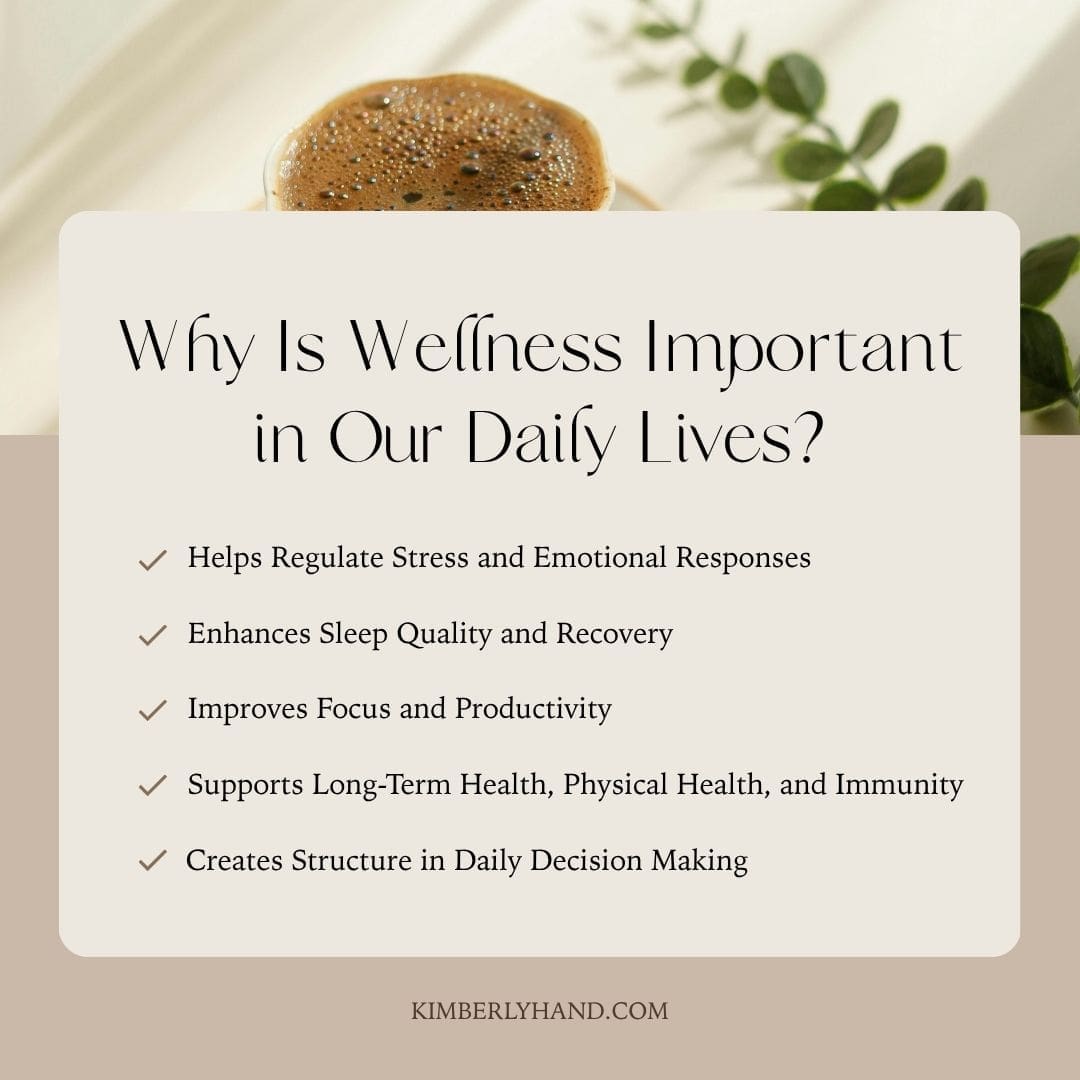
Helps Regulate Stress and Emotional Responses
Daily wellness habits help regulate stress before it builds into emotional exhaustion or burnout. Practices like breathing exercises, journaling, mindfulness, stretching, or walking outside all help calm the nervous system naturally.
And remember, stress management isn’t really about avoiding stress completely. It’s more about creating healthy systems that help your body recover more effectively. If you’re interested in exploring this idea further, listen to my episode on breaking generational trauma! In it, I explore how awareness influences emotional patterns and reactions in everyday life.
Enhances Sleep Quality and Recovery
Sleep affects almost every part of overall wellness. Without enough recovery, it becomes harder to focus, regulate emotions, support mental health, and maintain consistent energy levels. An intentional evening care routine can improve recovery significantly.
Limit screens before bed, reduce stimulation, and create calming nighttime habits to help your nervous system relax more naturally. Sometimes, better wellness simply begins with better rest. I have a beautiful episode on this, titled “The Vagus Nerve and Its Impact on Sleep, Stress Management, and Overall Well-Being with JP Errico.” I definitely recommend listening if you’re interested in the connection!
Improves Focus and Productivity
When your body feels supported properly, your brain usually responds positively, too. Healthy routines can improve focus, energy stability, motivation, and mental clarity throughout the day. Something as simple as a balanced morning routine can completely change how you start your day mentally and emotionally.
Drink a glass of water, open the blinds for sunlight, and avoid your phone immediately after waking up to help reduce stress early in the morning. Even 30 minutes of intentional wellness habits daily can make a noticeable difference over time.
Supports Long-Term Health, Physical Health, and Immunity
Consistent physical activity, hydration, balanced nutrition, and quality sleep all support long-term physical health outcomes. Wellness habits strengthen the body gradually, rather than relying on short-term “health kicks” that are difficult to maintain. Simple healthy habits matter more than people realize.
Carrying a water bottle throughout the day, eating balanced meals consistently, and prioritizing movement all contribute to better long-term well-being and immunity support.
Creates Structure in Daily Decision Making
Wellness routines often reduce decision fatigue by turning healthy behaviors into habits. You no longer have to constantly decide whether to hydrate, move your body, brush your teeth, or prioritize recovery. The routine already supports those choices naturally. That structure often creates greater emotional stability and greater ease in daily life, too.
How to Start a Wellness Routine for Daily Living
Choose 2-3 Foundational Habits to Start With
It’s really tempting to overhaul your entire routine overnight, especially when motivation is high. But usually, that’s the point where burnout creeps in. Starting smaller tends to work much better long term because it actually feels manageable.
Maybe that looks like drinking more water, walking each morning, cutting back on screen time before bed, or practicing gratitude for a few minutes during the day. The habits do not need to be perfect or impressive to make a difference. Simple routines are often the ones people stick with most consistently.
Add Movement, Hydration, and Nutrition Basics
Wellness can become overwhelming very quickly when everything feels overly complicated. Coming back to basics usually helps more than people think. Regular movement, enough water, and balanced meals create a strong foundation before anything else.
And movement doesn’t have to look intense to still be beneficial. Walking, Pilates, stretching, dancing in the kitchen, strength training, gardening—it all counts. The goal is to support your body consistently, not do everything perfectly.
Interested in taking this conversation a step further? Tune into “Dance Competition Recap: Saying Yes to Opportunities and Expanding Your Life!”
Identify Current Habits and Stress Points
Before trying to change everything at once, it helps to slow down and look honestly at your current habits first. Pay attention to the times when your energy dips, where stress tends to build, and which routines leave you feeling mentally or physically drained by the end of the day.
A lot of the time, wellness starts with awareness rather than drastic change. Simply noticing what no longer feels supportive can already shift the way you move through your day.
Build a Morning and Evening Anchor Routine
Having a few anchor habits in the morning and evening can make daily life feel calmer and more grounded. These routines do not need to be complicated either. Sometimes it’s just stretching for a few minutes, drinking water before coffee, getting outside early, or spending a few minutes doing a guided meditation.
Evening routines matter too. Reading, skincare, journaling, breathing exercises, or simply slowing the house down before bed can help your nervous system settle properly. Those little rituals often end up feeling more important than people expect over time.
This also connects really well to “Ep. 116 – Cultivating Creativity with Maria Konrad.” We spoke about how creativity and well-being both grow through small daily rituals and consistency.
Gradually Expand Into Mindfulness and Recovery Practices
Once your basic habits start feeling more natural, you can slowly build from there. Things like mindfulness, journaling, meditation, intentional rest, or recovery practices tend to feel much easier when your foundation already feels stable.
A lot of people treat rest like something they need to “earn,” but recovery is part of wellness too. Slowing down, resting properly, and creating space to reset mentally can support emotional well-being just as much as productivity or movement.
Daily Wellness Routine Ideas
Start Your Day Without Immediately Checking Your Phone
Giving yourself even 15 minutes before looking at notifications can help your nervous system feel calmer and less reactive. Morning energy shapes the rest of the day more than people realize. Rather than immediately reacting to everyone else’s demands, give yourself space to start the day on your own terms.
Prioritize Hydration Throughout the Day
Hydration plays a role in nearly every system of the body, influencing concentration, mood, energy levels, digestion, and overall physical well-being. Even mild dehydration can leave you feeling sluggish, irritable, or mentally foggy. That’s why consistently drinking enough water throughout the day is important. Begin by carrying a reusable water bottle to serve as a visual reminder to sip regularly.
Practice Gratitude Daily
When you practice gratitude consistently, it helps shift focus away from constant stress and overwhelm. It doesn’t need to feel complicated either. It can be as simple as writing down a few things you’re grateful for each day. By doing so, you begin to create a noticeable emotional shift over time.
Unsure where to start? Read my post on finding joy in life, and try incorporating The Cinnamon Effect Journal into your daily routine! Both are extremely handy tools to have with you on this journey.
Create Intentional Recovery Time
Recovery is an essential part of any sustainable wellness routine. While exercise, nutrition, and healthy habits often get the spotlight, the body also needs time to repair, recharge, and adapt. Without adequate rest, even positive habits can start to feel overwhelming. As a result, you’ll find yourself fatigued, irritable, and burnt out. Rest should feel essential… not optional.
Move Your Body Consistently
Movement supports both physical and mental health in powerful ways. It helps improve circulation, emotional regulation, energy levels, and mood naturally. And here’s the best part: consistency matters far more than intensity. Don’t feel as if you have to tire yourself out to create a meaningful impact. Find something you love doing and that feels good, and prioritize incorporating it into your daily wellness routine.
Daily Wellness Routine Tips
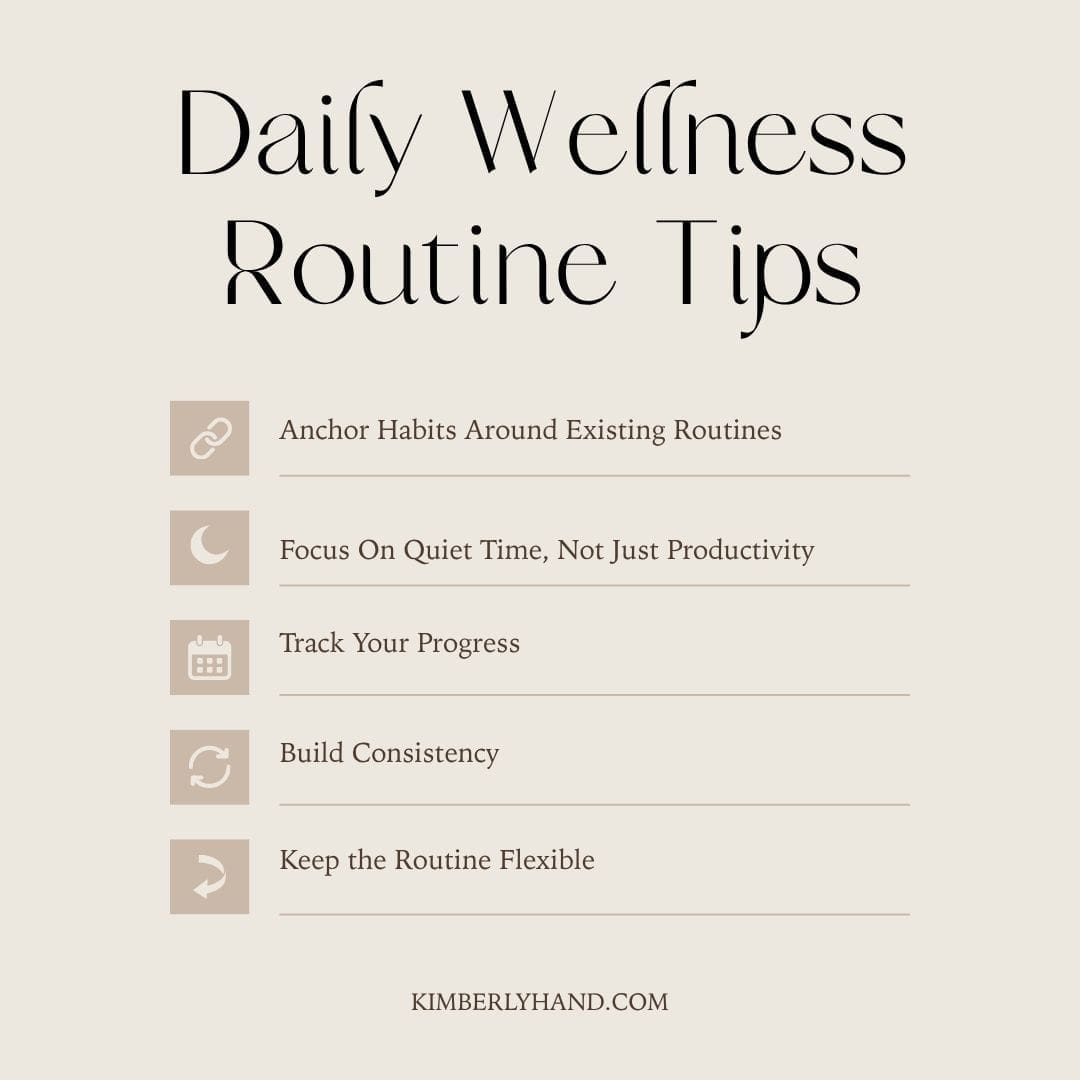
Anchor Habits Around Existing Routines
If you’re struggling to stick to your wellness routine, try attaching your new habits to old ones. For example, drinking water with meals, stretching before bed, and taking your vitamins after brushing your teeth. These are things you already do in your day-to-day life. However, by anchoring your new habit to these regular activities, it begins to feel like an intentional addition—not just another item on your to-do list.
Focus On Quiet Time, Not Just Productivity
A lot of people focus so heavily on productivity that they forget recovery matters too. Sleep, quiet time, rest days, slowing down mentally… All of that supports well-being as well. You don’t need to be constantly “doing” something to still be taking care of yourself. In fact, in a world that makes rest feel like a weakness, it’s even more important to give your mind and body time to recover.
Track Your Progress
Tracking habits can be helpful, but it doesn’t need to become intense. Sometimes, a few notes on your phone or a mental check-in is enough to support you throughout the day. Over time, as you look back, you’ll realize you’ve made a lot more progress than you initially realized. And, honestly, that’s where change becomes the most meaningful.
Build Consistency
Most people burn themselves out trying to change everything at once. However, it usually works better to keep things simple at the start and just focus on showing up consistently. Small habits repeated often tend to stick much longer than complicated routines that feel exhausting after a week.
Keep the Routine Flexible
Some weeks feel calm and organized. Other weeks feel completely all over the place. But, if nobody’s told you yet: that’s just life. Your routine does not need to collapse every time your schedule changes. Being flexible with wellness usually works better in the long term than trying to follow a perfect routine every single day.
The strongest routines are usually built around small daily actions that work together over time to improve overall well-being naturally.
At the end of the day, wellness isn’t about building the “perfect” routine. It’s about creating healthy, buildable habits that genuinely support your quality of life over time. Start small, stay flexible, and focus on routines that help you feel supported.
Remember: The routines that last are usually the ones that easily fit into your real daily life. For more tips like this, listen to The Cinnamon Effect podcast or head to my website!


