Traveling is so exciting… but air travel can really take a toll on your skin. After a long flight, skin often feels dry, dull, tight, irritated, or completely dehydrated. Cabin air, disrupted sleep, stress, and long travel days all play a role in how your skin responds during flights. Even when the trip itself is amazing, your skin can feel exhausted before you even unpack your suitcase.
This actually connects so well to “Ep. 120 – Wellness on the Road: Creating a Travel-Proof Routine with Asha Walker.” During the episode, Asha shared how travel can easily interrupt healthy habits. She also spoke about building routines that support your well-being realistically while on the go. I absolutely loved her reminder that wellness is about consistency, not perfection.
Learning how to take care of your skin on the plane helps maintain hydration, protect the skin barrier, and keep skin looking refreshed before, during, and after a flight. A few small habits can completely change how your skin feels once you land. So today, I’m sharing a guide on how to do airplane skincare routine focused on hydration, barrier support, and skin protection while traveling.
How to Do Airplane Skincare Routine: Travel Beauty Tips
If you’ve ever gotten off a flight and felt like your skin suddenly aged ten years overnight… same. Air travel can really dry your skin out fast, especially on long-haul flights. Between recycled air, low humidity, disrupted sleep, and travel stress, your skin can end up feeling tight, dull, irritated, or just “yuck” by the time you land. I notice it A LOT around my lips and under my eyes.
And to be totally honest, if your skin is already a bit sensitive, acne-prone, or naturally dry, flying usually makes it even more noticeable. The good news is you don’t need some huge complicated flight skincare routine to help your skin feel better. A few simple things really do go a long way. Keeping your skin hydrated, supporting your skin barrier, and avoiding overuse of harsh products while traveling can make such a difference.
This actually reminded me of “Ep. 61 – Finding Freedom and Joy Living Alcohol Free.” One thing that really stuck with me from that episode was how much small daily habits matter. It’s rarely the huge dramatic changes—usually it’s the tiny things we do consistently that end up helping the most over time.
What Is Airplane Skincare Routine?
An airplane skincare routine is a tailored, travel-focused regimen designed to keep skin hydrated and protected throughout the flight. Flying creates a very different environment for your skin compared to everyday life. Because of this, it’s important to incorporate hydrating, nourishing, and barrier-supportive products.
Plane cabins are extremely dry, and you can usually feel it after a few hours in the air. Skin often starts to feel tight, thirsty, dull, or more sensitive than usual, especially on long-haul flights. I think skin at high altitude almost always feels more reactive too. Even people with fairly balanced skin can suddenly notice dry patches, irritation, or makeup sitting differently during travel.
That’s why a good flight skincare routine usually focuses less on “perfect” skin and more on keeping the skin barrier happy. Hydration becomes the priority here. Most people find it helps to stick with gentle, nourishing products rather than lots of strong active ingredients while traveling.
Interested in learning more about gentle skincare? Listen to “Simple Non-Toxic Swaps for Your Home and Lifestyle with Kimberly Hand” on The Cinnamon Effect. In this episode, I discuss chemical sensitivity and how to create a supportive routine that works for you.
Does High Altitude Cause Dry Skin?
Yes! It definitely can. Flying tends to dry the skin out much faster than most people expect. After a few hours in the air, skin can start feeling tight, dull, irritated, or just uncomfortable overall. I always notice it more on long-haul flights, too. By the time you land, your face can feel completely different compared to when you boarded.
That mostly comes down to the cabin environment. Between the dry air, recycled airflow, lack of sleep, and high elevation, your skin loses moisture very quickly during travel.
Here are a few specific culprits behind why high altitude can impact skin:
Low Cabin Humidity Dries the Skin Out Faster
Airplane cabins are incredibly dry. The humidity levels are way lower than what your skin is used to normally. Because of that, water escapes from the skin much more quickly during flights. Your skin barrier can struggle to hold onto moisture properly, especially during longer trips. This is often when skin starts to feel stretched, tight, dull, or dehydrated. Unfortunately, lips and under-eyes notice it first.
Sensitive Skin Usually Reacts More During Travel
If your skin is already sensitive, flying can make everything feel more noticeable. Redness, irritation, itchiness, and discomfort tend to happen more easily during travel. Part of that comes from the recycled air and changing humidity levels.
However, disrupted sleep and UV exposure also play a role. Long travel days can leave the skin barrier feeling stressed and weakened. Then, products that usually work well with the skin tend to sting or feel particularly irritating.
Dry Skin During Flights Can Look Dull or Flaky
Dry skin doesn’t always look the same for everyone. Sometimes it shows up as flaky patches or rough texture. Other times, skin simply looks tired or lacks its usual glow.
You may even notice that your makeup looks different during flights. This is because products such as foundation often cling to dry areas you normally wouldn’t notice. Some people even break out more while traveling, because dehydrated skin can produce extra oil trying to balance itself out.
Hydration and Barrier Support Really Help
The good news is that a few simple habits can help your skin feel much more comfortable during flights. Hydrating products help replace some of the moisture lost during travel. A hydrating serum with hyaluronic acid, for example, can work really well underneath moisturizer.
Barrier-supporting products matter too. Richer moisturizers help create protective layers that reduce moisture loss throughout the flight. And seriously, drinking enough water helps more than people realize. Skin usually looks and feels much better when hydration stays consistent during travel.
If you’re interested in finding rich natural moisturizers, you may enjoy reading my post, “Is Olive Oil Good for Your Skin?” Certain nourishing oils can support dehydrated skin much more efficiently than we realize!
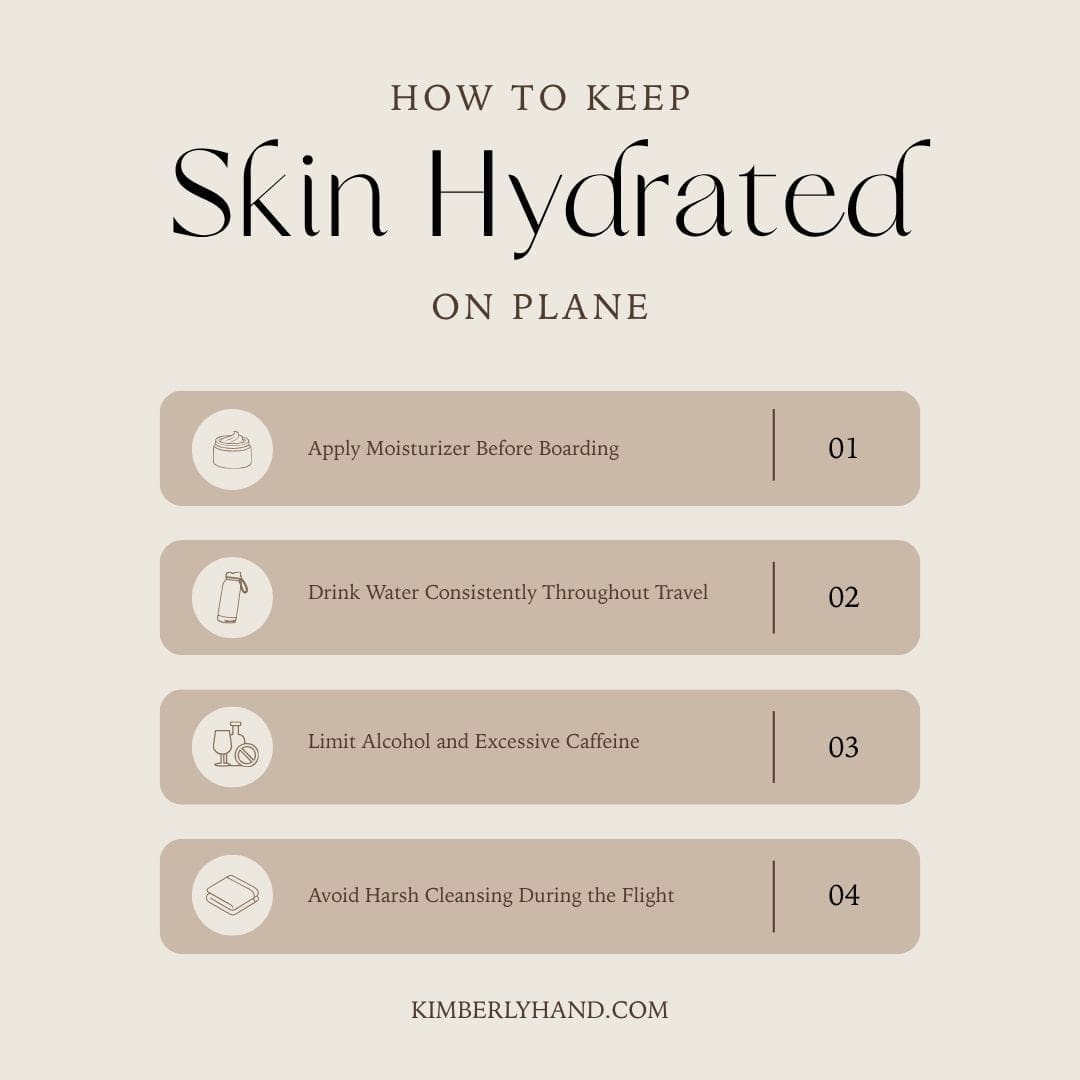
How to Keep Skin Hydrated on Plane
Keeping your skin hydrated during flights usually comes down to a few simple habits. You really don’t need an overly complicated routine either. Most of the time, consistency matters far more than perfection.
A little extra hydration and barrier support can make such a difference by the time you land.
Apply Moisturizer Before Boarding
I think this is one of the easiest ways to help protect your skin before flying. Applying moisturizer before boarding helps create a protective layer on the skin, which slows moisture loss during the flight.
Cream-based products usually work best for travel, especially if your skin leans dry or sensitive. I would also stick with gentle formulas instead of strong active ingredients before flying. What works well for your skin on land may not always react the same in the air!
Drink Water Consistently Throughout Travel
Water matters so much more than most people realize during travel days. Dehydration can creep up very quickly while flying. To combat this, drinking water consistently throughout the flight helps support energy, hydration, and overall skin health.
Ultimately, your skin usually looks less dull and tired when you stay properly hydrated. And as a bonus? The more I drink on travel days, the less fatigue and headaches I notice!
Speaking of hydration, “Health Benefits of Molecular Hydrogen with Michael Legel of Axiom H2” is an incredible resource here. You may be surprised at its remarkable health benefits… both on land and in the air.
Limit Alcohol and Excessive Caffeine
Having coffee or a glass of wine while traveling is completely okay. However, too much alcohol or caffeine can leave the body feeling more dehydrated overall. Balance tends to help most here. Alternating with water throughout the flight can make a surprisingly big difference. Your skin usually feels much happier afterward, too.
Remember how I discussed using olive oil on your skin earlier? That’s not the only way you can use it. Listen to “Making Olive Oil Sexy: Fancy Peasant Founder Anastasia Ganias on Greek Pantry Essentials, Longevity, & Female Entrepreneurship.” You’ll learn a surprising benefit of using olive oil as an elixir… not just a skincare hack.
Avoid Harsh Cleansing During the Flight
It can be tempting to over-cleanse during travel, especially after long days in airports. However, harsh cleansing usually strips the skin barrier even more. Strong foaming cleansers can leave skin feeling tight and irritated during flights.
With this in mind, gentle products work much better in the air. If you need to remove makeup, a makeup remover or micellar water usually feels much kinder on dehydrated skin.
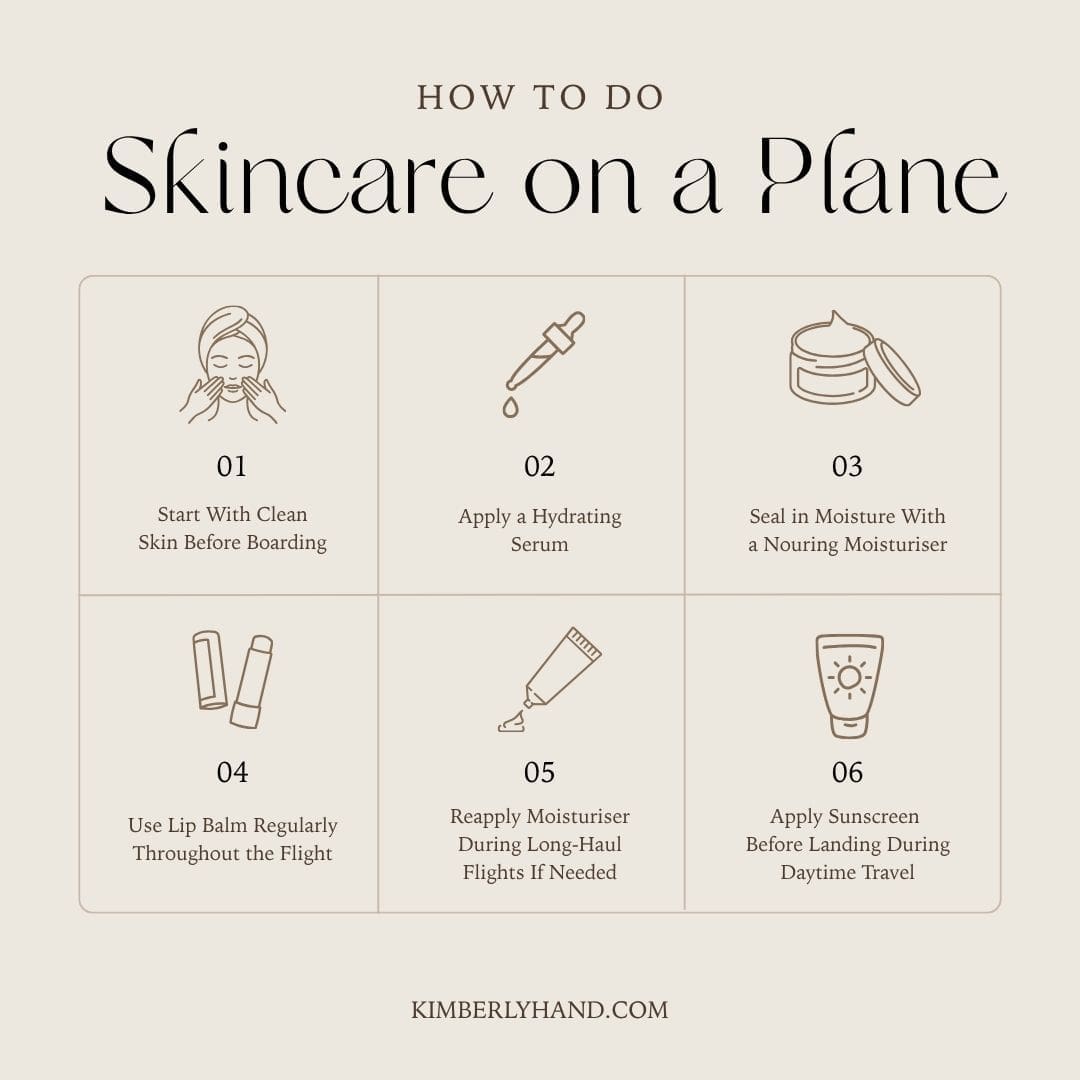
How to Do Skincare on a Plane
When it comes to flight skincare, simpler usually feels better. Your skin is already dealing with dry air, long travel days, significant change, and disrupted skincare routines. It doesn’t need a huge skincare routine on top of that.
I think the goal should really be keeping the skin comfortable, hydrated, and supported while traveling.
Start With Clean Skin Before Boarding
Starting with freshly cleansed skin gives you a good base before flying. It removes leftover makeup, excess oil, sunscreen, and buildup from the day. Clean skin also allows hydrating products to absorb more easily during the flight.
Needless to say, your skincare tends to work better when applied to a fresh base. I would avoid over-exfoliating beforehand, though. Skin can already feel more sensitive while flying, and you don’t want to aggravate it.
Apply a Hydrating Serum
This is usually where I focus most of my attention during travel. A hydrating serum adds lightweight moisture without making the skin feel heavy or overloaded. More specifically, ingredients like hyaluronic acid work really well for dehydrated skin during flights.
They help draw hydration into the skin and support moisture levels throughout travel. If you’re a few hours in and feeling dry or irritated, pack some of your favorite face masks to soothe your skin.
Seal in Moisture With a Nourishing Moisturizer
Moisturizer helps lock in hydration and reduces moisture loss during flights. Think of it like creating a protective cushion over the skin barrier. Beyond this, I recommend reaching for your creamier formulas. Because they provide more lasting hydration against dry cabin air, they tend to provide a richer base and last longer.
Use Lip Balm Regularly Throughout the Flight
Lip care gets forgotten so easily during travel. Then, suddenly, your lips feel painfully dry halfway through the flight. Keeping lip balm nearby makes regular application much easier. Hydrating lip treatments, in particular, help prevent cracking and irritation. This can be especially beneficial during overnight travel, because you can just sweep it on, fall asleep, and wake up to hydrated lips.
Reapply Moisturizer During Long-Haul Flights If Needed
Long-haul travel can leave skin feeling progressively drier throughout the journey. Sometimes your skin simply needs another layer of hydration mid-flight. You don’t need to completely redo your skincare routine either.
Even gently pressing moisturizer onto dry areas can help the skin feel more comfortable again. A face mist can feel really refreshing too, especially on overnight flights. Just make sure you apply moisturizer afterward so the hydration stays locked into the skin.
Apply Sunscreen Before Landing During Daytime Travel
A lot of people forget about sunscreen while flying. However, UV rays and UV exposure increase at high elevations, especially during daytime flights. Applying a broad-spectrum sunscreen before landing helps protect your skin if you will be outdoors afterward. This matters even more if you are heading somewhere sunny straight from the airport.
Even when the trip itself is amazing, your skin can feel exhausted before you even unpack your suitcase.
At the end of the day, the best airplane skincare routine is usually the one that feels easy enough to actually do. Travel is already super tiring at times. So, the last thing you need is a complicated routine that makes everything feel harder.
Honestly, a few small things can help more than people expect. Drinking extra water, keeping lip balm in your bag, or applying moisturizer before boarding all add up over time. Your skin really doesn’t need perfection while traveling. Most of the time, it just needs a little extra hydration and support while you’re stuck in dry cabin air for hours.
If you enjoyed this post, you might also like listening to more wellness conversations on The Cinnamon Effect podcast. You can also explore The Cinnamon Effect Journal if you want more support building small, realistic wellness habits into everyday life.


