Food is an essential part of our lives, but somehow, it can feel way more complicated than it should. For so many of us, eating isn’t just about fueling our bodies anymore. It comes wrapped up in guilt, restriction, sneaky overeating, confusion… and that little voice in your head that never seems to be quiet about what you should or shouldn’t be eating.
You’ll catch yourself wondering if you’re eating too much, if you’re picking the “right” foods, or if you’re not eating enough. Sometimes it even feels like food has more control over you than you’d like to admit… That’s exactly why understanding what a healthy relationship with food actually looks like matters so much. It’s especially important when you’re trying to build eating habits that support your body, your mind, and your life.
After all, it’s not just about what you eat, but how you think and feel about it. That’s why I’m sharing this supportive, practical guide on how you can build a healthy relationship with food. Remember, this is raw and real. There’s no pressure to be perfect, or hard rules to follow. Just calm guidance to help you feel comfortable in your body and confident about your food choices.
How to Have a Healthy Relationship With Food
There’s no denying that diet culture and misinformation have done a number on our collective eating patterns. We’ve been conditioned to fear certain foods, glorify restriction, and believe that control is health. Spoiler alert: this is ALL wrong. Because over time, these types of thoughts can quietly create disordered eating habits, even in women who don’t identify as having an eating disorder.
A healthy relationship with food supports both mental and physical health. It allows consistency without extremes and flexibility without uncharted chaos. This approach is not about weight loss or shrinking your body to fit into an old dress. It’s about sustainable habits that support your life, your energy, and your purpose.
It also doesn’t require perfection—because progress looks and feels different for everyone. A healthy relationship is built through awareness, compassion, and small, intentional shifts that add up over time. It’s not a one-size-fits-all solution, and it’s okay for your journey to look different from someone else’s.
What Is a Healthy Relationship With Food?
A healthy relationship with food is all about viewing it as nourishment and enjoyment, not a moral issue. It’s also about making sure you don’t view food as a reward, a punishment, or a measure of worth. There are no “good” foods or “bad” foods, only foods that serve different needs at different times. In this relationship, food choices feel flexible and adaptable. This means you can choose foods based on hunger cues, cultural preferences, satisfaction, and real-life circumstances.
In a healthy relationship, eating is guided by internal signals such as hunger, fullness, and how your body feels, not by rigid rules or outside noise. Most importantly, eating shouldn’t involve guilt, shame, or punishment.
I think of this often when I reflect on Ep. 82 – Transform Your Relationship with Food, Lower Inflammation, and Avoid Food Trends with Shelley Loving. Shelly shared with listeners her journey, and the life-altering moment her husband suffered a massive heart attack at only 41. This completely shifted their world as they knew it, changing their relationship with food forever.
But instead of turning to strict diets or fear-based rules, she chose to pursue a healthy relationship with food instead. Shelley often says that food is one of the most meaningful daily decisions we make for our overall health, but it doesn’t need to feel heavy. Healthy eating can be supportive, delicious, and evolving, especially when we allow ourselves room to learn and grow.
The same energy shows up beautifully in my podcast episode, Healing Through Food, which gently reconnects food with care, simplicity, and appreciation. Together, these conversations bring the focus back where it belongs—toward nourishment and feeling good in your body.
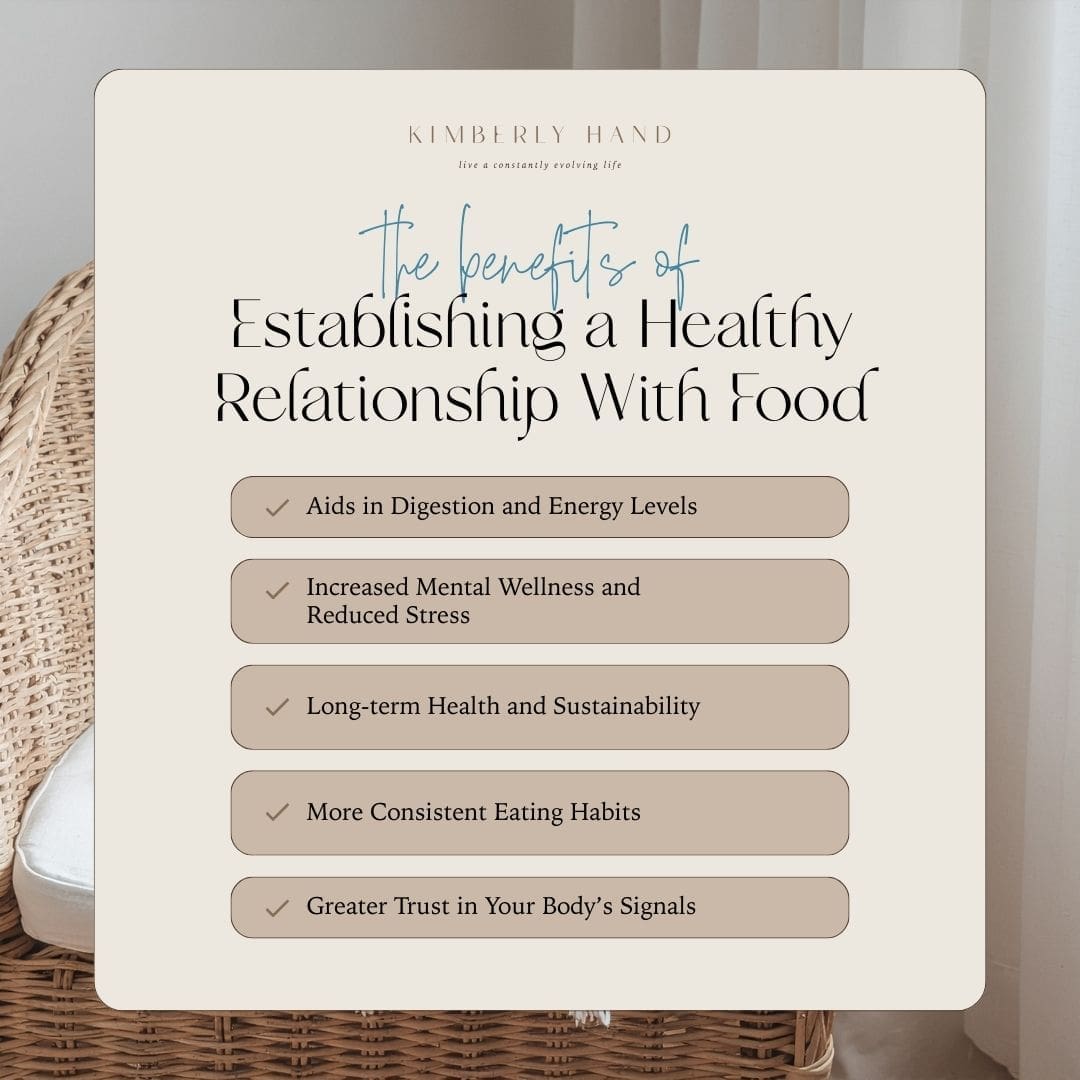
Benefits of Establishing a Healthy Relationship With Food
Aids in Digestion and Energy Levels
Stress impacts digestion so much more than people realize. When eating begins to feel safe and relaxing, the nervous system shifts into a state where digestion can work properly. This often leads to less discomfort, bloating, and that heavy feeling after meals.
Many women also notice renewed energy levels throughout the day. Once restrictive diets are removed, blood sugar and hormones tend to stabilize. The result is energy that feels consistent and supportive instead of up and down.
Increased Mental Wellness and Reduced Stress
When food stops taking up so much mental space, life feels like it opens up. You’re no longer tracking, planning, or worrying all day long about what to eat and when to eat it. That energy can now be redirected towards creativity, relationships, and things that truly matter to you.
Reduced stress around meals will also support your emotional well-being. This is because eating becomes supportive and grounding rather than a source of pressure. This mental freedom is one of the most noticeable benefits for people healing their relationship with food.
Long-term Health and Sustainability
Restrictive diets may promise quick results, but they rarely hold up in the long-term. A healthy relationship with food focuses on habits you can continue for years to come, not just weeks. Your mind begins to prioritize sustainability over quick-fix results.
While this isn’t something many people tend to think about, this approach also allows flexibility. You don’t have to hyperfixate on which types of food you eat during travel, holidays, illness, or life changes. Food begins to adapt to your life—not control it. This is where real balance lives.
More Consistent Eating Habits
A healthy relationship with food encourages consistency instead of intensity. Rather than swinging between restriction and overeating, eating patterns become more predictable and supportive. This steadiness helps the body feel safe and nourished.
Plus, when you do control your eating, it’s easy to fall into this “all-or-nothing” mindset. Carbs become harmful. One sweet treat ruins your progress. You skip meaningful dinner parties because the menu may not align with your diet. A healthy relationship with food erases this pressure, making meal time feel peaceful and enjoyable again.
Greater Trust in Your Body’s Signals
Learning to trust hunger and fullness cues can take time—especially when you’ve previously ignored them. With kind and gentle practice, those signals become clearer and easier to respond to. Your body begins to feel like more of a consenting partner rather than something to control.
As trust builds, confidence grows. You’ll notice that you rely less on external rules and more on how your body feels. That trust often carries into other areas of life beyond what you see on the plate.
What Does a Healthy Relationship With Food Look Like?
A healthy relationship with food can look different for every person, but common signs include:
- Adjusting intake based on activity, illness, or life changes
- Being able to leave food unfinished without guilt
- Eating when hungry and stopping when comfortably full
- Not labeling days of eating as “good” or “bad”
- Planning meals without rigidity or obsession
- Being able to eat socially without stress
- Choosing foods based on culture, preference, and needs
- Enjoying treats without compensating later
- Trusting your body to guide food choices
- Enjoying meals without distractions
- Feeling satisfied after meals, not just full
If this feels unfamiliar, that’s okay! These are skills to learn, not personality traits. This takes time, and you’ll get there with patience and trust.
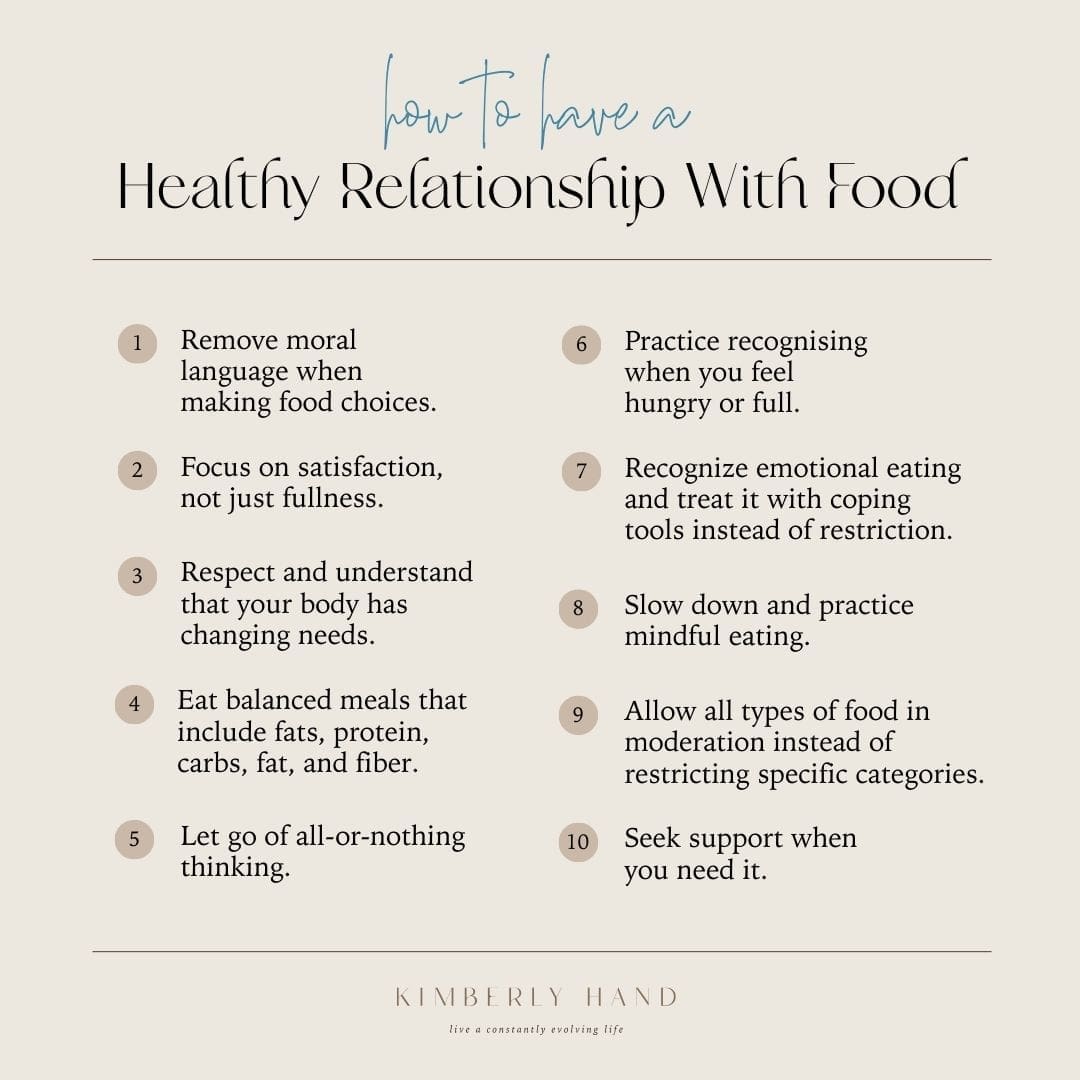
How to Build a Healthy Relationship With Food
Remove moral language when making food choices.
I touched on this idea in Ep. 114 – Change Your Relationship With Alcohol With Laura Elorza and Unconscious Moderation. Although this episode discussed alcohol, the same thought process applies to food. You need to remove moral language from your choices.
Words like “good,” “bad,” or “cheat” often create a lot of unnecessary guilt around eating certain foods. Shifting to neutral language helps take the emotional charge out of food choices. Food becomes a source of enjoyment, not a judgment.
When meals feel emotionally safe, eating patterns tend to stabilize. This change alone can break shame-based cycles and support more consistent eating habits over time.
Focus on satisfaction, not just fullness.
Fullness alone doesn’t always equal satisfaction. In fact, a meal can fill you physically while still leaving you mentally unsatisfied. Satisfaction includes taste, enjoyment, and a sense of emotional contentment. When meals are satisfying, grazing and cravings will decrease. This leads to much steadier eating habits and less mental preoccupation with food.
Respect and understand that your body has changing needs.
I’ve said it before, and I’ll say it again: our bodies are not static, and our eating habits don’t need to be either. Needs can change based on activity level, stress, sleep, hormones, illness, or season of life. A healthy relationship with food allows flexibility instead of forcing the same routine no matter what’s happening.
Respecting your body means adjusting food choices without guilt or second-guessing yourself. Some days you may need more nourishment, while other days less feels more comfortable. Listening and responding to your body builds trust over time.
Eat balanced meals that include fats, protein, carbs, and fiber.
Balanced meals help the body feel nourished and supported. Including protein, carbohydrates, fats, and fiber in your diet promotes steadier energy and blood sugar, which can reduce cravings and constant food thoughts.
When meals are balanced, it becomes easier to trust hunger and fullness cues. Try to reinforce choosing foods that support your body rather than chasing nutrition rules. Satisfaction lasts longer, which naturally supports more stable eating habits.
To help, here’s a healthy food grocery list to get you started.
Let go of all-or-nothing thinking.
All-or-nothing thinking often shows up as feeling “on track” or “off track” with food. This mindset creates unnecessary pressure and can lead to cycles of restriction and overeating. Real life doesn’t work in extremes, and neither does sustainable health.
Letting go of perfection allows space for balance, one meal at a time. A specific meal or one day doesn’t define your eating habits. After all, you build consistency through flexibility—not uncomfortable, rigid control.
Practice recognizing when you feel hungry or full.
Gently check in with your body before and after meals. Notice hunger, comfort, and satisfaction instead of the rules you (or society) have created. This awareness helps reconnect you with your natural hunger cues over time.
At first, these cues may feel inconsistent, and that’s normal. With patience and repetition, they become much easier to recognize. That sense of awareness is a foundational part of building a healthy relationship. You begin to trust your body’s internal instinct rather than relying on external rules or restrictive mindsets.
Recognize emotional eating and treat it with coping tools instead of restriction.
Emotional eating isn’t failure. It’s simply information about unmet needs like connection, rest, comfort, or stress relief. Food often becomes the most accessible coping tool in those moments—and it’s much more common than you may realize.
Addressing emotions directly builds resilience because restriction usually adds stress rather than solving the root issue. Ep. 76 Food, Movement, Longevity, and Being Your Own Cure with Wellness Entrepreneur Asha Walker reminds us that food is just one (important) piece of overall wellbeing.
Slow down and practice mindful eating.
Slowing down helps your body and brain to actually communicate during meals. When you eat quickly or are distracted, it’s harder to notice hunger cues, fullness, and satisfaction. Taking a breath and being truly present can completely change how eating foods feel in your body.
This idea is laid out beautifully in Ep. 107 – Food as Fuel: Food Combining, Why Chewing Is Important, and Finding Joy in the Kitchen with Katie Hardie. Slowing down, chewing well, and being present with food can completely shift digestion and satisfaction without adding pressure.
Allow all types of food in moderation instead of restricting specific categories.
Restriction often increases fixation on a single food or food group. Allowing all foods reduces urgency and creates space for moderation to develop naturally. This doesn’t mean eating everything all of the time. It just means trusting yourself to choose foods based on hunger, enjoyment, and context instead of fear.
Seek support when you need it.
Sometimes, extra support from a trusted professional brings clarity and relief to your mind. A registered dietitian can help untangle misinformation and offer guidance rooted in health, not diet culture.
Remember: seeking help isn’t a sign of failure. You don’t have to do this alone. This empowering perspective shows up in Ep. 78 – How To Be The CEO Of Your Health with Dr. Avianne Hospedales (Part 1), which encourages confident, informed choices without perfectionism.
Frequently Asked Questions About a Healthy Relationship With Food
What are the signs of an unhealthy relationship with food?
Common signs include chronic dieting, guilt after eating, rigid rules, not eating at all, overeating, and anxiety around certain foods. Feeling out of control around a single food can also be a signal.
How long does it take to heal a relationship with food?
Don’t worry, there’s no set timeline. Healing depends on history, support, and life stressors. Progress is rarely linear, and that’s normal.
When do I need to seek professional help?
If food thoughts feel constant or distressing, professional support can really help. A registered dietitian or therapist can guide healing in a safe, supportive way.
How does diet culture impact my relationship with food?
Diet culture teaches us to distrust our bodies. It promotes restrictive diets and external rules over internal wisdom. Over time, this disconnect erodes confidence and consistency. This is why it’s so important to work on developing a positive relationship with food.
A healthy relationship with food supports both mental and physical health…
Building a healthy relationship with food isn’t about rules, restrictions, or perfection. It’s about connection…. Connecting with your body, your hunger cues, and the joy of eating without guilt. You’ll learn how to make choices that feel good, support your energy, and show yourself a little grace along the way.
Remember, progress looks different for everyone, and that’s okay. Small, consistent shifts matter more than quick fixes or strict diets. Trust yourself, listen to your body, and let meals be moments of nourishment and enjoyment, not stress.
For more inspiration, practical tips, and real-life stories from real people, listen to The Cinnamon Effect podcast. And don’t forget to visit The Cinnamon Effect website to connect with me directly or grab your TCE Gratitude Journal.
You deserve to feel good, confident, and free around food, and in life. Start small, be patient, and celebrate progress along the way. See you next week!


